// NUTRITION
Fasted Cardio for the Faith-Driven Lifter: What the Research Actually Says
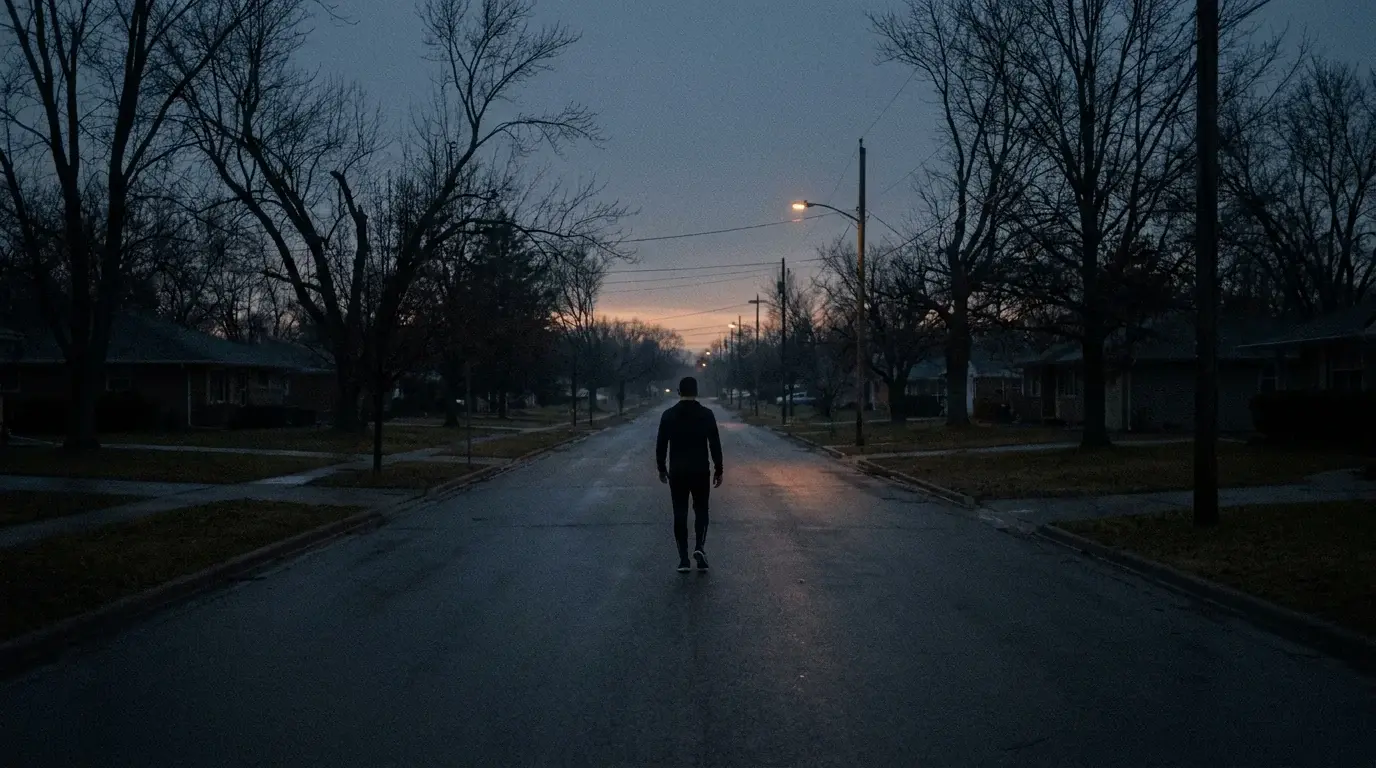
Fasted cardio has been sold as the shortcut to a lean physique for thirty years. The research says something quieter and more useful. Here is what fasted training actually does, when it helps, and why the morning walk and prayer combination is the most undervalued tool you own.
Pete Fluriach, founder of Alpha Omega Strength Team. For most of my twenties I believed that walking on an empty stomach at five in the morning was doing something to my body that walking at noon could not. I had read it in magazines. I had heard it from men who looked the part. It took me years, and eventually a serious read of the actual literature, to understand that I had the mechanism backwards - and that the practice was still worth keeping, for reasons that had nothing to do with fat.
This is the honest version. What fasted cardio does, what it does not do, where the research is settled and where it is not, and how a faith-driven lifter should actually program it. No hype. If a practice only survives when it is oversold, it was never worth doing.
What Every Faith-Driven Lifter Needs to Know About Fasted Cardio
Fasted cardio is aerobic work performed after an overnight fast, before the first meal of the day. The claim attached to it is that training without food in the system forces the body to pull from stored fat rather than from recent calories. That claim is half true, and the half that is false is the half that matters.
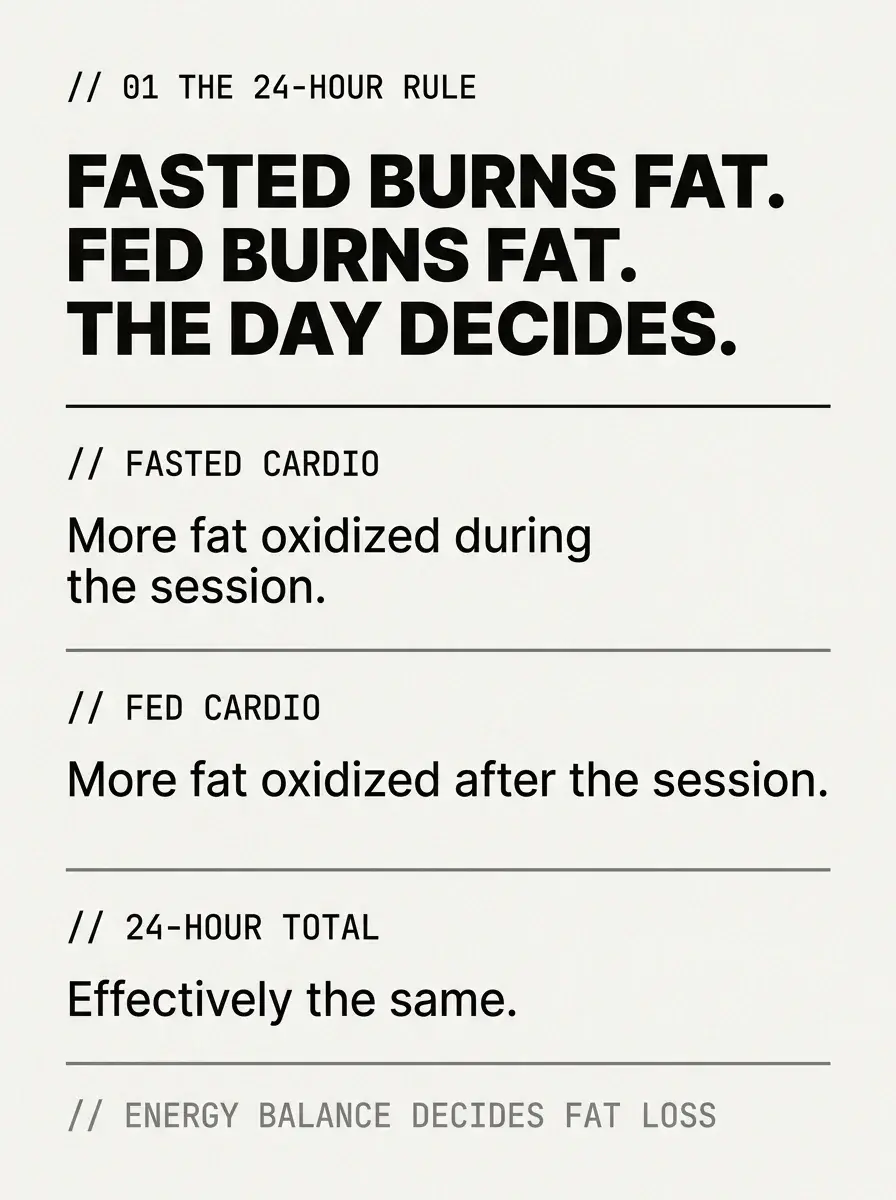
Yes - you oxidize more fat during a fasted session. No - you do not lose more fat because of it. The body settles its accounts across the whole day, not inside the forty minutes you spent moving. Burn more fat in the morning and you will burn correspondingly less of it later. The ledger closes at twenty-four hours, and the number at the bottom is decided by energy balance.
Where the Myth Came From, and What the Research Actually Found
The idea is not fabricated. It rests on a real observation: with low insulin and depleted liver glycogen after an overnight fast, the body leans harder on fat as a fuel source during exercise. Measure the respiratory exchange ratio mid-session and you will see it plainly. Fasted training does raise fat oxidation while you are moving. That much is not in dispute.
The error was in assuming that fat burned during a session equals fat lost from the body. It does not. Fuel selection is not fat loss. The body compensates over the following hours - oxidizing less fat after a fasted session, more after a fed one - and the two paths converge before the day is out. Once researchers stopped measuring the workout and started measuring the week, the advantage evaporated.
The Controlled Trials Say the Same Thing
The most cited direct test is Schoenfeld and colleagues, published in 2014 in the Journal of the International Society of Sports Nutrition. Two groups did the same steady-state aerobic work under the same supervised calorie deficit - one fasted, one fed. Over four weeks both groups lost fat, and the difference between them was not statistically meaningful. The deficit did the work. The timing did not.
Reviews of the wider literature land in the same place: fasted exercise reliably shifts fuel use during the session, and reliably fails to produce superior changes in body composition when calories and protein are matched. Thirty years of gym-floor certainty, and the honest summary is a shrug. There is no fat-loss magic in an empty stomach.
Why We Wanted It to Be True
Because a shortcut is easier to believe in than a deficit you have to hold for sixteen weeks. Fasted cardio offered a way to feel like the hard part was being handled by biochemistry rather than by obedience. That is the appeal, and it is worth naming plainly, because the same instinct shows up everywhere else in a man's life. We would all rather find a mechanism than practice a discipline.
Paul had no interest in that kind of self-deception. He wrote in 1 Corinthians 9:27 (NIV), "No, I strike a blow to my body and make it my slave so that after I have preached to others, I myself will not be disqualified for the prize." That is not a man looking for a loophole in his own physiology. That is a man who has decided to do the work and has stopped negotiating with himself about it.
The Decision Framework: Which Version of Cardio Is Actually Yours
The question is not whether fasted cardio burns fat. It is which arrangement of cardio you can hold for months without it eating the training that actually builds you. Here are the five common setups, who each one serves, and where each one tends to fall apart.
| Approach | Best For | What It Looks Like | Where It Breaks Down |
|---|---|---|---|
| Fasted low-intensity walk | Most lifters, early risers | 30-45 min easy walk before the first meal | Does nothing at all if the day's calories are not in a deficit |
| Fasted high-intensity intervals | Almost no one | Sprints or hard intervals on an empty stomach | Output drops, recovery suffers, and hard-won muscle is on the line |
| Fed steady-state cardio | Midday and evening trainers | 30-40 min of easy work after a light meal | Requires planning the day around food timing |
| Fasted cardio stacked before lifting | No one in a strength phase | Cardio first, then straight under the bar | Robs the session that is actually building you |
| Easy cardio on rest days | Lifters protecting their lifts | Zone 2 work placed away from training days | Costs an extra slot in an already full week |
Read that table honestly and find yourself in it. If you are lifting seriously and eating in a deficit, the fasted low-intensity walk and the rest-day easy session are the two rows that will serve you. The other three are where men quietly trade away strength and call it discipline.
When Fasted Cardio Helps, and When It Costs You
It helps when it is low intensity, when it is placed away from your heaviest lifting, and when it makes the rest of the plan easier to hold. A forty-minute walk at first light asks almost nothing of your recovery, sits comfortably on top of a lifting program, and often takes the edge off appetite for the rest of the morning. If it fits your hour and your gut, keep it.
It costs you when the intensity climbs. Hard intervals on an empty stomach mean lower output, a rougher session, and a longer shadow over the training that follows. In a deficit, with protein already tight, long and hard fasted work is the fastest way to spend the muscle you spent years building. That is a bad trade, and no amount of fat oxidized during the session makes it a good one.
And it costs you when it is placed directly in front of the barbell. Cardio before lifting blunts the session that is actually driving the adaptation you want. Strength is the asset. Cardio is maintenance on the asset. Never let the maintenance damage the thing it exists to protect.
One more honest note: for some men, fasted work simply feels bad. Lightheaded, flat, irritable, watching the clock. If that is you, eat something small and go. A session you complete beats a session you endured for the sake of a mechanism that was never doing what you thought it was doing.
The Most Undervalued Tool You Own: The Morning Walk and the Prayer
Here is where I land after all of it. The fat-burning claim was never the real reason to walk before breakfast. Strip that claim away and something better is left standing: a quiet, unhurried, uninterrupted hour that nothing else in your day is competing for.
Mark records the pattern in the life of Christ himself. Mark 1:35 (NIV): "Very early in the morning, while it was still dark, Jesus got up, left the house and went off to a solitary place, where he prayed." Still dark. Away from the house. Alone. The Son of God structured his mornings around solitude and prayer, and he was not doing it to improve his body composition.
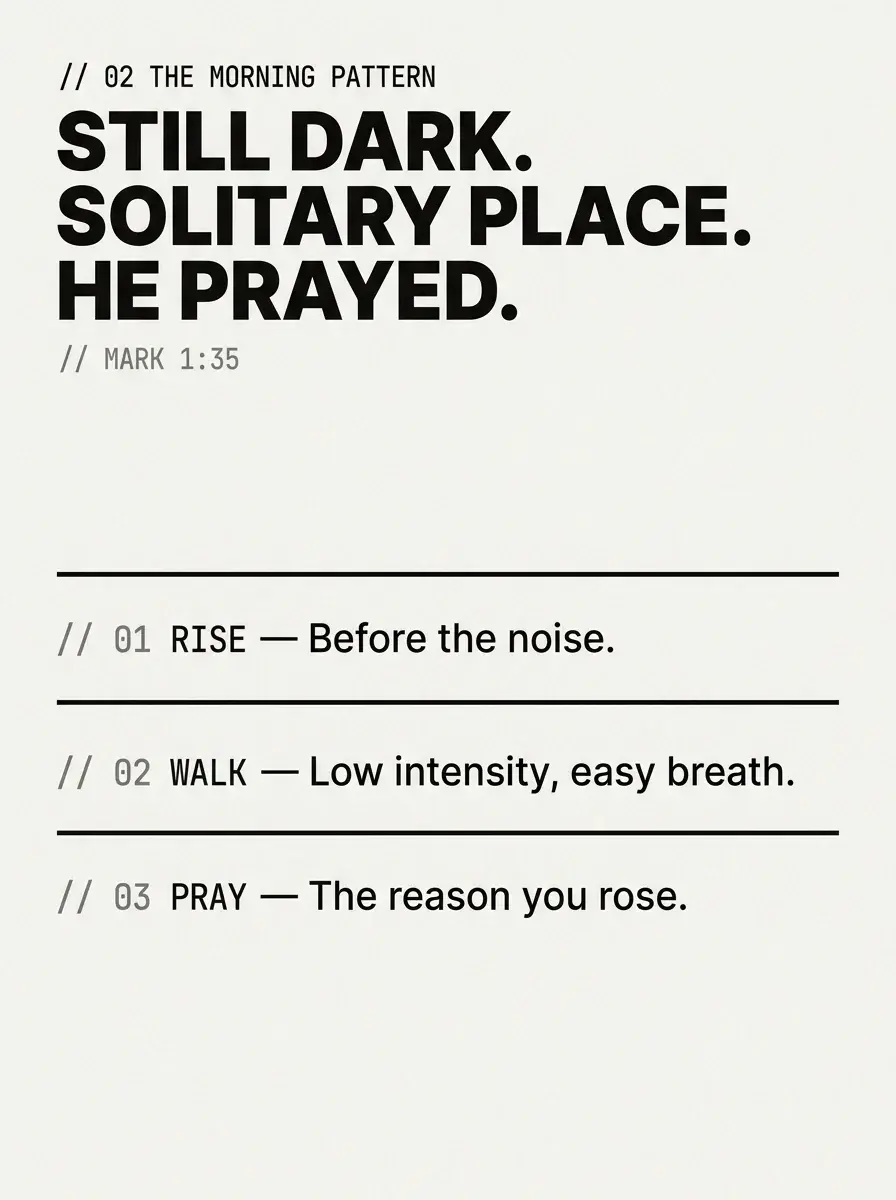
A man walking in the dark with no phone in his hand and no music in his ears has been given forty minutes of the only kind of time that is genuinely scarce. Use it. Pray through the day in front of you. Bring the thing you have been avoiding. Ask for the patience the deficit is going to require. The walk was never the point. The walk is the container.
Paul writes in 1 Corinthians 6:19-20 (NIV), "Do you not know that your bodies are temples of the Holy Spirit, who is in you, whom you have received from God? You are not your own; you were bought at a price. Therefore honor God with your bodies." Honoring God with your body is not a search for the most efficient fat-burning window. It is stewardship, held steady over years, in the ordinary hours nobody applauds.
How to Program It Without Wrecking Your Lifting
Set the deficit first. Cardio is not a substitute for a diet you have not written. Decide the calories and the protein target, then place cardio on top as a tool, not as an apology.
- Keep fasted work easy. A conversational pace, nose breathing, 30-45 minutes. If you cannot hold a conversation, you are working too hard for a fasted session.
- Protect the barbell. Never place fasted cardio directly before a heavy session. Put it on a rest day, or separate it from lifting by at least six hours.
- Hit protein hard once you eat. In a deficit, protein is the fence around your muscle. Break the fast with a real protein-forward meal, not a token one.
- Limit the volume. Three to five easy fasted sessions a week is plenty. More than that and you are asking recovery to pay for a benefit the research does not support.
- Leave the phone at home. The strongest argument for the pre-dawn walk is the silence. Do not fill it.
Coffee before the walk is fine and will not break anything that matters here. If you feel genuinely unwell fasted, eat. Nothing in this practice is worth defending at the cost of the training it exists to support.
Frequently Asked Questions
Does fasted cardio burn more fat?
During the session, yes. Over twenty-four hours, no. The body compensates afterward and total fat loss ends up governed by energy balance, not by whether you had eaten. Matched for calories, fasted and fed training produce effectively the same result.
Will fasted cardio make me lose muscle?
An easy walk will not. Long, hard fasted sessions in a steep deficit with low protein can. Keep the intensity low, keep protein high, and keep it away from your heavy lifting, and the risk is minimal.
Can I drink coffee before fasted cardio?
Yes. Black coffee before an easy morning walk is fine and will not undo anything that matters for fat loss.
Should I do fasted cardio before lifting?
No. Cardio before a heavy session lowers your output on the work that actually drives strength. Separate them by several hours, or move the cardio to a rest day.
So is fasted cardio worth doing at all?
Yes - but not for the reason you were sold. It is worth doing because the pre-dawn hour is quiet, uncontested, and easy to keep. The metabolic edge is a myth. The time is real.
The Bottom Line
Fasted cardio is not a fat-loss accelerator. It never was. The deficit does that work, and no arrangement of your breakfast will do it for you. Anyone who tells you otherwise is selling something, and what they are selling is the hope that discipline can be avoided.
But keep the walk. Keep it because it is easy on your recovery, easy to hold for months, and because it hands you an hour in the dark that nothing else is asking for. Rise before the noise. Move at an easy pace. Pray through the day ahead of you. Then eat, and go put your hands on the bar.
The mechanism was never the point. The obedience was.
// FREQUENTLY ASKED
Questions, answered.
Does fasted cardio burn more fat?
During the session, yes. Over twenty-four hours, no. The body compensates afterward and total fat loss ends up governed by energy balance, not by whether you had eaten. Matched for calories, fasted and fed training produce effectively the same result.
Will fasted cardio make me lose muscle?
An easy walk will not. Long, hard fasted sessions in a steep deficit with low protein can. Keep the intensity low, keep protein high, and keep it away from your heavy lifting, and the risk is minimal.
Can I drink coffee before fasted cardio?
Yes. Black coffee before an easy morning walk is fine and will not undo anything that matters for fat loss.
Should I do fasted cardio before lifting?
No. Cardio before a heavy session lowers your output on the work that actually drives strength. Separate them by several hours, or move the cardio to a rest day.
So is fasted cardio worth doing at all?
Yes - but not for the reason you were sold. It is worth doing because the pre-dawn hour is quiet, uncontested, and easy to keep. The metabolic edge is a myth. The time is real.
// GEAR WORN IN THIS TRAINING
PUBLISHED JULY 14, 2026