// FAITH
Training While Fasting: A Faith-Driven Lifter's Guide to Strength Work During Lent or a Personal Fast
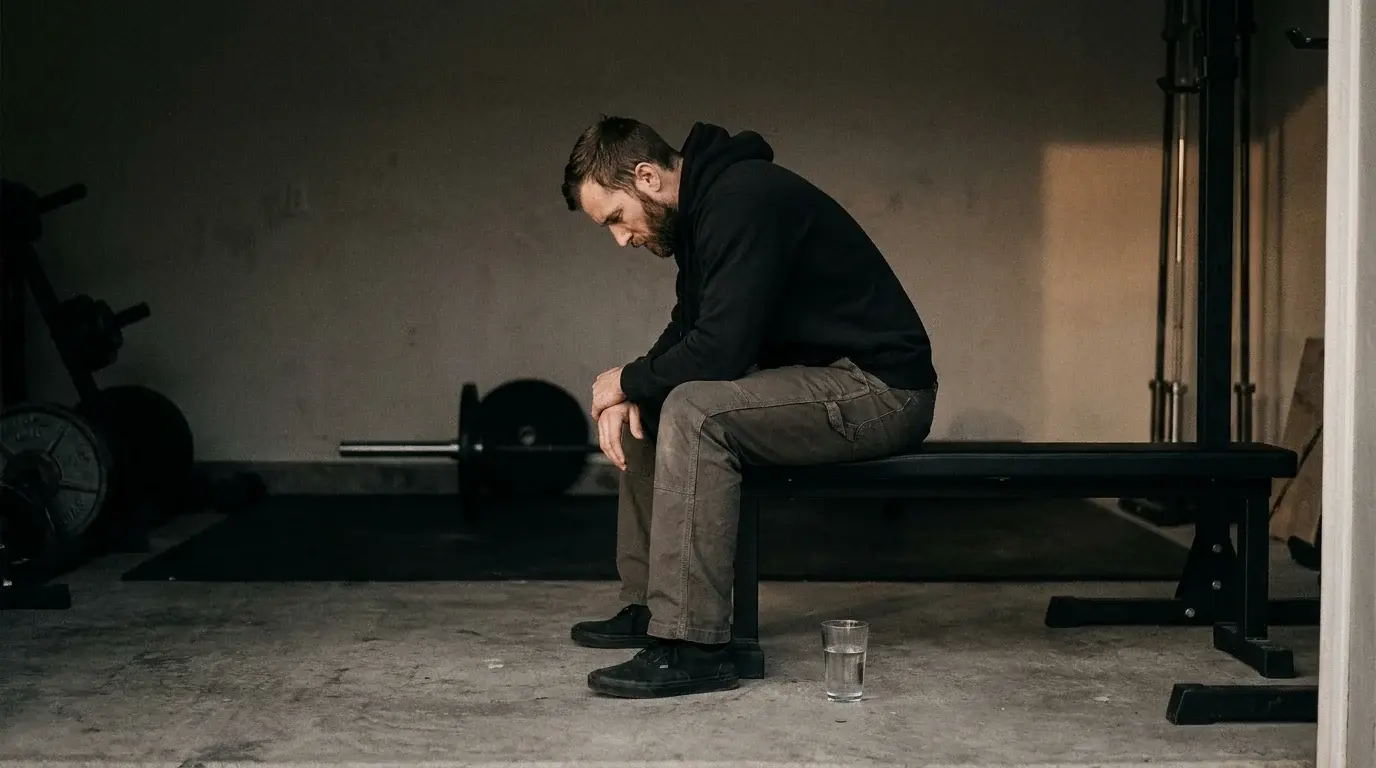
Fasting and lifting are not enemies, but they are not casual roommates either. Here is how to keep training hard through Lent or a personal fast - what to adjust, what to drop, and the discipline frame that makes the empty stomach mean something.
Pete Fluriach, founder of Alpha Omega Strength Team. The first Lent I tried to keep training through, I did almost everything wrong. I treated a fasted body like a fed one, kept my squat volume where it had been, and spent three weeks feeling like I was lifting underwater and wondering why. The fast was not the problem. My refusal to adjust to it was. This guide is what I learned since - how to keep training hard through Lent or a personal fast, what to change, what to drop, and why an empty stomach is one of the most honest places a faith-driven lifter ever trains.
Training while fasting is not a stunt and it is not a shortcut. For most healthy men it is simply training with a fuel constraint, the same way you would train in the heat or on short sleep. The body is built to move on stored fuel. The work is to respect the constraint, lower the demand to match it, and let the fast do its actual job - which is on the will, not the muscle.
What Every Faith-Driven Lifter Needs to Know About Training While Fasting
Training while fasting means doing your strength work during a window when you are not eating - an overnight intermittent fast, a daytime Lenten fast, or a longer personal fast undertaken for prayer. It is not about training harder on no food. It is about training smart enough that the fast and the program can share the same week without wrecking either one.
There are three kinds of fast a lifter usually trains through, and they ask for different things:
- Intermittent fast - a daily eating window, often 16 hours off and 8 hours on; the easiest to train around
- Daytime or Lenten fast - no food from sunup to sundown, or one simple meal a day; common during Lent and Ramadan-style disciplines
- Multi-day fast - 24 hours or more, usually for focused prayer; the one where heavy lifting comes off the table
Before you train through any of them, hold the four variables that decide whether a fasted session goes well or badly:
- Timing - how close the session sits to your eating window decides how much you can ask of it
- Volume - total sets and reps, the first thing to cut when the tank is low
- Hydration - water and electrolytes, which matter more than food on a short fast
- Honesty - the willingness to stop at the line instead of grinding past it to prove something
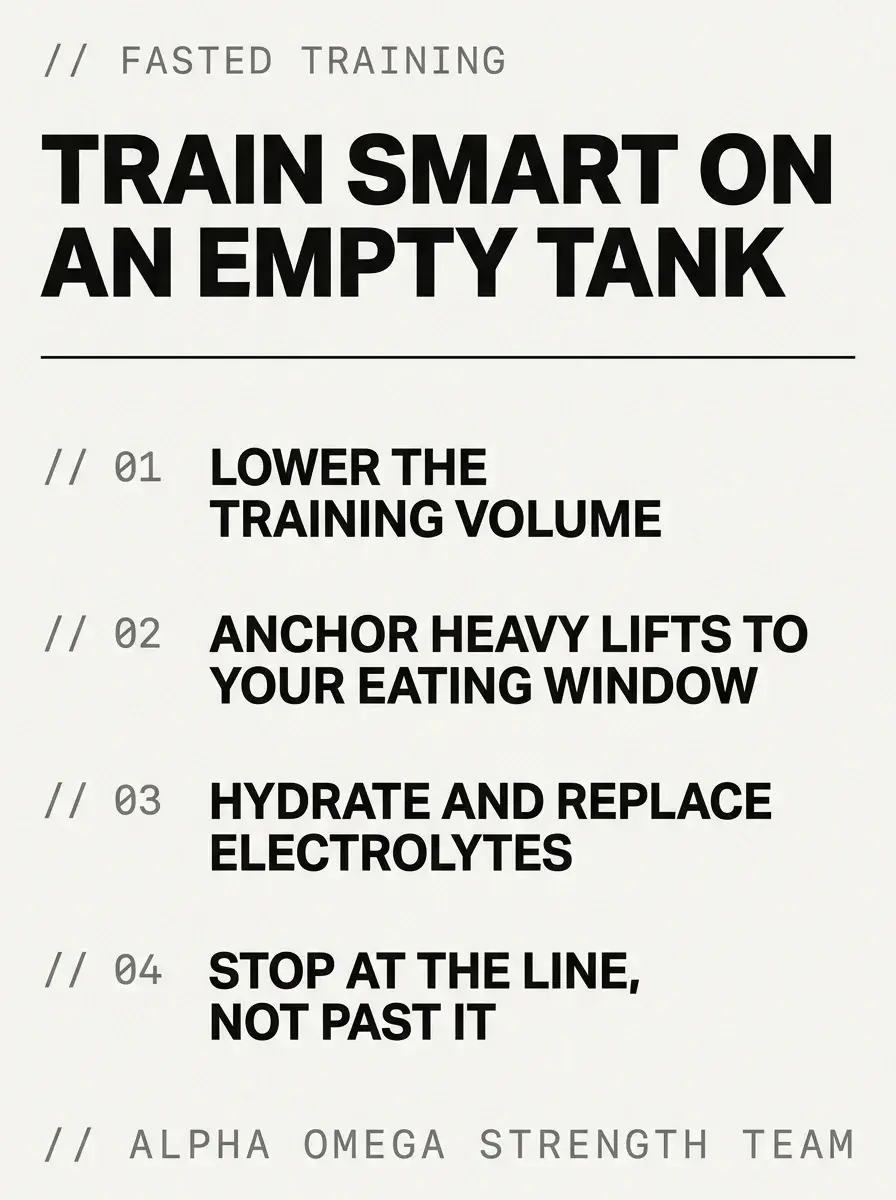
Here is the whole approach on one card - the four adjustments that keep a fasted session productive:
Why Fasting and Lifting Are Not Actually Enemies
The fear most lifters carry into a fast is that the work they have built will evaporate the moment they skip a few meals. It will not. A trained body stores enough glycogen in the muscles and liver to power a normal strength session, and a fed-up fat store to back it. Short fasts - the overnight and daytime kind - barely touch your ability to lift. What they touch is your perception. You feel emptier, your warm-up feels heavier, and your mind reads that as weakness long before your muscles do.
Where fasting genuinely changes the math is at the edges: long sessions, very high volume, and the back half of a multi-day fast. Strength on a single heavy set holds up well without food. Work capacity - your ability to keep grinding through set after set - is the quality that fades first. That single fact decides almost every adjustment in this guide. You keep the heavy, low-volume work and you trim the long, high-volume work. The fast does not take your strength. It shortens your stamina, so you train accordingly.
Fasting as Discipline of the Will, Not a Performance Hack
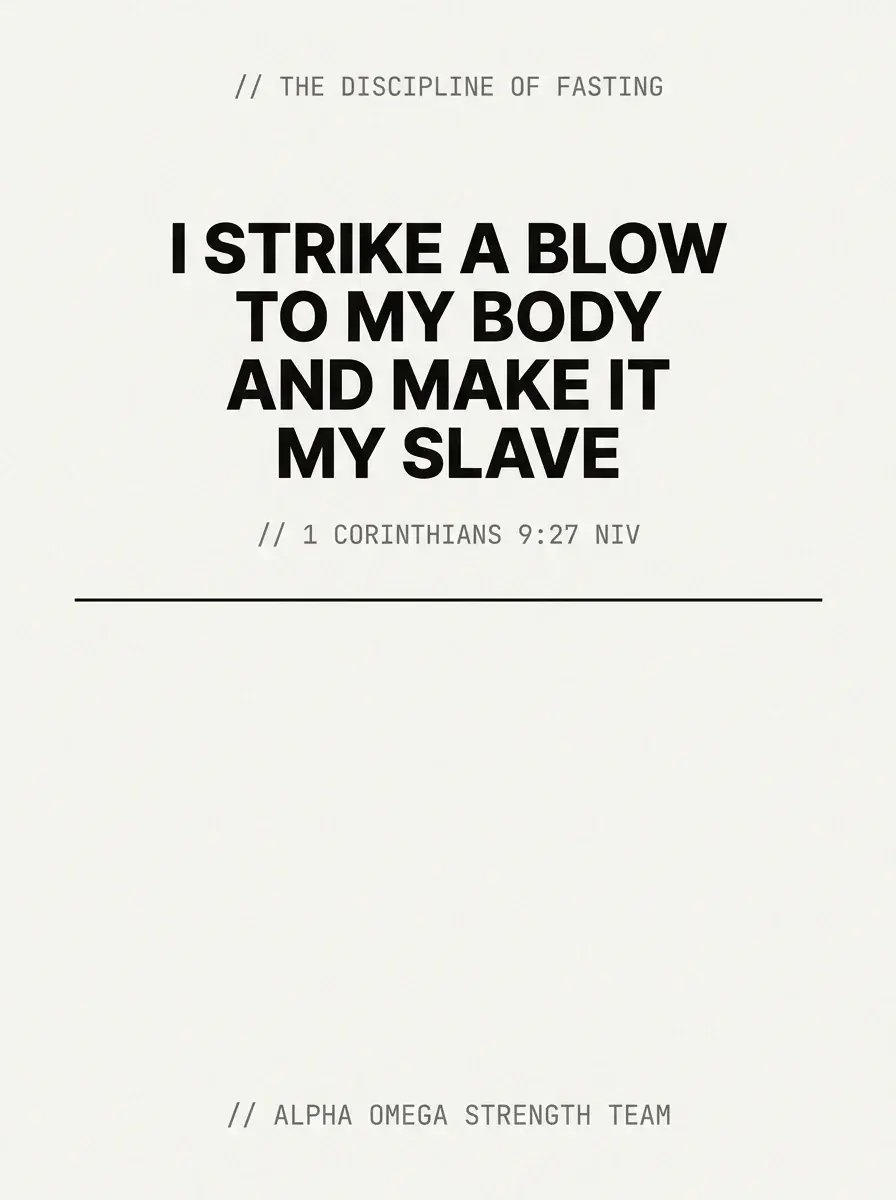
Most of the internet treats fasting as a fat-loss tool with a spiritual coat of paint. The faith-driven frame flips that. Fasting is first a discipline of the will - the practice of telling the body no so that the soul learns it is not the one in charge. Paul puts it bluntly: 'I strike a blow to my body and make it my slave' (1 Corinthians 9:27 NIV). That is the same muscle a serious lifter already trains every time he shows up to a hard session he did not feel like doing. Fasting and lifting train the same internal man.
- Function - trains the appetite to obey, which is the same will that drives a hard training program
- Length - chosen and bounded; a fast has a start and an end, not an open-ended starvation
- Content - prayer first, training second; the meal you skip is meant to point somewhere, not just to empty a plate
- Result - a man less ruled by his cravings, in the kitchen and under the bar alike
Scripture keeps the body in its proper place - valuable, but not ultimate. 'For physical training is of some value, but godliness has value for all things, holding promise for both the present life and the life to come' (1 Timothy 4:8 NIV). When Jesus answered the tempter at the end of His own forty-day fast, He said, 'Man shall not live on bread alone, but on every word that comes from the mouth of God' (Matthew 4:4 NIV). Training while fasting sits inside that order. The lifting is good. The fast reminds you it is not the thing that keeps you alive.
How to Match Your Training to the Fast You Are Keeping
Most men who try to train through a fast quit inside the first week, and the reason is almost always the same: they ran their normal program into a fasted body and felt it break. The fix is to match the session to the fast. Use the table below to see where each common fasting window leaves your training, whether to lift fasted or fed, and the single adjustment that matters most.
| Fast Type | Typical Window | Train Fasted or Fed? | Main Adjustment |
|---|---|---|---|
| Intermittent (16:8) | 16 hr off, 8 hr on | Either; fed is easier | Put heavy lifts in the eating window |
| One meal a day | About 23 hr | Fasted; eat right after | Cut volume; keep the main lift |
| Daytime / Lenten | Sunup to sundown | Train near the break | Move the session toward evening |
| Multi-day (24 hr plus) | One to three days | Do not lift heavy | Walking and mobility only |
| Short pre-fast (8-12 hr) | Overnight into morning | Fasted, moderate | Hydrate; hold intensity steady |
The pattern across every row is the same: the longer and deeper the fast, the lower the demand. A 16:8 schedule barely asks for a change. A three-day prayer fast asks you to put the barbell down and walk instead. Everything in between is a dial, not a switch.
Intermittent Fast - the Easy Case
- Best for: lifters who want fat-loss structure without losing strength work
- Move: schedule heavy sessions to end as your eating window opens, so the post-set meal lands fast
- Payoff: full strength retention with almost no change to the program itself
Daytime or Lenten Fast - the Common Case
- Best for: men keeping a Lenten discipline or a sunup-to-sundown fast for a season
- Move: train in the evening when you can, within an hour or two of breaking the fast; trim one or two working sets per lift
- Payoff: the program survives the season intact instead of being abandoned until Easter
Multi-Day Fast - the Hands-Off Case
- Best for: focused seasons of prayer where food comes off the table for a day or more
- Move: drop heavy lifting entirely; walk, stretch, and do light mobility instead, then re-load slowly when you eat again
- Payoff: you protect both the fast and the body instead of forcing a session that serves neither
Expert tip: if you are new to fasted training, do not test it on your heaviest day. Run your first fasted sessions on a lighter lower-volume day for two weeks, learn how your body actually responds, and only then keep a heavy session inside the fast. A routine that survives is worth more than a heroic week you never repeat.
Training While Fasting at Every Stage and Every Session
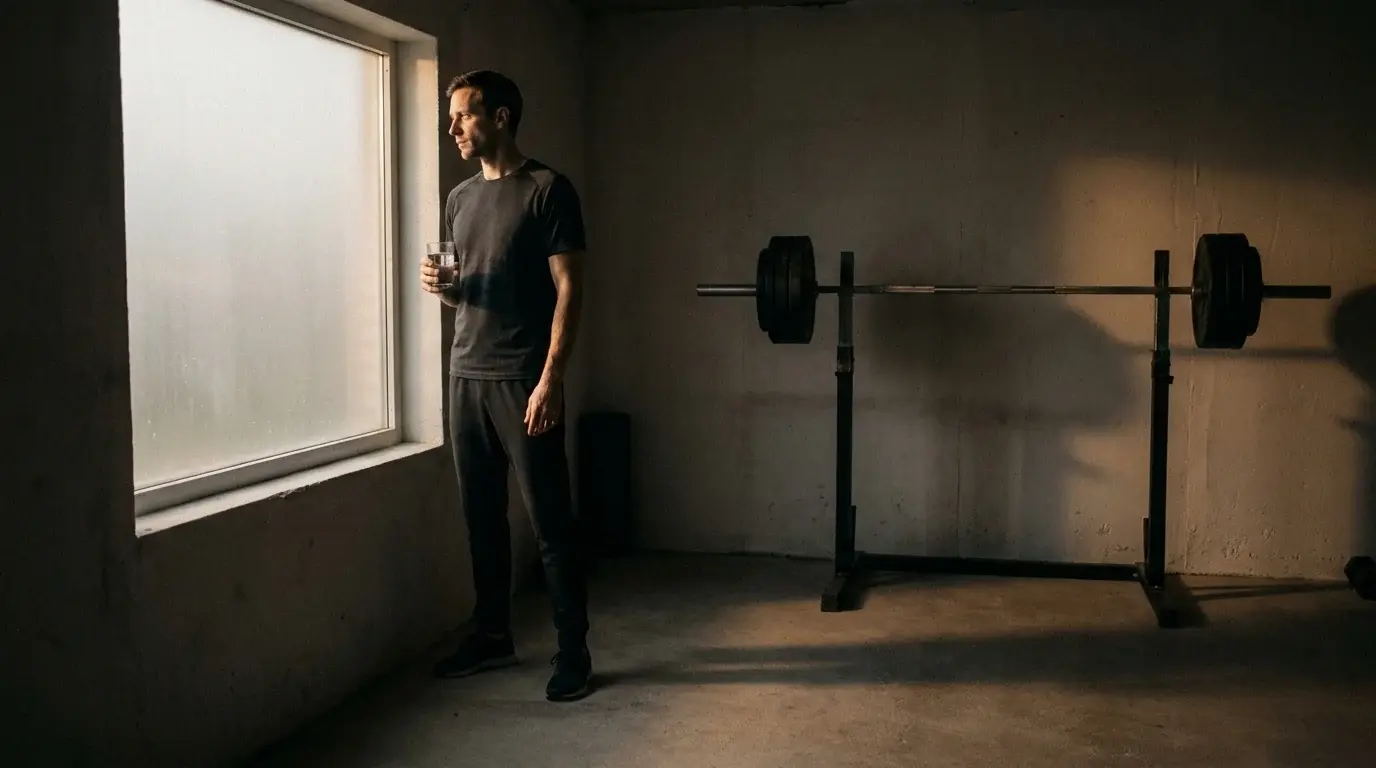
The same fast reads differently depending on how long you have trained. A newer lifter has less to protect and more to learn; a seasoned one has the autonomy to flex. Below is how fasted training shifts across a training life:
- The new lifter (0-12 months): keep it simple - eat before you train and fast the rest of the day. The early gains are too valuable to risk learning fasted lifting at the same time as the lifts themselves.
- The intermediate lifter (1-4 years): you have the base to experiment. Train fasted on lighter days, keep heavy days near your eating window, and start paying attention to how electrolytes change the session.
- The advanced lifter (5+ years): you already know your body. Use a fast as a planned lower-stress block - hold the heavy singles, drop the accessory volume, and let the season serve recovery rather than fighting it.
Heavy Day vs. Volume Day vs. Multi-Day Fast
The same week, recalibrated by what the day and the fast ask of you:
- Heavy day - keep it near your eating window; hold the top sets, cut a back-off set or two, and do not chase a record on empty
- Volume day - this is the one that suffers most fasted; lower the total sets, lengthen rest, and accept a slightly shorter session
- Multi-day fast - no barbell; a brisk walk and ten minutes of mobility keep the body moving without draining the fast
Hydration and Electrolytes - the Real Lever
Most of what feels like fasted weakness is not low fuel - it is low sodium and low water. A fast drops your insulin, your kidneys shed salt and water, and the result is the lightheaded, flat feeling lifters blame on hunger. The fix is sodium, potassium, and magnesium in plain water, taken before you train. Within the rules of your particular fast, electrolytes will do more for the session than any pre-workout ever could. For the broader stewardship case behind a real day off, see the Sabbath Rest for Lifters guide.
Why Training a Hungry Body Is a Faith-Driven Discipline
There is a particular clarity that shows up when you train a body that wants to be fed and is not. The ego that usually rides on the numbers goes quiet, because you already know today is not the day for a record. What is left is the work itself, and the honest question of who you train for when there is nothing in it for your appetite. That is the exact discipline a faith-driven lifter is built for - effort offered upward, not effort spent on the mirror. The fast strips the session down to its real motive.
- Quiet, unflinching identity - Alpha and Omega, the beginning and the end (Revelation 22:13) - a man whose strength is not the thing he ultimately lives on.
Getting the Most Out of Training While Fasting
- Lead with prayer, not protein - a fast undertaken for the gym is just a diet; let the discipline point somewhere before it points at your physique
- Salt your water before you lift; most fasted weakness is an electrolyte problem wearing a hunger costume
- Break the fast with protein and whole food, not a sugar spike; the meal after a fasted session does most of the rebuilding
- Keep a record of how each fast felt; over a season you will learn exactly which sessions belong inside the fast and which do not
Frequently Asked Questions About Training While Fasting
Will I lose muscle if I train while fasting?
Not from short fasts. As long as you keep training and eat enough protein across your eating window, an overnight or daytime fast will not cost you muscle. The body protects trained muscle well in the short term. Muscle loss becomes a real risk only with long fasts, very low total protein, or stopping training altogether - so keep lifting, and keep your protein high when you do eat.
Should I train before or after I break the fast?
For heavy work, train so the session ends close to your meal - either fed, or fasted with food waiting. For lighter work, fasted is fine and many lifters prefer the clear-headed feel of it. The one combination to avoid is a long, heavy, high-volume session deep in a fast with no meal anywhere near it. That is where fasted training stops being productive.
What should I take during a fasted workout?
It depends on the rules of your fast, but within them:
- Water - the first and most overlooked tool; dehydration mimics weakness
- Electrolytes - sodium, potassium, magnesium; the single biggest lever for how a fasted session feels
- Black coffee - if your fast allows it, a useful pre-workout that keeps you in the fasted state
Is it safe to train while fasting?
For most healthy adults, short fasted training is safe and well tolerated. It is not for everyone. If you are diabetic, on blood-sugar or blood-pressure medication, pregnant, underweight, or have any history of disordered eating, talk to a physician before you combine fasting and hard training - and if a fast ever leaves you dizzy, shaking, or genuinely lightheaded, stop and eat. Pushing through those signals is not discipline; it is poor stewardship of a body that was never fully your own to begin with.
Conclusion
Fasting does not have to cost you the gym, and the gym does not have to break your fast. Match the session to the window, lead with hydration, keep the heavy work near your meals, and put the barbell down for the long fasts. Do that and you can train hard through Lent or any personal fast without losing the ground you have built. More than that, you train the one muscle a program cannot reach on its own - the will that learns to say no to the body so it can say yes to something higher.
Pick your fast. Adjust the work. Show up anyway. And when the season of fasting ends, rebuild with intention - to dial in the protein that does the real repair, read the faith-driven guide to protein targets.
// FREQUENTLY ASKED
Questions, answered.
Will I lose muscle if I train while fasting?
Not from short fasts. As long as you keep training and eat enough protein across your eating window, an overnight or daytime fast will not cost you muscle. The body protects trained muscle well in the short term. Muscle loss becomes a real risk only with long fasts, very low total protein, or stopping training altogether - so keep lifting, and keep your protein high when you do eat.
Should I train before or after I break the fast?
For heavy work, train so the session ends close to your meal - either fed, or fasted with food waiting. For lighter work, fasted is fine and many lifters prefer the clear-headed feel of it. The one combination to avoid is a long, heavy, high-volume session deep in a fast with no meal anywhere near it. That is where fasted training stops being productive.
What should I take during a fasted workout?
It depends on the rules of your fast, but within them: Water - the first and most overlooked tool; dehydration mimics weakness Electrolytes - sodium, potassium, magnesium; the single biggest lever for how a fasted session feels Black coffee - if your fast allows it, a useful pre-workout that keeps you in the fasted state
Is it safe to train while fasting?
For most healthy adults, short fasted training is safe and well tolerated. It is not for everyone. If you are diabetic, on blood-sugar or blood-pressure medication, pregnant, underweight, or have any history of disordered eating, talk to a physician before you combine fasting and hard training - and if a fast ever leaves you dizzy, shaking, or genuinely lightheaded, stop and eat. Pushing through those signals is not discipline; it is poor stewardship of a body that was never fully your own to begin with.
// GEAR WORN IN THIS TRAINING


PUBLISHED JUNE 25, 2026