// ENDURANCE
The Unbreakable Athlete's Guide to Finishing Strong: Faith, Endurance, and the Long Game

Motivation fades. The novelty ends. What keeps a disciplined athlete going for years - not weeks - is something deeper. This is the guide for the long middle of the race.
Pete Fluriach, founder of Alpha Omega Strength Team. This is the post that ties everything together - what we mean by “Built for the Beginning. Proven at the Finish.” and how to actually live it across decades, not weeks. If you've ever wondered how to keep training when the motivation runs dry, this guide is for you.
At some point in every serious athlete's life, the initial spark goes quiet. Not all at once - it fades gradually, like a fire that isn't tended. The first year of training carries its own momentum: everything is new, gains come fast, and the identity of being “someone who trains” is still fresh. Then year two arrives. The beginner gains are gone. Progress slows to a fraction of what it was. Life gets complicated. And the question that motivated athletes rarely talk about openly surfaces: how do I keep going when I don't feel like it anymore?
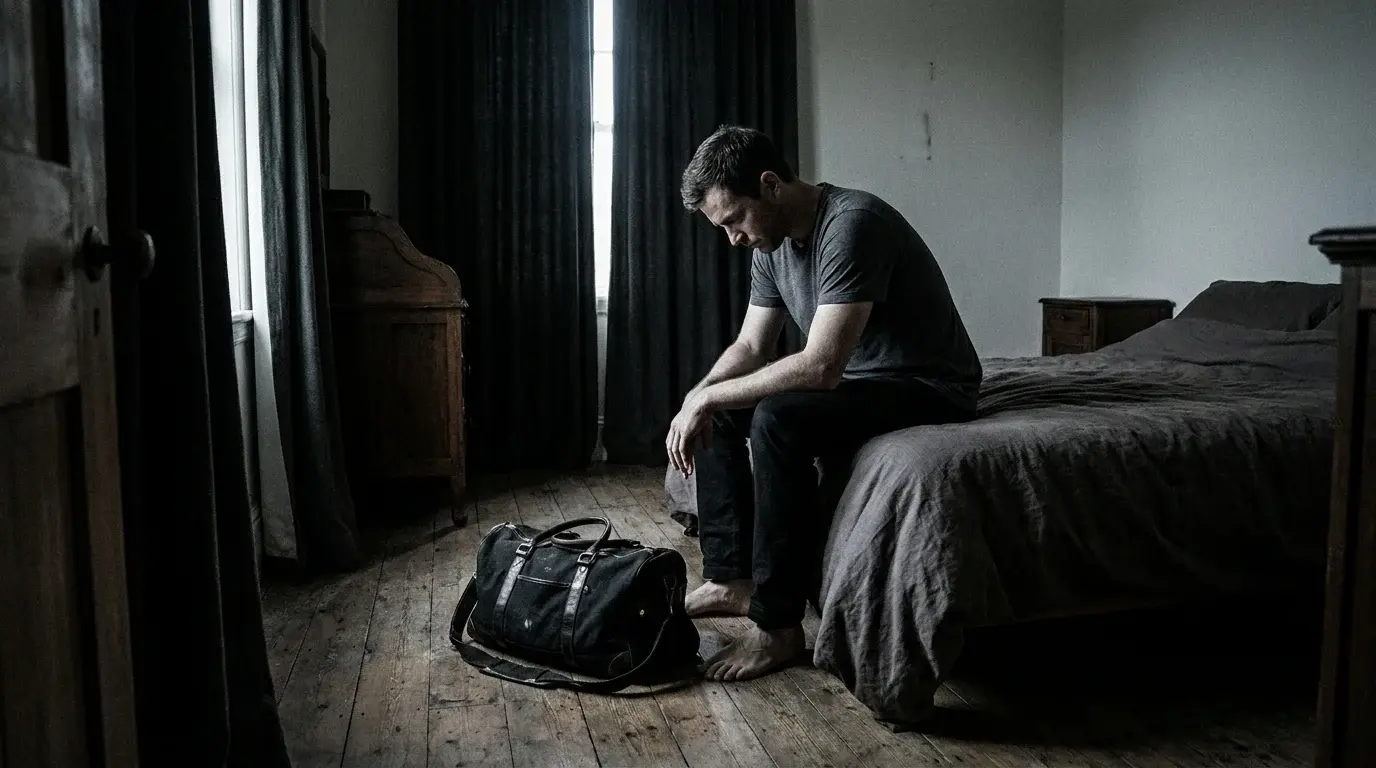
This post is for athletes two to ten years in. Men and women who have built something real in the gym and are asking whether they can sustain it for life - not for a season, not until the next competition, but for the long arc. It's also for the athlete who has come back from a setback - injury, illness, a brutal life season - and is trying to find their footing again without losing what they built.
The answer, in our experience, is not another training program. It's not a motivational podcast or a new supplement stack. What separates athletes who finish from athletes who drift away is a framework - one that holds when motivation doesn't. That framework, for us, is grounded in scripture. Not because it's the fashionable angle, but because it's the only one we've found that actually holds over a ten-year horizon.
What the Middle of the Race Actually Looks Like
Most training content is written for beginners or competitors. Beginners get step-by-step guides. Competitors get programming and peaking strategies. The athlete in the long middle - someone who trains seriously but isn't chasing a stage or a podium - gets very little. That's a problem, because the middle is where character is formed and where most people quit.
The writer of Hebrews understood this. Hebrews 12:1 doesn't call us to sprint. It calls us to run with endurance - the Greek word is hypomonē, which carries the idea of patient continuation under pressure. It's not passive waiting. It's active, sustained forward movement when the conditions are hard and the finish line is not yet visible. That word choice wasn't accidental.
“Therefore, since we are surrounded by such a great cloud of witnesses, let us throw off everything that hinders and the sin that so easily entangles. And let us run with perseverance the race marked out for us, fixing our eyes on Jesus, the pioneer and perfecter of faith.” - Hebrews 12:1-2
Notice the instruction: throw off what hinders. That's not just sin in the conventional sense. It's also the weight of comparison, the burden of perfectionism, the drag of inconsistent expectations. In training terms: the constant program-hopping, the scale obsession, the all-or-nothing thinking that makes a missed session feel like a failed identity.
The Unglamorous Season - Why Nobody Talks About Year Three
Year one in the gym is almost universally positive. Strength increases weekly. Body composition changes are visible. The nervous system is learning fast and every workout produces measurable adaptation. Year three looks nothing like that. The gains are slower, more technical, harder to measure. Progress happens across months, not sessions. The athlete who navigates this season well does so by changing their relationship with measurement - moving from outcome-based feedback to process-based identity.
Paul's words in Philippians 3:14 describe something similar: pressing on toward the goal without fixating on what's behind or what's not yet achieved. The discipline is directional, not obsessive. The press continues regardless of whether the scoreboard is updating in real time.
“I press on toward the goal to win the prize for which God has called me heavenward in Christ Jesus.” - Philippians 3:14
The Physical Reality of Long-Term Training
Experienced athletes face challenges that don't respond to the same tools that worked early on. Motivation-as-fuel runs out. Novelty-driven adaptation slows. The body becomes more efficient, which means harder work is required to produce the same stimulus. Recovery demands increase with age. None of this is a problem to be solved - it's the nature of the long game. The athlete who understands this stops fighting the plateau and starts working with it.
What those athletes share across decades of training:
Systems over willpower. Training is scheduled like a non-negotiable appointment, not negotiated with each morning based on mood.
Identity-anchored motivation. “I am someone who trains” - not “I am trying to get fit.” The behavior follows the identity, not the other way around.
Recovery as part of the framework. Not a reward for hard work - a structural requirement for continued adaptation. (See: rest is not weakness for the full treatment of this.)
Flexible consistency. They adapt the training when life demands it but they don't stop training. A hard week means a lighter week, not a month off. This connects directly to how we think about rest and recovery as tools of endurance, not signs of weakness.

Five Endurance Frameworks - Which One Actually Holds
Not all motivation is built the same. The framework you use to drive your training determines how durable it is when conditions get difficult. Some frameworks are highly effective short-term and collapse under pressure. Others are slower to ignite but nearly impossible to extinguish. Understanding the differences helps you choose deliberately - or audit what you're currently running on.
Endurance Frameworks Compared
Framework | Drives behavior via | Sustainable for | Faith integration
Goal-based training | Outcome targets (weight, lifts, aesthetics) | 3-12 months; collapses when the goal is reached or missed | Low - goals are self-defined, easily become idols
Identity-based training | Self-concept (“I am someone who trains”) | 1-5 years; durable until identity is challenged by life change or comparison | Moderate - pairs well with faith but not rooted in it
Season-based training | Periodized phases aligned with life rhythms | 1-3 years; highly practical, reduces burnout | High - mirrors seasons of growth and rest in scripture
Legacy-based training | Long-view purpose (modeling for family, leading others) | 5-20 years; grows stronger with age and responsibility | High - stewardship and generational thinking are deeply scriptural
Faith-anchored training | Obedience + stewardship of the body as temple | Lifelong; the only framework not dependent on outcomes | Highest - behavior is rooted in calling, not performance
The practical observation: most experienced athletes are running on a hybrid. Goal-based thinking gets them started, identity-based thinking sustains them through the middle years, and the athletes who make it to decade two tend to have shifted - consciously or not - toward legacy and faith-anchored frameworks. The shift is not automatic. It requires a deliberate decision about why you're doing this.
Why People Quit vs. What Finishing Athletes Do Differently
Quitting rarely happens in a single dramatic moment. It accumulates through a series of small compromises, each one responding to a predictable stall point. Knowing what those stall points are - and having a prepared response - is the difference between athletes who finish and athletes who drift.
Plateau (no visible gains). Common response: switch programs, chase novelty, or quietly give up. Finishing response: audit recovery and progressive overload first, then stay the course. Hebrews 12:11 addresses this directly: “No discipline seems pleasant at the time, but painful. Later on, however, it produces a harvest of righteousness and peace.” The harvest is delayed. That's the design.
Motivation drops. Common response: wait to feel like it. Finishing response: build systems that remove the decision from daily negotiation. James 1:12 calls the one who perseveres under trial “blessed” - not because they felt motivated, but because they kept going regardless. Feeling motivated and being disciplined are different things.
Life gets busy. Common response: training is the first thing cut. Finishing response: protect a minimum viable training session - 30 minutes is enough to maintain. The question is not whether to train but what the minimum viable version looks like in a constrained week.
Comparison. Common response: despair or overtraining trying to close a gap. Finishing response: refocus on the race marked out for you specifically (Hebrews 12:1). The race marked out for you is not someone else's race. Another person's results have no bearing on your calling.
Injury or setback. Common response: extended break with no structured return. Finishing response: structured deload, adapted training, and patience. James 1:2-4 frames trials as productive: “the testing of your faith produces steadfastness.” The setback is not a detour from the story - it's part of it.
Building the Framework That Holds for Decades
Long-term training is not a more intense version of short-term training. It's a structurally different endeavor. The athlete who trains for life manages recovery differently, programs differently, measures differently, and relates to the gym differently. Below is a practical framework - not a program, but a set of principles - for building the infrastructure of lifelong training.

Audit Your Training - Four Questions for the Long-Game Athlete
If you've been training for two or more years and feel like you're losing traction, start here before changing anything else:
1. What is actually driving you right now? Name the framework honestly. If it's goal-based and the goal is gone, that's the root of the drift. The fix is not a new goal - it's a deeper layer.
2. Is your recovery proportional to your effort? Most training stalls in experienced athletes are recovery failures disguised as programming failures. Before redesigning your split, look at sleep, nutrition, and deload frequency over the last 12 weeks.
3. Is your minimum viable session defined? For weeks when life compresses your schedule, you need a predefined 30-minute version of your training that you can run without deliberation. Athletes who define this in advance train consistently through hard seasons. Athletes who haven't defined it stop training when the full version is impossible.
4. Are you measuring what actually matters in year five? Year-one metrics (weight on the scale, before-and-after photos) become poor proxies for year-five progress. Long-game metrics include: consistent training weeks per year, energy and sleep quality, injury-free months, and strength-to-bodyweight ratios across time. The measurement system should evolve with the athlete.
The Role of Community in Endurance
Hebrews 12:1 opens with a specific image: a great cloud of witnesses. The writer is not describing solitary endurance. The runner is surrounded. The long game in training is not meant to be run alone. Accountability partners, training partners, and communities built around shared values are not optional accessories - they're structural components of long-term consistency.
This isn't about having a training partner who pushes you to max intensity. It's about being known. When someone who shares your values asks how training is going, the accountability is quiet and durable in a way that a paid coach's weekly check-in isn't. Find people whose identity in the gym is grounded in the same things yours is. The standard rises by proximity.
Alpha to Omega - The Theology of Finishing
This is the post that names the architecture of everything we've built at AO. The name Alpha Omega Strength Team is not branding - it's a declaration drawn from the final chapter of scripture, where Christ identifies himself as the Alpha and the Omega, the First and the Last, the Beginning and the End (Revelation 22:13). We build from that.
“I am the Alpha and the Omega, the First and the Last, the Beginning and the End.” - Revelation 22:13
The theological weight of this claim is directly applicable to the endurance question. If the Alpha and the Omega holds both the beginning and the end, then the athlete who trains in faithfulness to that God is not training toward an uncertain outcome. The end is held. The calling is to be faithful in the middle - in the unglamorous second and third years, in the seasons when progress is invisible, in the moments when comparison or injury make the whole endeavor feel pointless.
Paul writes in 2 Timothy 4:7 from the end of his life and ministry. Not from the beginning, not from a peak moment of success - from the very end, looking back:
“I have fought the good fight, I have finished the race, I have kept the faith.” - 2 Timothy 4:7
Three verbs. All past tense. All complete. This is not aspirational - it's declarative. Paul is not describing what he hoped to do; he's describing what he did. The race is finished. The faith is kept. This is the standard: not to have been impressive at any single point, but to still be standing at the end.
James 1:12 anchors the promise that makes this endurance possible:
“Blessed is the one who perseveres under trial because, having stood the test, that person will receive the crown of life that the Lord has promised to those who love him.” - James 1:12
The blessedness is not for the one who started well. It's for the one who perseveres under trial. The trial is assumed. The perseverance is the variable. And the promise is not that the trial ends before the blessing - it's that the blessing comes to the one who held on through it.
What Unbreakable Actually Means
The word Unbreakable in AO's framework does not mean immune to difficulty, injury, or setback. It means that the setback does not end the story. The structure holds at the root level. An unbreakable athlete gets injured and returns. Gets busy and adapts. Loses motivation and keeps showing up anyway - because the behavior is no longer conditional on the feeling.
That's the Omega standard: quiet conviction over loud bravado. Not the loudest in the room at any given moment, but the one still training in year ten when half the people who started with them have drifted away. The AO About page lays out this theology directly - if you want the full context of how this shapes everything we build, it's worth reading.

Frequently Asked Questions
How do I stay consistent in my training when motivation runs out?
Stop relying on motivation as the input and build systems instead. Motivation is a starting condition, not a sustaining one. Define when you train, how long you train, and what the minimum viable session looks like - then follow the system regardless of how you feel that morning. The decision to train should already be made before the day begins. Experienced athletes report that the hardest part of any session is the first five minutes. Once the work starts, the feeling usually follows.
What does it mean to “finish strong” in a fitness context - is there an actual endpoint?
In training, finishing strong is less about a single endpoint and more about the quality of your consistency across the whole arc of your athletic life. The person who is still training with discipline, care, and purpose at age 60 has finished strong in a way that a person who peaked at 28 and stopped did not. Finishing strong means the standard you set early in your training life is the same standard you're still honoring twenty years later. The form of the training changes - intensity, volume, modality - but the underlying commitment does not.
How do I handle a setback - injury, illness, or a hard life season - without losing everything I've built?
The first task after a setback is perspective: fitness built over years is not lost in weeks. Strength and conditioning have significant retention, especially in experienced athletes who have been training consistently. The return to training after a genuine forced break is almost always faster than the original build - the neuromuscular patterns and structural adaptations are still there. Practically: define a structured re-entry that starts well below your pre-setback capacity, builds progressively, and prioritizes staying injury-free over getting back to previous numbers quickly. The long-game mindset treats the setback as a chapter, not an ending.
Conclusion: Built for the Beginning. Proven at the Finish.
Anyone can begin. The gym in January is full of evidence. What the culture celebrates - the transformation photo, the first pull-up, the thirty-day challenge - is all built around the beginning. We don't have language for the person who is still showing up in year eight, not because the results are dramatic but because the work has become part of who they are. That person is the Omega athlete. That's the standard this brand was built around.
The framework is simple, even if the execution is hard: train from your identity, not your motivation. Build systems that remove daily negotiation. Protect recovery as a structural requirement. Define the minimum viable version of your training for compressed weeks. Find people who share your standard and run alongside them. And root the whole thing in something deeper than performance - in obedience to the call to steward well what you've been given, from the beginning to the finish.
If you want to understand the theology behind the name - the Alpha and Omega framing that drives everything we build - the AO About page lays it out plainly. This is the post that earns that page. Go read it knowing what finishing strong actually requires - and then go train.
// FREQUENTLY ASKED
Questions, answered.
How do I stay consistent in my training when motivation runs out?
Stop relying on motivation as the input and build systems instead. Motivation is a starting condition, not a sustaining one. Define when you train, how long you train, and what the minimum viable session looks like - then follow the system regardless of how you feel that morning. The decision to train should already be made before the day begins. Experienced athletes report that the hardest part of any session is the first five minutes. Once the work starts, the feeling usually follows.
What does it mean to “finish strong” in a fitness context - is there an actual endpoint?
In training, finishing strong is less about a single endpoint and more about the quality of your consistency across the whole arc of your athletic life. The person who is still training with discipline, care, and purpose at age 60 has finished strong in a way that a person who peaked at 28 and stopped did not. Finishing strong means the standard you set early in your training life is the same standard you're still honoring twenty years later. The form of the training changes - intensity, volume, modality - but the underlying commitment does not.
How do I handle a setback - injury, illness, or a hard life season - without losing everything I've built?
The first task after a setback is perspective: fitness built over years is not lost in weeks. Strength and conditioning have significant retention, especially in experienced athletes who have been training consistently. The return to training after a genuine forced break is almost always faster than the original build - the neuromuscular patterns and structural adaptations are still there. Practically: define a structured re-entry that starts well below your pre-setback capacity, builds progressively, and prioritizes staying injury-free over getting back to previous numbers quickly. The long-game mindset treats the setback as a chapter, not an ending.
// GEAR WORN IN THIS TRAINING


PUBLISHED JUNE 24, 2026