// TRAINING
The Christian Woman's Guide to Strength Training: Building a Faithful, Strong Foundation
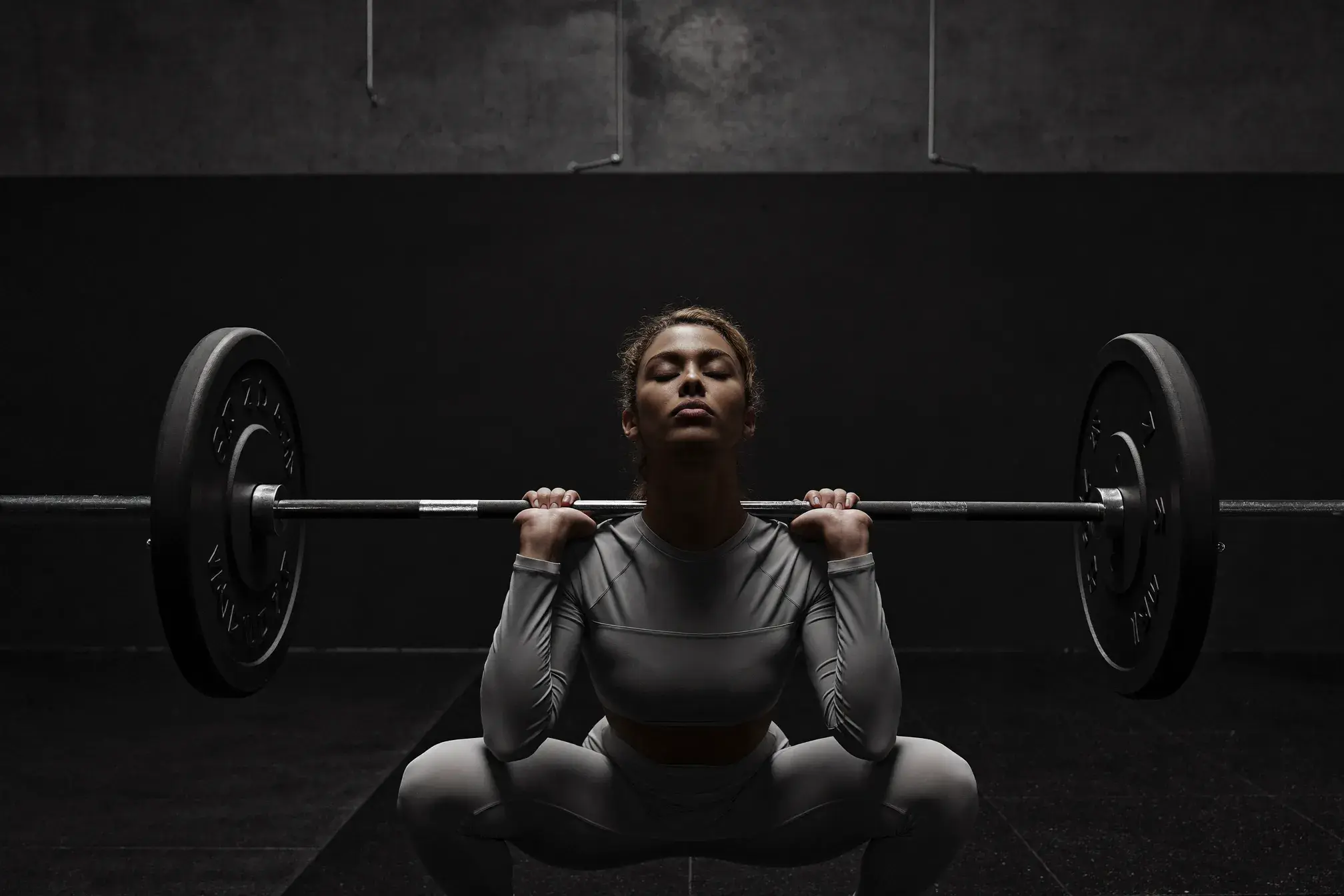
Strength is a biblical virtue - and Proverbs 31:17 makes that clear. This guide covers programming, hormones, identity, and the faith framework Christian women need to train with purpose.
I'm Pete Fluriach, founder of Alpha Omega Strength Team, and I'll be direct: I'm a man writing a guide aimed at women. I built this alongside women on our coaching team and in our community who live this out daily. Where I name scripture or programming principles, I'm drawing from those conversations. Where something feels missing or off as you read, trust that instinct and find a female coach or trainer who can fill the gap I can't.
Here is what the current faith-fitness landscape looks like for women: Revelation Wellness. Shaped by Faith. Worship'n'Workout. Those ministries have done meaningful work and are real entry points for thousands of women - cardio, yoga, and light resistance are legitimate ways to start moving. What is still missing in most of them is a clear call to load a barbell and build heavy strength. That gap is not an accident - it reflects a cultural assumption that has bled into Christian fitness spaces, the idea that women should move their bodies softly, carefully, at moderate intensity, and always toward leanness rather than strength.
Scripture does not agree with that assumption.
What Strength Has to Do With Faith
She sets about her work vigorously; her arms are strong for her tasks. - Proverbs 31:17
That verse is not a metaphor. The Hebrew word used for "vigorous" here is chayil - translated elsewhere as strength, valor, and military capability. The Proverbs 31 woman is not described as thin or gentle. She is described as strong in her arms and vigorous in her effort. Three verses later, we read:
She is clothed with strength and dignity; she can laugh at the days to come. - Proverbs 31:25
Strength and dignity are listed together, as garments she wears. Not competing values - complementary ones. The pressure Christian women often feel in fitness spaces, to stay small, to not take up too much room, to train modestly toward leanness rather than power, does not come from this text. It comes from culture. And it is worth naming directly.
Then there is Isaiah 40:31 - the verse women on our team cite most when they talk about what keeps them in the gym through hard seasons:
But those who hope in the Lord will renew their strength. They will soar on wings like eagles; they will run and not grow weary, they will walk and not be faint. - Isaiah 40:31
One note on 1 Peter 3:3-4, which sometimes enters this conversation: "Your beauty should not come from outward adornment... rather, it should be that of your inner self." Peter's concern is not with physical strength or a healthy body - it is with identity anchored in appearance rather than character. That warning holds whether you are chasing aesthetic results or not. The answer is not to stop training; it is to hold the goal loosely. Strength built as stewardship lasts. Strength built only to manage appearance becomes a moving target.
Choosing Your Training Approach: What Each Path Actually Builds
Most Christian women's fitness content presents cardio and yoga as the obvious default. They are not bad choices - but they are not the same as strength training, and they do not produce the same adaptations. The table below is not meant to rank options by virtue. It is meant to give you an honest picture so you can choose with intention.
Fitness Approaches for Women - Comparing the Options
Approach | Primary Adaptation | Time Per Week | Common Misconception | Faith Integration Potential
Group cardio / HIIT | Cardiovascular endurance | 3-5 hrs | "This is enough for health" - it is for heart health, less so for bone density or functional strength | High - community context makes devotional pairing natural
Yoga / Pilates | Flexibility, core stability | 3-4 hrs | "This counts as strength training" - mobility work does not produce the same muscle or bone adaptations | High - reflective pace supports scripture meditation
Functional fitness / CrossFit | Mixed power and conditioning | 3-5 hrs | "The intensity is too much" - scaling options exist; Faith Rx'd is a faith-integrated community within this space | High - existing faith community infrastructure
Barbell strength training | Muscle mass, bone density, functional strength | 3-4 hrs | "Lifting heavy will make me bulky" - women do not have the testosterone levels required for that outcome | Moderate - requires individual intention to integrate faith; the discipline and solitude of the work can itself be formative
At-home bodyweight | General conditioning, basic strength | 2-4 hrs | "I can keep progressing indefinitely" - bodyweight hits a ceiling; adding external load eventually becomes necessary for continued strength development | Easy - accessible anywhere, simple to pair with morning or evening prayer
The honest recommendation: barbell strength training produces the deepest physical adaptations - muscle, bone density, and long-term functional capacity - and those adaptations matter across a woman's entire life, including pregnancy, postpartum, perimenopause, and beyond. The 3-4 hours per week time commitment is comparable to most group fitness schedules. The barrier is not really time. It is familiarity with a training environment that has not historically welcomed women.
A Simple 3-Day Starting Framework
For a woman new to barbell training, three full-body sessions per week with at least one rest day between sessions is the most effective starting structure. Here is what that looks like in practice:
Day 1 (Monday): Squat, hip hinge (Romanian deadlift), horizontal push (dumbbell press). 3 sets of 8-10 reps. Rest 60-90 seconds between sets.
Day 2 (Wednesday): Hinge variation (trap bar or conventional deadlift), vertical pull (lat pulldown or assisted pull-up), carry (farmer carry or suitcase carry). 3 sets of 6-8 reps on the hinge.
Day 3 (Friday): Squat variation, horizontal pull (cable row or dumbbell row), single-leg work (split squat or step-up). Add 2.5 lbs when you complete all reps with clean form.
That is progressive overload - the foundational principle of strength development. You do not need a complicated program to start. You need consistency and a commitment to adding load over time.
Training With Your Physiology, Not Against It
Most strength training content is written by men, tested on men, and calibrated to male physiology. That is not a complaint - it is just an accurate description of the research base. What it means practically is that women often import a training framework that does not fully account for how their bodies work.
The menstrual cycle produces predictable hormonal shifts that affect energy, recovery rate, joint laxity, and strength output. Understanding this is not mystical - it is practical programming knowledge that the women on our team have found genuinely useful.
A Basic Cycle-Aware Training Approach
This is not about restricting training at any phase - it is about aligning intensity with what your body is doing:
Follicular phase (days 1-14): Estrogen rises. Energy and pain tolerance tend to be higher. This is typically the best window for testing new maxes, attempting heavier loads, and higher-volume sessions.
Ovulation (around day 14): Peak strength window for many women. Joint laxity also peaks here, so prioritize clean form over maximum load.
Luteal phase (days 15-28): Progesterone rises. Energy may dip, recovery can slow. Slightly lower volume and intensity here is not failure - it is smart periodization. Moderate sessions in this phase still produce adaptation; they just do not need to match follicular-phase intensity.
Tracking this over 2-3 cycles gives you real data on your own pattern, which is more useful than any generic periodization template.
The Body Image Question - Strength vs. Appearance
Christian women in the gym often carry a specific tension: training for strength can feel uncomfortably close to training for appearance, and scripture has clear words about where identity should be anchored. The way through that tension is not to stop caring about your body - it is to clarify the goal.
Stewardship is a different goal than aesthetics. Stewardship means training because this body was given to you and deserves intentional care - stronger joints, better bone density, the capacity to carry what needs carrying. Children, groceries, the things life actually demands. That goal does not expire when your reflection stops changing. Aesthetic goals do.
Women on our team describe a shift that happens somewhere around six months into consistent strength training: the metric that starts to matter is not the mirror but the bar. Did I lift more than last month? Can I do something today I could not do in January? That reframe - from body as object to body as instrument - is, theologically, exactly what stewardship looks like in practice.
Building a Training Community That Supports Your Values
Solo strength training works. But the women in our community who have stayed in the gym longest - through pregnancies, career pivots, relocations, hard seasons - almost all point to another person as part of the reason they kept going. A training partner, a coach, a group chat of women who also track their lifts.
Community in the gym does not mean you need a faith-specific gym or a women-only lifting group, though both of those are fine options. It means having at least one person who knows what you are working toward and is honest with you about your progress. Proverbs 27:17 - iron sharpens iron - applies here just as directly as it does in a men's discipleship context.
We wrote more about building that kind of accountability in Iron Sharpens Iron - the principles there apply directly to women building training partnerships and small groups around the gym.
What to Look for in a Training Partner
Four things that matter more than shared fitness level:
1. Consistent schedule. Showing up on the same days matters more than matching strength levels.
2. Honest feedback. Someone willing to tell you when your form needs correcting, not just encouragement.
3. Shared values around the goal. You do not need identical theology - but training with someone who also views the body as worth caring for, not just performing, changes the texture of the work.
4. Patience with the timeline. Strength is built in months and years. A partner who quits when results are slow will pull your motivation with them.
Frequently Asked Questions
Will lifting weights make me look bulky as a woman?
No - and this particular fear has kept more women out of strength training than almost any other misconception. Women have roughly 15-20 times less testosterone than men. The physiological capacity for extreme muscle hypertrophy simply does not exist without pharmacological intervention. What women who lift regularly develop is visible muscle definition, improved posture, and a body that moves and performs differently. That is not bulk - that is the direct result of training the way Proverbs 31:17 describes.
Can I keep strength training during pregnancy, and how do I modify?
For most healthy pregnancies, continuing to train is supported by current guidance - but the specifics are between you and your OB. Generally, modifications become necessary as pregnancy progresses, and a coach with prenatal certification is the most useful person in the room here, not a blog post. After delivery, the standard guidance is pelvic floor rehabilitation before returning to heavy loading - and that timeline varies. Don't rely on general articles for pregnancy and postpartum programming. Get someone who can actually see you.
How do I stay motivated to lift when results take months to show?
Two reframes that work in practice. First: stop measuring results exclusively by the mirror and start measuring by the log. Your squat went from 65 lbs to 105 lbs in four months. That is a result - it just does not photograph well. Second: Isaiah 40:31 is not a verse about feelings. "Those who hope in the Lord" is a statement about orientation, not emotion. Hope is not motivation - it is a posture. Women who frame consistency as faithfulness rather than motivation tend to outlast the women who are waiting to feel like training. Systems carry you through the seasons where feelings are absent.
She Is Clothed With Strength
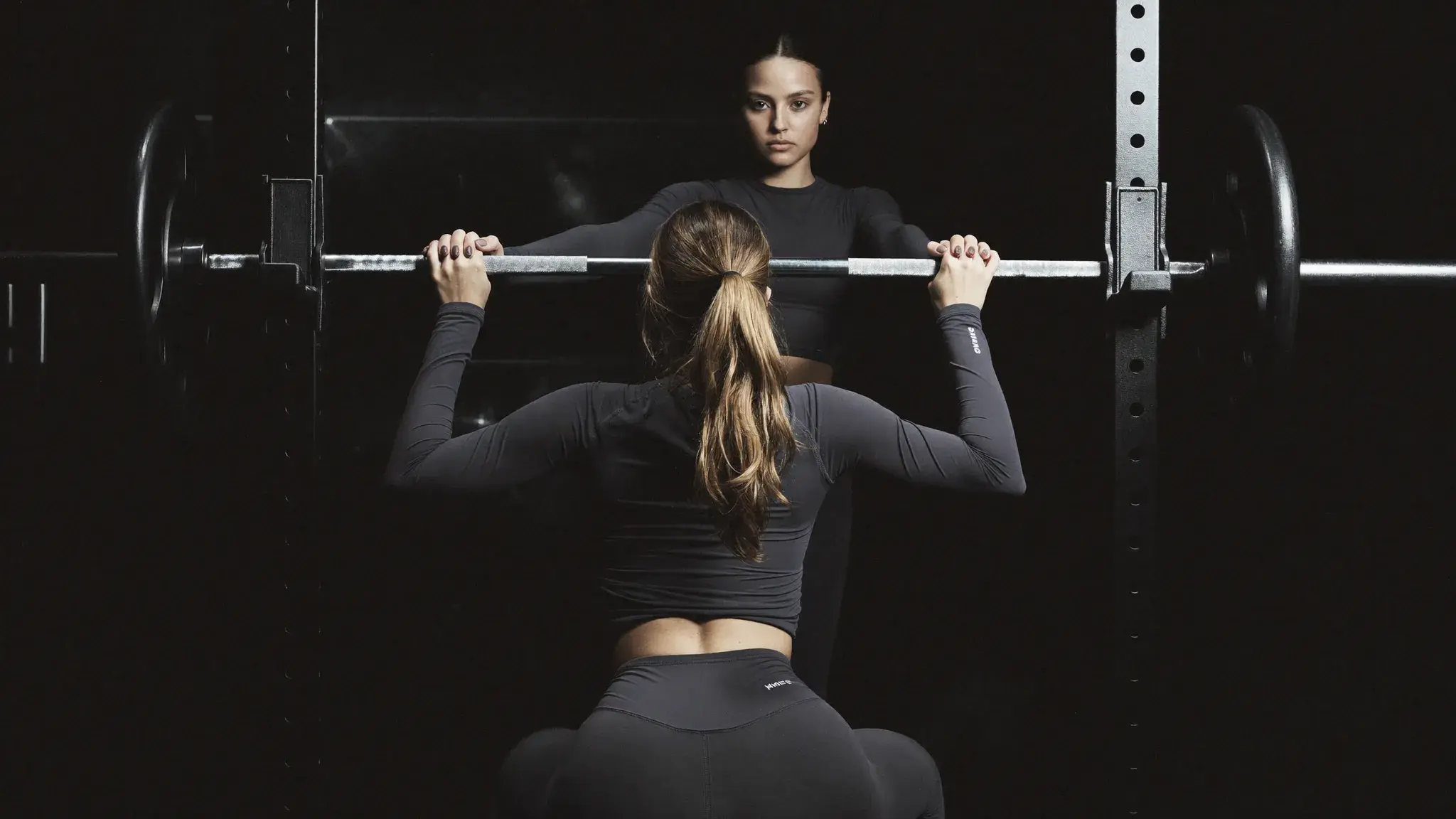
Strength is not a male virtue that women have permission to borrow. It is described in scripture as something a godly woman is clothed in - inseparable from her dignity, part of how she faces the days ahead with confidence. The gym is one of the more practical places to develop it.
The work looks unglamorous most days. Three sessions a week, adding small amounts of weight over long stretches of time, tracking what you can do rather than how you look. That is the method. Over a year, it changes what your body is capable of. Over a decade, it changes how you age. It is worth starting, and it is worth continuing through the seasons when the progress is invisible.
If you are ready to train like Proverbs 31:17 describes - vigorously, with arms strong for your tasks - start with the framework in this guide and give it 90 days. Clothed in strength.
// FREQUENTLY ASKED
Questions, answered.
Will lifting weights make me look bulky as a woman?
No - and this particular fear has kept more women out of strength training than almost any other misconception. Women have roughly 15-20 times less testosterone than men. The physiological capacity for extreme muscle hypertrophy simply does not exist without pharmacological intervention. What women who lift regularly develop is visible muscle definition, improved posture, and a body that moves and performs differently. That is not bulk - that is the direct result of training the way Proverbs 31:17 describes.
Can I keep strength training during pregnancy, and how do I modify?
For most healthy pregnancies, continuing to train is supported by current guidance - but the specifics are between you and your OB. Generally, modifications become necessary as pregnancy progresses, and a coach with prenatal certification is the most useful person in the room here, not a blog post. After delivery, the standard guidance is pelvic floor rehabilitation before returning to heavy loading - and that timeline varies. Don't rely on general articles for pregnancy and postpartum programming. Get someone who can actually see you.
How do I stay motivated to lift when results take months to show?
Two reframes that work in practice. First: stop measuring results exclusively by the mirror and start measuring by the log. Your squat went from 65 lbs to 105 lbs in four months. That is a result - it just does not photograph well. Second: Isaiah 40:31 is not a verse about feelings. "Those who hope in the Lord" is a statement about orientation, not emotion. Hope is not motivation - it is a posture. Women who frame consistency as faithfulness rather than motivation tend to outlast the women who are waiting to feel like training. Systems carry you through the seasons where feelings are absent.
// GEAR WORN IN THIS TRAINING

PUBLISHED JUNE 17, 2026