
// FAITH
Training With Your Son: A Faith-Driven Father's Guide to Building Strength Together
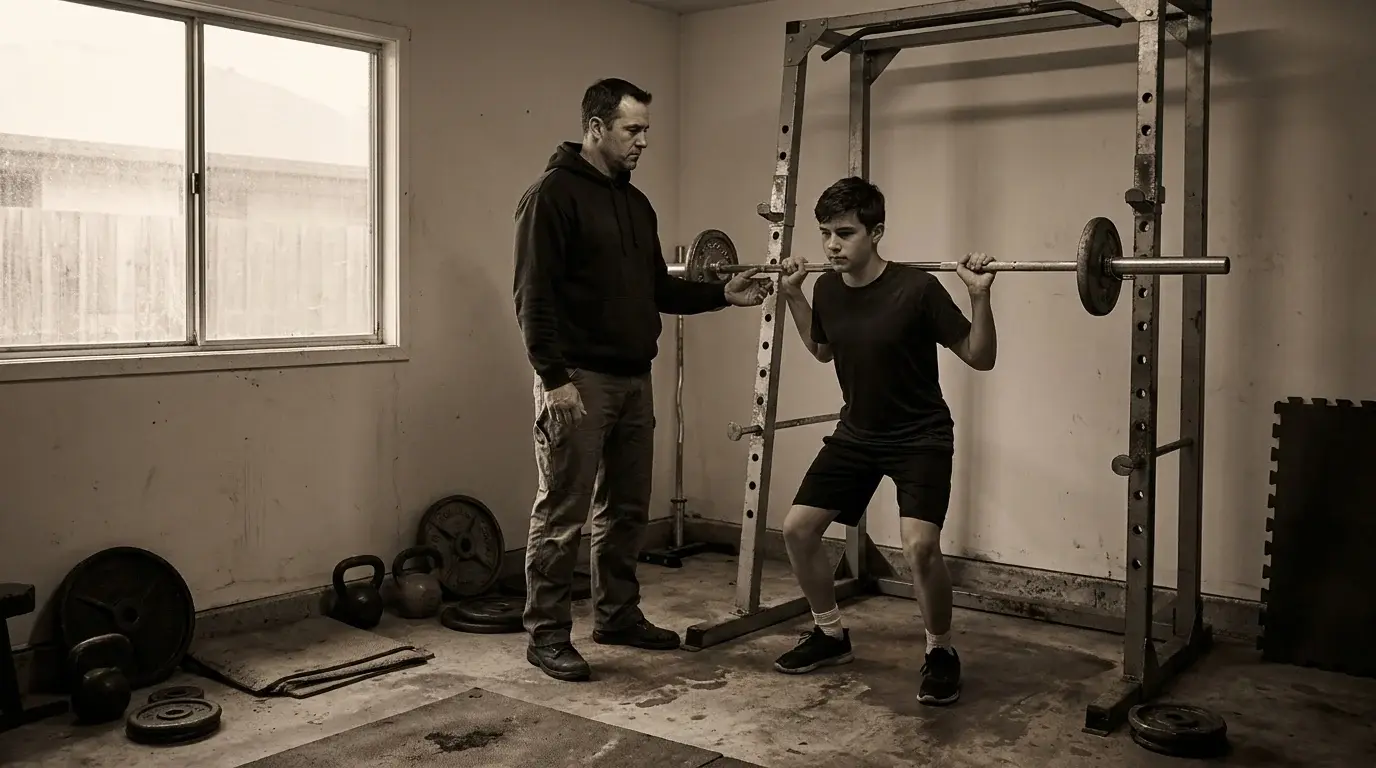
Introducing your son to the barbell is one of the few things a father can hand down that the world cannot take back. Here is how to start a 12-year-old under the bar without crushing him - and how to make the gym a place of discipleship, not pressure.
Pete Fluriach, founder of Alpha Omega Strength Team. My son asked to come to the gym with me before I ever thought to invite him. That caught me off guard - and it taught me something. A boy watches what his father gives his time to, and at some point he wants in. What you do with that moment matters more than any program. This is the guide I wish someone had handed me: how to bring a son under the bar in a way that builds him up, and how to keep the whole thing pointed at something bigger than a number.
Training with your son is not a youth-sports project, and it is not a way to relive your own training through a smaller body. Done well, it is one of the cleanest forms of discipleship a father has access to - a recurring, physical, unhurried hour where you teach him how to work hard, fail honestly, and come back tomorrow. The barbell is just the curriculum. The lesson is how a man carries weight.
What Every Father Needs to Know Before Training With His Son
Training with your son means introducing him to structured strength work under your direct supervision, at a pace set by his development and not by your impatience. It belongs to any father with a willing kid around twelve or older - no special facility required, no athletic background needed on either side.
Before you load a single plate, hold these four non-negotiables. They keep the experience building him up instead of wearing him down:
- Movement before load - perfect the pattern with bodyweight and the empty bar before adding weight
- His pace, not yours - the timeline belongs to a developing body, not to your training history
- Encourage, then correct - praise the effort first; fix the form second; never the reverse
- Keep it his - the moment it becomes about your ego, your goals, or your old PRs, it stops working
After this guide, you will have a clear readiness ladder by age, a frame for what to coach at each stage, and a way to keep the gym pointed at discipleship rather than pressure. Start with the ladder below.
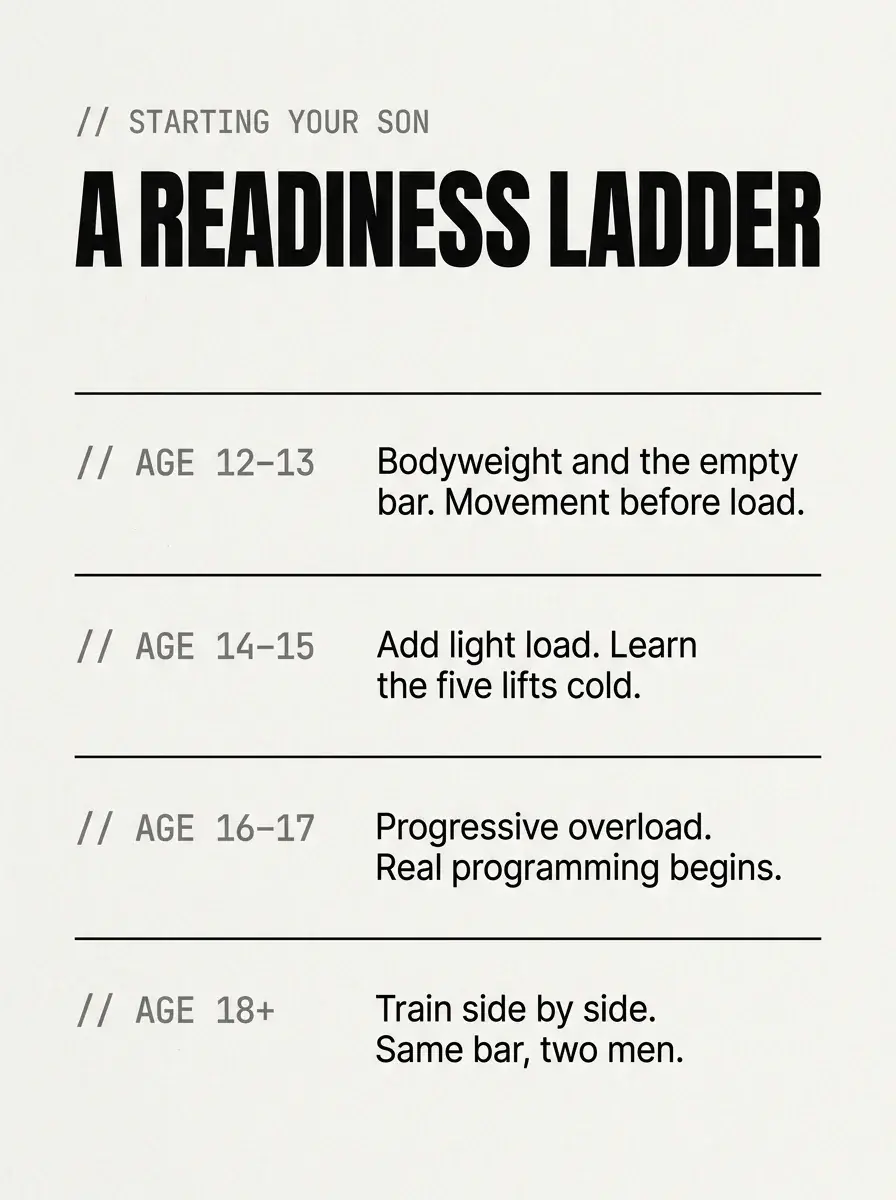
The Discipleship Frame: Why the Gym Is Good Ground
Most father-son advice splits into two camps. One treats the boy like a project to be optimized - early specialization, hard numbers, a scholarship dangling at the end. The other avoids any real demand at all, afraid that asking too much will damage the relationship. Both miss it. A son is neither a project nor a houseplant. He is a young man learning what it costs to do something hard on purpose, and a father is the first person who gets to show him.
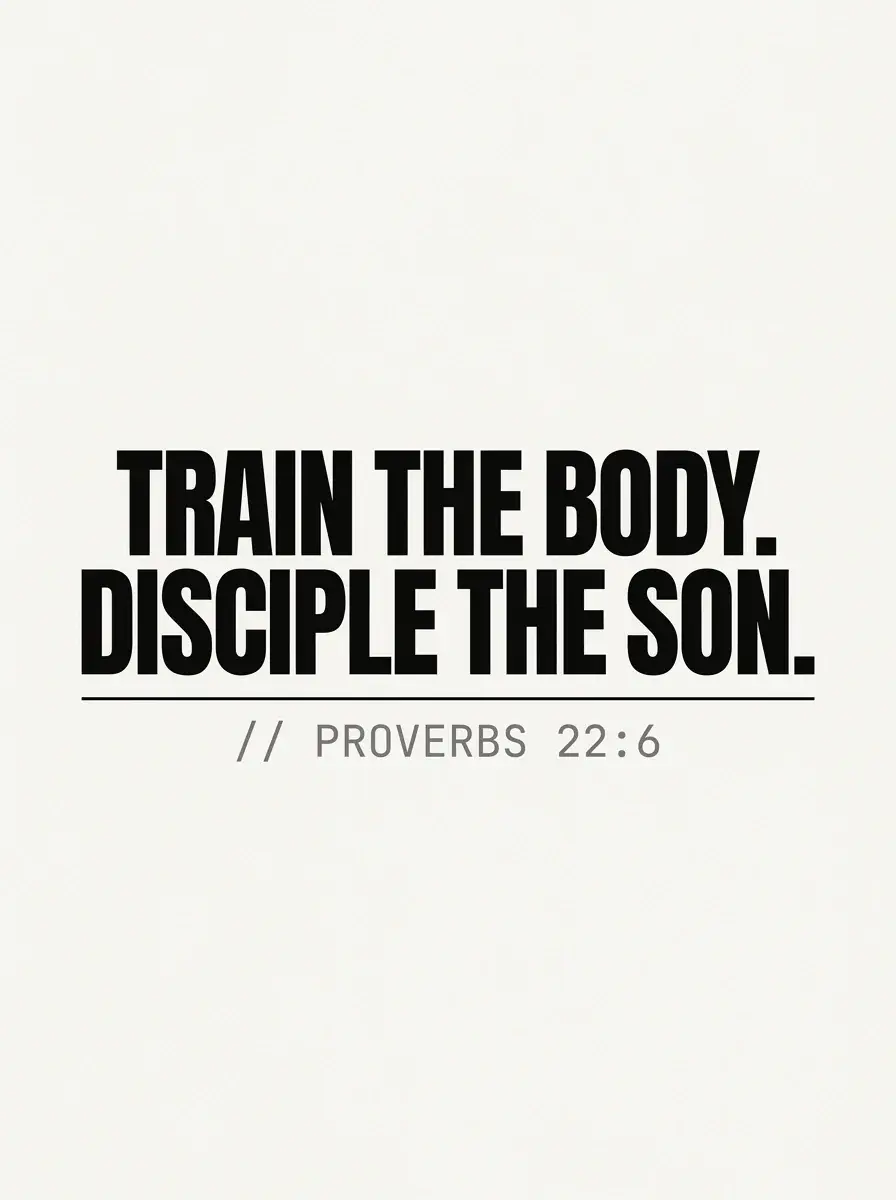
Scripture hands fathers this work directly. Ephesians 6:4 (NIV) says, "Fathers, do not exasperate your children; instead, bring them up in the training and instruction of the Lord." The word translated training carries the sense of disciplined formation over time - exactly what a strength program is. Proverbs 22:6 (NIV) adds the long view: "Start children off on the way they should go, and even when they are old they will not turn from it." In Deuteronomy 6, Moses tells parents to impress God's commands on their children and to talk about them in the ordinary hours - sitting at home, walking the road, lying down, getting up. The gym is one of those ordinary hours.
What He Is Actually Learning
A son who trains with his father learns more than how to squat. He learns that effort and outcome are not the same thing - that you can do everything right and still have a bad day under the bar, and you show up anyway. He learns that his father will correct him without humiliating him. He learns that strength is built slowly and stewarded, not seized. These are the lessons that outlast the program, and they are caught more than they are taught.
- Patience - progress comes in months and years, not sessions
- Honesty - the bar does not lie about whether you did the work
- Stewardship - the body is a gift to be cared for, not an idol to be served
- Perseverance - the willingness to come back tomorrow is the whole game
How to Match the Work to His Stage
The single most common mistake is training a thirteen-year-old like a grown man on a smaller frame. A developing body is not a scaled-down adult body - it needs different priorities at different stages. Use the table below to set the right focus for where your son actually is, then let him graduate up the ladder as he earns it.
| Phase | Primary Focus | Loading | Father's Role |
|---|---|---|---|
| Curiosity (10-12) | Play and movement | Bodyweight only | Make it fun, keep it short |
| Foundation (12-14) | Pattern mastery | Empty bar to light | Patient coach, every rep |
| Build (14-16) | Learn the five lifts | Light, slow progression | Spotter and standard-keeper |
| Ownership (16+) | Real programming | Progressive overload | Training partner, less talk |
Foundation (12-14) - The Make-or-Break Stage
This is where most fathers lose the plot by adding weight too soon. At this stage the empty barbell is plenty. Your job is to make the squat, hinge, press, and pull look identical on rep one and rep thirty. If he can own the empty bar with clean form for weeks, the strength that follows will be safe and durable. Rush it, and you build a fast ceiling and a sloppy habit that takes years to undo.
Build (14-16) - Where He Starts to Care About Numbers
Now he wants to add weight, and that energy is good - it just needs a rail. Teach him the five compound lifts cold and let progression be slow and boring. The goal is not a teenage record; it is a sixteen-year-old who knows how to run a program and trusts the process of getting a little stronger over a long time. Resist the urge to test his max. There is nothing there worth the risk.
Expert tip: if you are starting from zero, spend the first month with zero added weight. Bodyweight and the empty bar only. The discipline of not loading early is the most important habit you will ever model for him.
Training With Your Son in Real Life
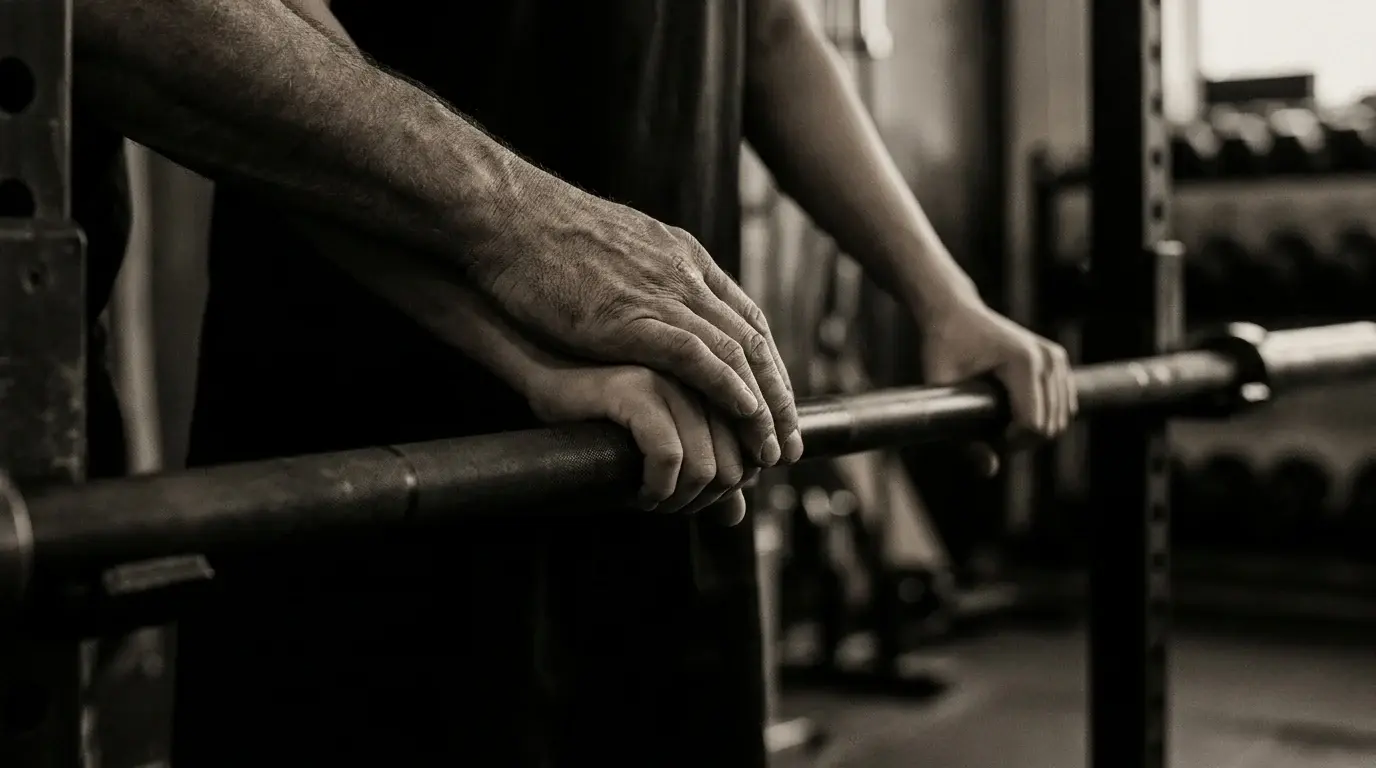
No two fathers come to this the same way. Below are three honest scenarios and how to handle each without losing the relationship or the point.
- The eager kid who wants to go heavy now: redirect the energy into technical mastery. Tell him the heavy weight is a reward for clean reps, and mean it. Patience modeled here pays off for a decade.
- The reluctant kid you do not want to push too hard: lower the stakes entirely. Two short sessions a week, no performance talk, just time together moving. Let consistency do the recruiting; do not sell.
- The father who never lifted either: learn alongside him and say so out loud. A boy watching his dad be a humble beginner learns more than from a dad who pretends to know everything.
When to Talk and When to Be Quiet
Early on, coach every rep - he needs the feedback. As he matures, talk less. A sixteen-year-old does not need a running commentary on his form; he needs a father who spots him, trusts him, and lets the silence say he is capable. Some of the best conversations of my week happen in the ninety seconds of rest between sets, when neither of us is trying to make them happen.
Why a Faith-Driven Frame Changes the Whole Project
Plenty of fathers train with their sons and never mention God. The work is still good. But a faith-driven frame changes what the hard parts mean. When your son misses a lift, it becomes a small lesson in humility instead of a verdict on his worth. When he adds five pounds after a month of patience, it becomes gratitude instead of pride. The barbell turns into a place where you can name what is true about effort, failure, and grace without it ever feeling like a lecture.
Alpha Omega Strength Team exists for exactly this - a quiet, unflinching conviction that training is one of the honest places a man, or a young man, learns who he is before God. Alpha and Omega, the beginning and the end (Revelation 22:13). You are not just building your son's strength. You are handing him a way of carrying weight that points past himself.
Getting the Most Out of Training With Your Son
- Set a fixed time each week and protect it - the consistency matters more than the program
- Praise effort before you correct form, every single session
- Keep a shared log so he can see slow progress with his own eyes
- Let one open question hang in the rest periods - then listen more than you talk
Frequently Asked Questions About Training With Your Son
What age should my son start lifting weights?
Most kids can begin supervised, bodyweight-based strength work around ten to twelve, and add the empty barbell around twelve to thirteen once they can follow coaching and hold a pattern. The research on youth resistance training is reassuring: with proper supervision and light loads, it is safe and beneficial. The key words are supervised and light. When in doubt, check with your pediatrician and start with movement, not weight.
Will lifting stunt my son's growth?
No. The old claim that lifting damages growth plates and stunts height is not supported by the evidence. The actual risk comes from poor supervision, ego-driven maxing, and bad technique under heavy load - all of which you avoid by coaching form and progressing slowly. A well-run program is one of the safer activities a teenager can do, far safer than most contact sports.
What if my son loses interest after a few weeks?
Let him. Forcing it is the surest way to make the gym a place he associates with pressure instead of his father. Keep training yourself, keep the door open, and invite him without selling. Boys often circle back to what they saw their dad quietly stick with. The point was never to manufacture a lifter; it was to be available when he wants in.
Conclusion
You will not remember most of the sets. You will remember the hour you spent together each week, the way he started standing a little taller, the conversations that happened sideways while you both caught your breath. Training with your son is not about producing an athlete. It is about handing down a way of working - patient, honest, pointed past himself - that he will carry long after he can out-lift you. Start light, go slow, encourage first, and keep it his. The strength will come. The relationship is the point.
For more on the theology underneath all of this, read the Lifter's Devotional Guide to Training as Worship.
// FREQUENTLY ASKED
Questions, answered.
What age should my son start lifting weights?
Most kids can begin supervised, bodyweight-based strength work around ten to twelve, and add the empty barbell around twelve to thirteen once they can follow coaching and hold a pattern. The research on youth resistance training is reassuring: with proper supervision and light loads, it is safe and beneficial. The key words are supervised and light. When in doubt, check with your pediatrician and start with movement, not weight.
Will lifting stunt my son's growth?
No. The old claim that lifting damages growth plates and stunts height is not supported by the evidence. The actual risk comes from poor supervision, ego-driven maxing, and bad technique under heavy load - all of which you avoid by coaching form and progressing slowly. A well-run program is one of the safer activities a teenager can do, far safer than most contact sports.
What if my son loses interest after a few weeks?
Let him. Forcing it is the surest way to make the gym a place he associates with pressure instead of his father. Keep training yourself, keep the door open, and invite him without selling. Boys often circle back to what they saw their dad quietly stick with. The point was never to manufacture a lifter; it was to be available when he wants in.
// GEAR WORN IN THIS TRAINING


PUBLISHED JUNE 11, 2026