// FAITH
The 5-Minute Morning Prayer Routine for Faith-Driven Athletes
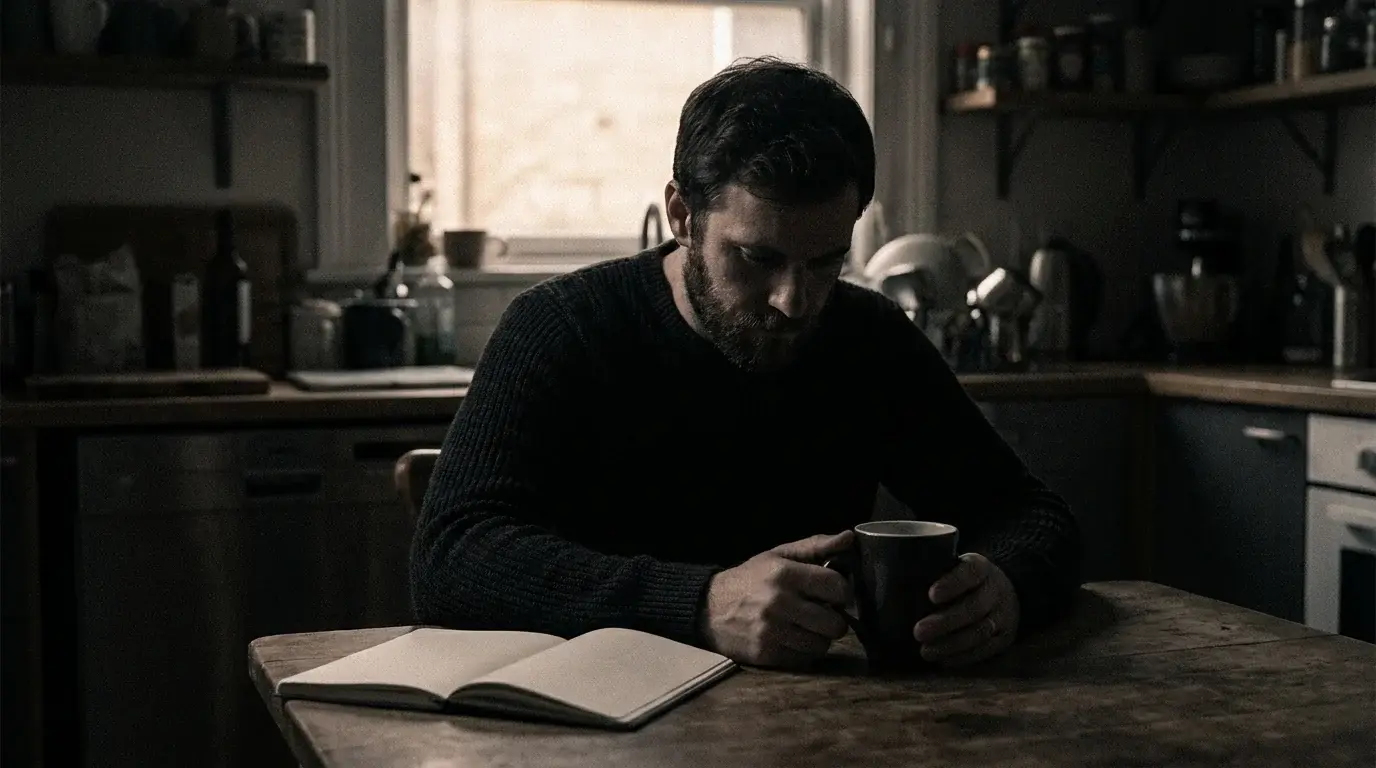
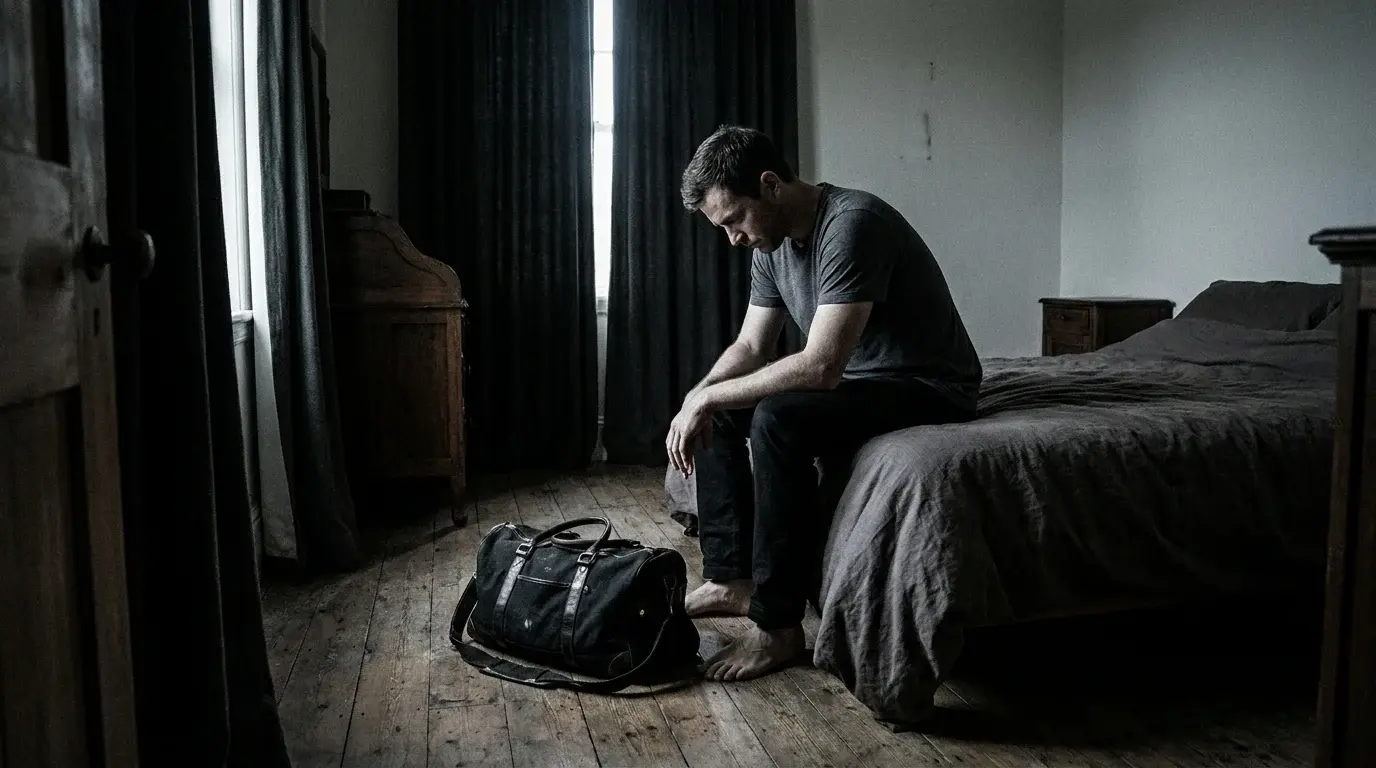
The pre-workout prayer guide covered the five minutes before you touch the bar. This is the five minutes before the day touches you - a simple morning prayer routine that sets the frame for training, work, and everything else.
Pete Fluriach, founder of Alpha Omega Strength Team. A while back I wrote the pre-workout prayer guide - the five minutes between the gym door and the bar. It became the most-read piece on this site, and the most common question I got afterward surprised me. It wasn't about training. It was: what do you do before that? The honest answer is that the pre-workout routine only works because something happens earlier - a shorter, quieter routine at the kitchen table before the day gets moving. This is that routine.
Five minutes. No app, no journal system with seventeen prompts, no candle. A man, a chair, an open Bible, and a clock. It is the simplest discipline I practice and the one I would give up last.
Why the First Five Minutes Decide the Rest of the Day
Every athlete already believes in the first five minutes. You believe in them under the bar - that's why warm-up sets exist. You believe a session that starts scattered stays scattered. The morning works the same way. The first input of the day disproportionately shapes the next sixteen hours: your patience, your appetite for hard things, whether the 5 a.m. session happens or gets negotiated away.
For most men the first input is the phone. Before your feet hit the floor, you've read a work email, two headlines, and someone else's highlight reel. You didn't choose an orientation for the day - one was assigned to you by whoever filled your notifications overnight. That is a losing position, and no amount of caffeine recovers it.
The psalmist had a different order of operations. Psalm 5:3 says, "In the morning, LORD, you hear my voice; in the morning I lay my requests before you and wait expectantly" (NIV). Notice the sequence: voice first, requests laid out, then expectation. Not reaction. Direction. The routine below is nothing more than a practical structure for doing what that verse describes before the day gets a vote.
The Decision Framework: Where Prayer Fits in Your Morning
The routine is fixed. The slot is not. A single man who trains at dawn and a father of four who leaves the house at six do not have the same morning, and pretending they do is how routines die in week two. Pick the slot you can actually hold, and defend that slot instead of chasing an ideal one.
One rule stands above the slot decision: prayer before phone. Whichever window you choose, the routine happens before the first scroll, the first inbox, the first headline. The phone is not a neutral bystander in your morning - it is the competition.
| Morning Slot | Best For | The Risk | Hold It By |
|---|---|---|---|
| First thing, before the phone | Most men, most seasons | Drifting back toward sleep | Feet on floor, chair, five-minute timer |
| At the table, with coffee | Slow starters, fathers up before the house | Sliding into email mid-prayer | Phone stays in another room |
| Before training, parked at the gym | Dawn lifters on a tight clock | Rushing it to get to warm-ups | Pray before the engine turns off |
| On the commute, out loud | Full houses, long drives | Autopilot and distraction | No podcast or radio until it's done |
If you train early, the parked-car slot pairs naturally with the pre-workout routine: this one frames the day on the drive, that one frames the session at the door. They are companions, not duplicates. One answers who the day belongs to. The other answers what this hour is for.
The Five-Minute Routine, Minute by Minute
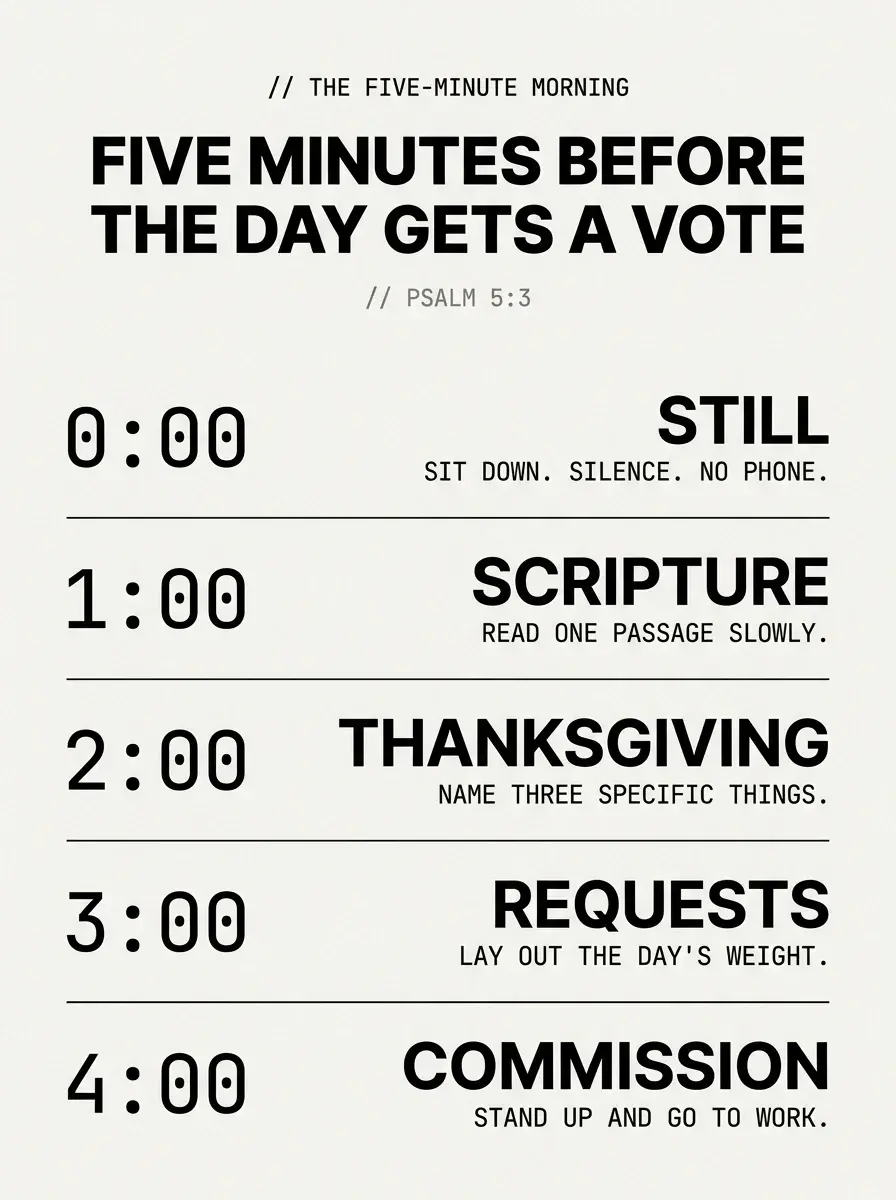
Minute one: Still. Sit down. Both feet on the floor. Say nothing. The point of the first minute is to stop moving before you start talking - the same reason you don't load the bar while you're still walking to it. Sixty seconds of silence feels long the first week. That feeling is the withdrawal symptom of a mind trained to reach for input, and it passes.
Minute two: Scripture. Read one short passage slowly - a psalm, a paragraph from a Gospel, wherever your reading plan has you. One passage, not a study session. You are not preparing a sermon; you are letting the first words of the day be words you didn't write.
Minute three: Thanksgiving. Name three specific things. Specific is the discipline - not "my family" but the thing your daughter said at dinner. Gratitude that stays general stays theoretical, and theoretical gratitude changes nothing about how you walk into a hard day or a heavy session.
Minute four: Requests. Lay out the day's actual weight - the conversation you're dreading, the deadline, the rehab session that isn't progressing. Psalm 5:3 uses the language of laying requests out and waiting expectantly, the way you'd lay out your gear the night before. Orderly. Deliberate. Handed over.
Minute five: Commission. Stand up and go to work. The last minute is a sentence or two, prayed standing: today is Yours - the training, the work, the people. Then you move. The routine ends with your feet, not your feelings. You will not feel transformed most mornings. You are not chasing a feeling; you are setting a frame, and frames hold whether you feel them or not.
That's the whole routine. Five minutes, five moves, in the same order every day. The order matters for the same reason your warm-up order matters: sequence is what turns five good ideas into one repeatable practice.
The Four Ways This Routine Dies - and How to Keep It Alive
First: it grows. Five minutes becomes fifteen, fifteen needs a journal, the journal needs prompts, and three weeks later the whole thing collapses under its own ambition. Keep it at five. If God gives you more some morning, take it - but the commitment stays small enough to survive your worst week, not your best one.
Second: the phone gets there first. One glance at the inbox and you are already answering an email in your head while your mouth says the words. The fix is mechanical, not spiritual - charge the phone outside the bedroom, or leave it in the kitchen drawer until the routine is done. Remove the decision and you remove the failure point.
Third: a missed morning becomes a broken streak, and a broken streak becomes a dropped habit. Athletes know this failure mode from training - one missed session turns into a missed week because the streak was the point instead of the practice. It wasn't. Miss a morning, pray at noon or don't, and sit back down tomorrow. No penance lap required.
Fourth: it becomes a transaction. Pray well, lift well - as if the routine were a pre-workout supplement with better branding. Some of my best sessions have followed rushed, distracted prayers, and some flat sessions have followed focused ones. The routine is not a performance enhancer. It is an act of orientation, and orientation is worth doing whether or not the bar moves fast that day.
New Every Morning: The Theology of Beginning Again
Jesus kept a morning routine. Mark 1:35 records it plainly: "Very early in the morning, while it was still dark, Jesus got up, left the house and went off to a solitary place, where he prayed" (NIV). This is the day after one of the busiest evenings of His ministry - the whole town at the door, Mark says. The response to a full schedule was not to sleep in and recover. It was to get up early and get alone. If the Son of God structured His morning around prayer, the practice is not beneath any athlete's schedule.
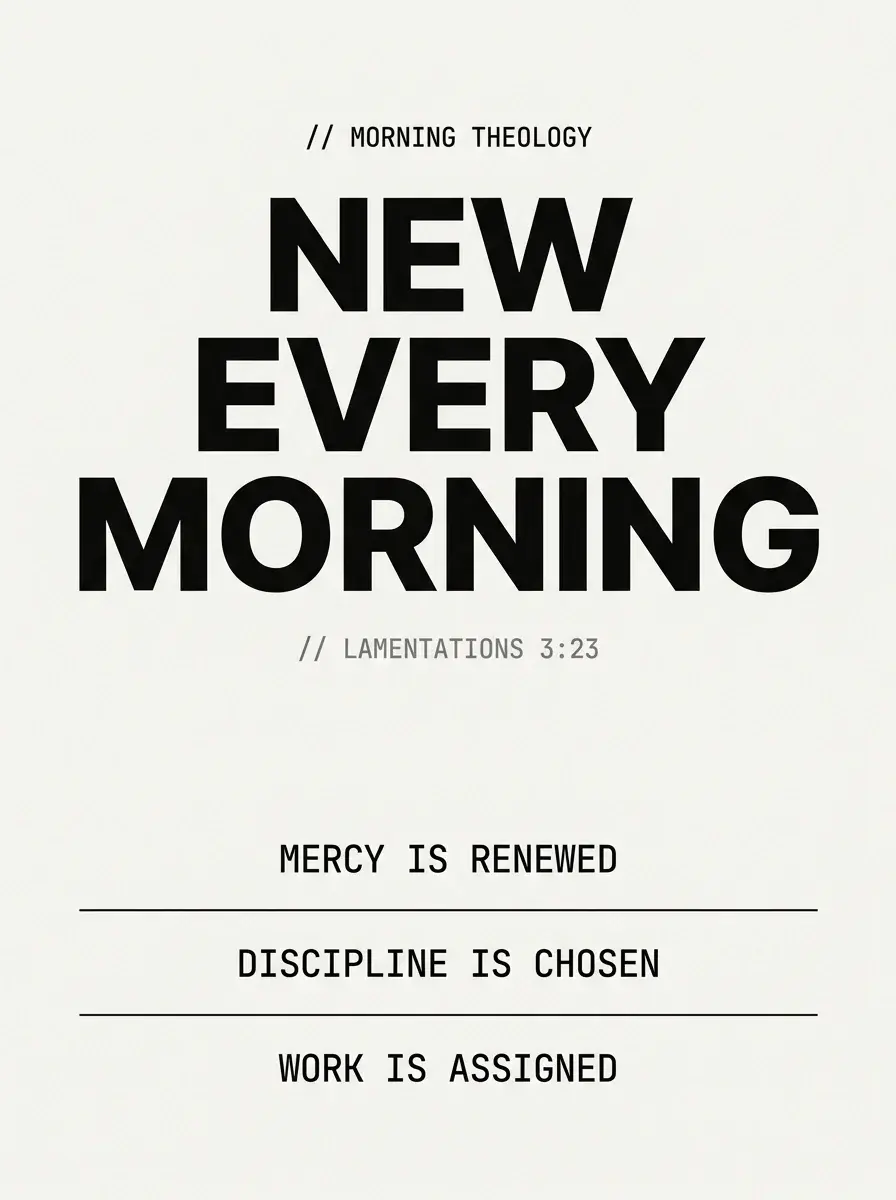
There is also a promise attached to mornings specifically. Lamentations 3:22-23 - written from the middle of a national catastrophe, not a comfortable season - says, "Because of the LORD's great love we are not consumed, for his compassions never fail. They are new every morning; great is your faithfulness" (NIV). New every morning. Not stockpiled from last week's quiet time. The mercy you trained on yesterday is not the mercy assigned to today.
That is why this is a daily routine and not a weekly one. Athletes already live by daily renewal - yesterday's meals don't fuel today's session, and yesterday's sleep doesn't recover tonight's. Grace, it turns out, runs on the same schedule. The five minutes at the table are simply showing up to collect what has already been set out.
Frequently Asked Questions
What is a good morning prayer routine for athletes?
A workable format is five minutes in five steps: one minute of stillness, one short Scripture passage, three specific points of thanksgiving, laying out the day's requests, and a closing commission prayed standing. The keys are that it happens before the phone and that it stays short enough to survive a bad week.
Should I pray before or after my morning workout?
Before, if you can - the routine is designed to frame the day, and the workout is part of the day. Dawn lifters can run it in the parked car before walking in, then use a shorter pre-workout prayer at the door. If your only honest option is after training, take it. A held slot beats an ideal one.
How is this different from the pre-workout prayer routine?
The morning routine orients the whole day; the pre-workout routine orients a single session. They share DNA - stillness first, Scripture early, surrender before work - but one happens at the kitchen table and one happens at the gym door. On training days the two stack; on rest days the morning routine stands alone.
What if I miss a morning?
Nothing is broken. Lamentations 3:23 says God's compassions are new every morning - which means tomorrow's five minutes are already scheduled and fully funded. Skip the guilt spiral, skip the make-up session, and sit back down in the chair the next day.
The Bottom Line
You already believe the first five minutes matter - you prove it every time you warm up before you load the bar. This routine applies that same conviction to the day itself: still, Scripture, thanksgiving, requests, commission. Five minutes, before the phone, in the same chair.
Start tomorrow. Put the phone in the kitchen tonight, put a Bible on the table, and give the first voice of the day to the One the day belongs to. The bar will still be there at five. It will feel different when the frame is already set.
// FREQUENTLY ASKED
Questions, answered.
What is a good morning prayer routine for athletes?
A workable format is five minutes in five steps: one minute of stillness, one short Scripture passage, three specific points of thanksgiving, laying out the day's requests, and a closing commission prayed standing. The keys are that it happens before the phone and that it stays short enough to survive a bad week.
Should I pray before or after my morning workout?
Before, if you can - the routine is designed to frame the day, and the workout is part of the day. Dawn lifters can run it in the parked car before walking in, then use a shorter pre-workout prayer at the door. If your only honest option is after training, take it. A held slot beats an ideal one.
How is this different from the pre-workout prayer routine?
The morning routine orients the whole day; the pre-workout routine orients a single session. They share DNA - stillness first, Scripture early, surrender before work - but one happens at the kitchen table and one happens at the gym door. On training days the two stack; on rest days the morning routine stands alone.
What if I miss a morning?
Nothing is broken. Lamentations 3:23 says God's compassions are new every morning - which means tomorrow's five minutes are already scheduled and fully funded. Skip the guilt spiral, skip the make-up session, and sit back down in the chair the next day.
// GEAR WORN IN THIS TRAINING


PUBLISHED JULY 23, 2026