
// FAITH
The Faith-Driven Athlete's Guide to Gym Apparel: Why What You Wear Reflects Who You Are
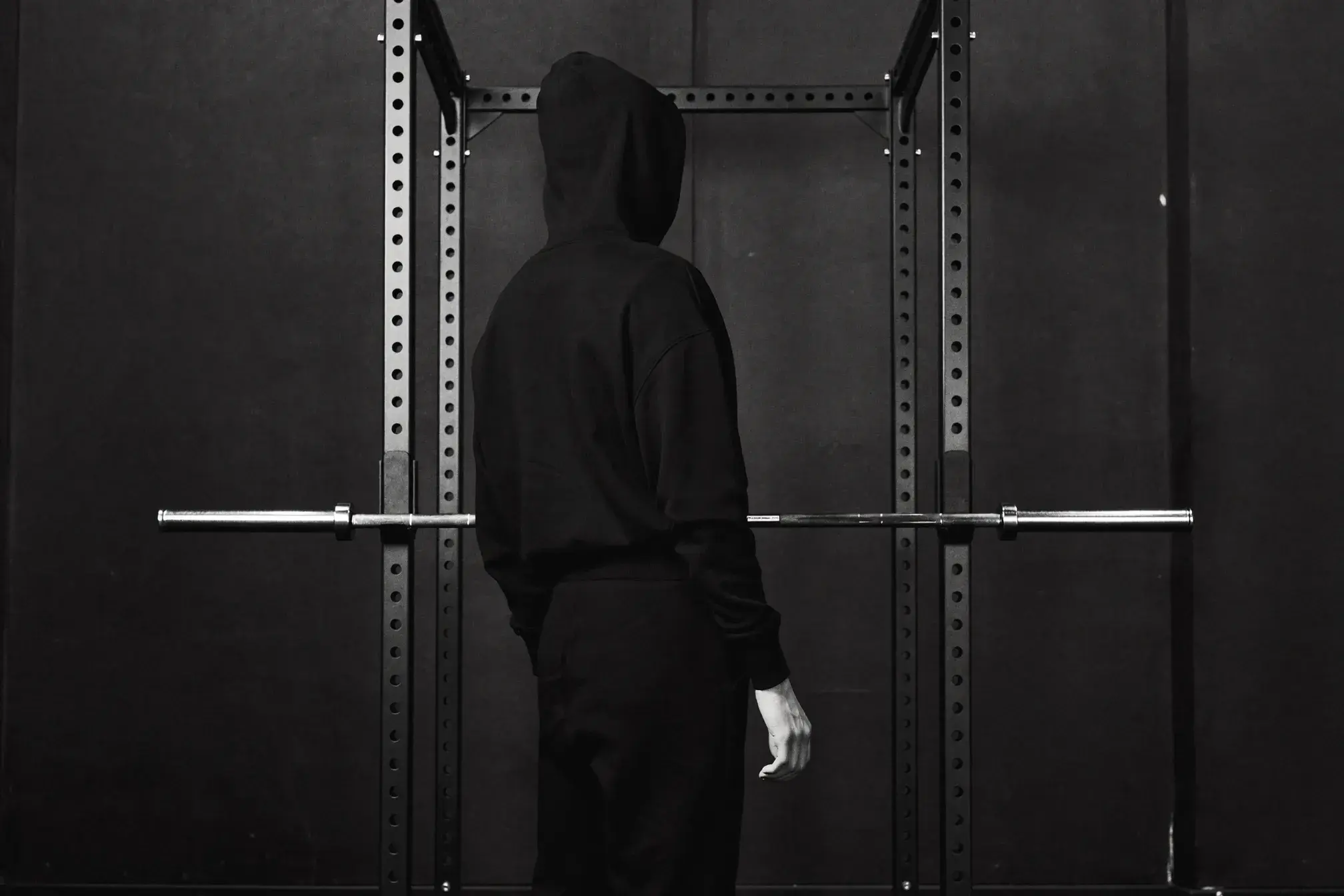
What you put on before you train is a small daily decision about identity. This guide explores the theology of apparel as witness - and how to build a kit that reflects what you actually train for.
Every morning before you train, you make a small decision that most athletes never think about. You reach into a drawer and choose what to put on your body. That choice - repeated hundreds of times a year - says something about who you are and what you believe you are doing in that gym.
I'm Pete Fluriach, founder of Alpha Omega Strength Team. In this guide, I'll show you why every piece of training apparel is a small daily decision about identity - and how to build a kit that reflects what you train for.
This is not a piece about modesty codes or gym dress rules. It's about something quieter and more interesting: the idea that what you wear before your first rep is a form of communication. Not to the room - to yourself.
What Every Faith-Driven Athlete Needs to Know About Gym Apparel
The athletic apparel market is enormous and loud. Billion-dollar brands have spent decades telling you that what you wear determines how hard you push, how fast you move, how much you can take. The messaging is almost always the same: dominance, performance, no days off, beast mode.
If you're a person of faith walking into that culture every day, there's a quiet friction. Not necessarily a moral one. Just a mismatch between the posture those brands project and who you actually are. You're not there to dominate. You're there to steward.
Here's what this guide covers:
- The scriptural case for intentional apparel as identity expression
- The five categories of athletic apparel and what each communicates
- The difference between explicit faith branding and quiet identity apparel
- How to build a training kit that reflects your values across every category
- Practical answers to the questions faith-driven athletes actually ask
By the end of this, you'll have a clear framework for making apparel choices that hold up - in the gym and outside of it.
The Theology of Getting Dressed
Scripture uses clothing as a metaphor for identity more than almost any other physical act. That's not coincidence. Getting dressed is one of the most fundamental ways we prepare to present ourselves to the world - and to ourselves.
For all of you who were baptized into Christ have clothed yourselves with Christ.
Galatians 3:27
Paul's language here is physical. Clothed. Not inspired, not influenced - clothed. The metaphor implies that identity is something you put on deliberately, as a covering that shapes how you move through the world. When you read it that way, the morning drawer pull is not a trivial act.
Colossians 3:12 extends the idea. Paul writes:
Therefore, as God's chosen people, holy and dearly loved, clothe yourselves with compassion, kindness, humility, gentleness and patience.
Colossians 3:12
The virtues Paul names - compassion, humility, patience - are not passive. They are character postures that require daily intention. You clothe yourself in them the same way you pull on a shirt: by choosing to.
And then there is Romans 12:1-2, the hardest verse in the pile:
Therefore, I urge you, brothers and sisters, in view of God's mercy, to offer your bodies as a living sacrifice, holy and pleasing to God - this is your true and proper worship. Do not conform to the pattern of this world, but be transformed by the renewing of your mind.
Romans 12:1-2
Do not conform to the pattern of this world. That phrase is a direct address to the question of athletic apparel in 2026. The dominant pattern of mainstream gym culture is performance theater - gear designed to signal status, aggression, and achievement. Paul's instruction is not to ignore culture, but to hold it lightly. To evaluate it. To choose which parts of it you step into intentionally, and which parts you leave on the shelf.
The Five Tiers - What Your Gym Clothes Actually Communicate
Not every piece of athletic apparel carries the same message. Before you can build a kit that reflects your values, it helps to understand the spectrum of what's out there - not as a hierarchy of holiness, but as a map of signals.
Athletic Apparel Types - What Each Communicates
Apparel Type | Visual Signal | Who Gravitates to It | Faith Alignment | AO Equivalent
Mainstream performance brand (Nike, Under Armour) | Speed, athleticism, achievement | General athlete | Neutral | Any AO core piece
Aggressive slogan tees (“Beast Mode,” “No Days Off”) | Dominance, hustle culture | Hype-driven athlete | Low | -
Plain, minimalist athletic | Quiet, no statement | Anyone | Neutral-positive | -
Faith-branded apparel (scripture + logo, loud) | Explicit witness | Overtly evangelical | High, but loud | -
Understated faith identity apparel | Identity, not performance | Disciplined believer | High, quiet | -
The gap between tier four and tier five is worth pausing on. Both claim a faith identity. But one performs it; the other carries it. The difference is not which is more “right” - it's a question of posture. Do you want your apparel to announce your faith, or embody it?
Quiet Confidence vs. Loud Performance - Understanding the Difference
Loud performance apparel is built around a transaction: you show the room something, and you expect a reaction. It's designed to communicate status and effort before the first set. There is nothing wrong with it as workout gear. But it creates a habit of external validation that doesn't serve most faith-driven athletes well.
Quiet confidence apparel says nothing about your effort. It reflects your character. It's gear that looks the same on rep one and rep one thousand - because what you're carrying isn't energy, it's conviction. That's a different kind of durable.
Four things to look for in training apparel that reflects this posture:
- Restraint in branding. No aggressive slogans. A mark that means something - without shouting.
- Honest construction. Built to hold up through serious training, not just photographed use. Materials and weight that match the work.
- Versatility. Gear that transitions from the rack to the street without a costume change. Your identity doesn't end at the gym door.
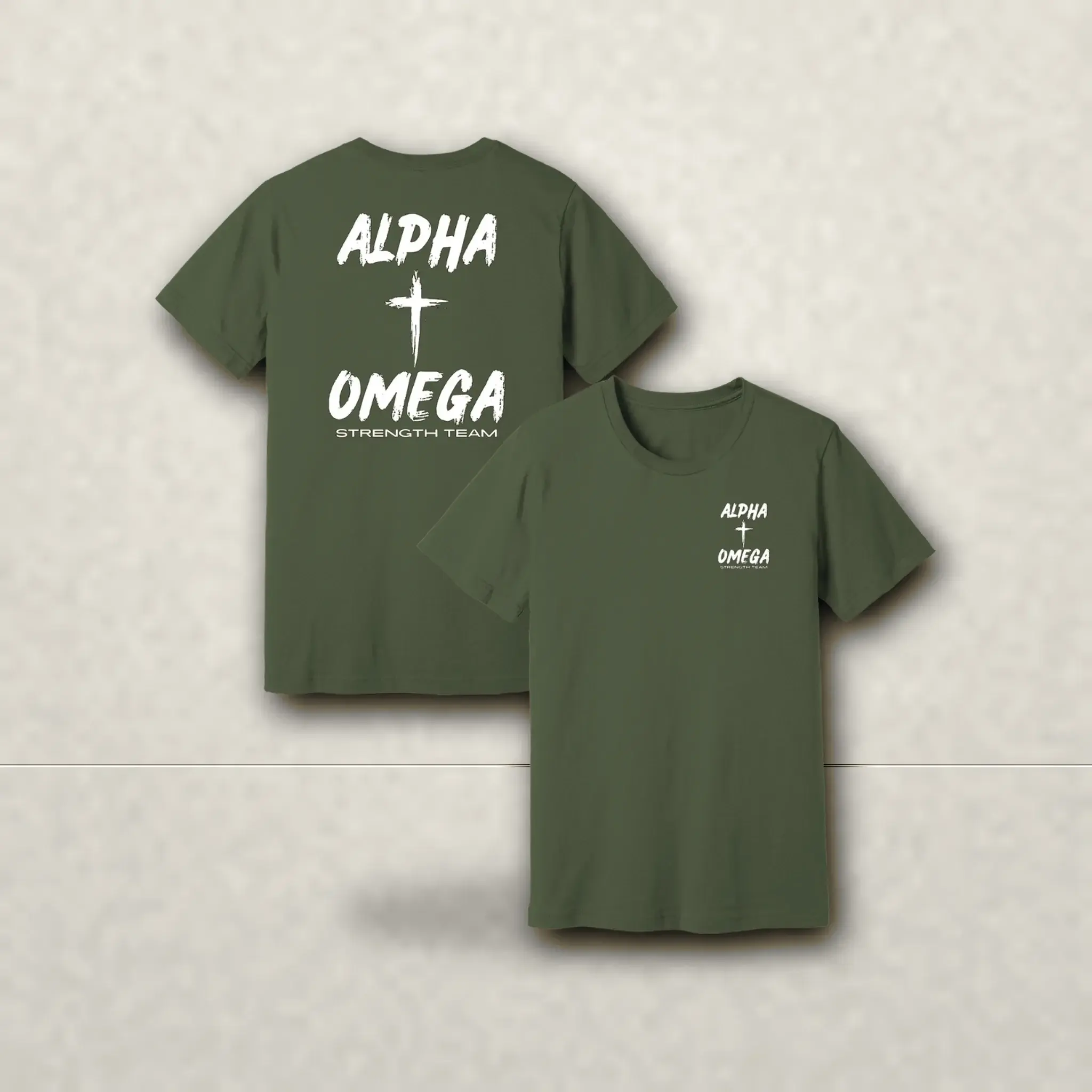
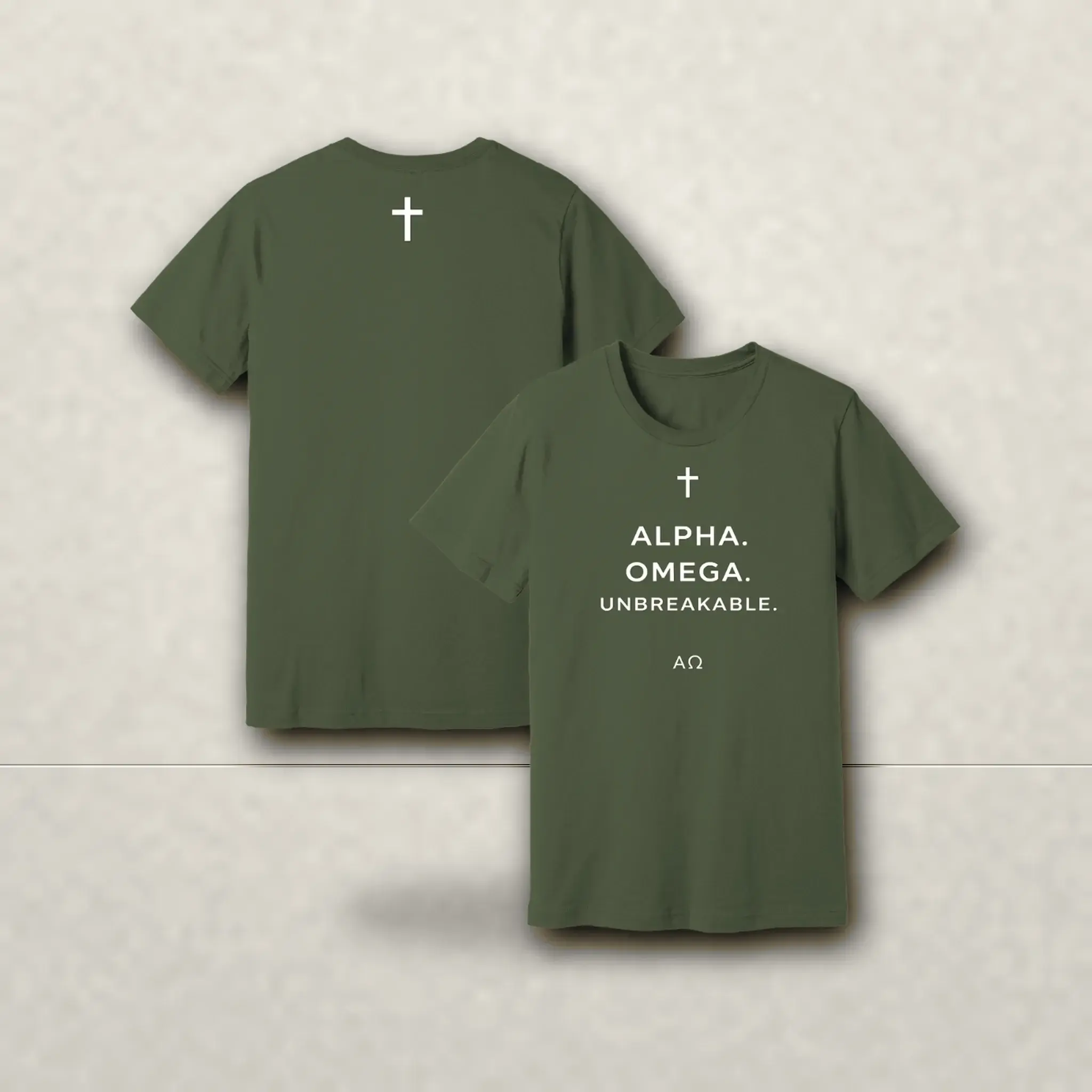
- Meaning in the mark. If there's a symbol, it should mean something to you. Wearing Alpha and Omega means something specific. It's not decoration.
Building Your Training Kit Category by Category
A training kit is not a collection of individual clothing decisions. It's a system. When every piece reflects the same posture - functional, grounded, intentional - you stop having to think about it. That's the goal: gear that does its job quietly so you can do yours.
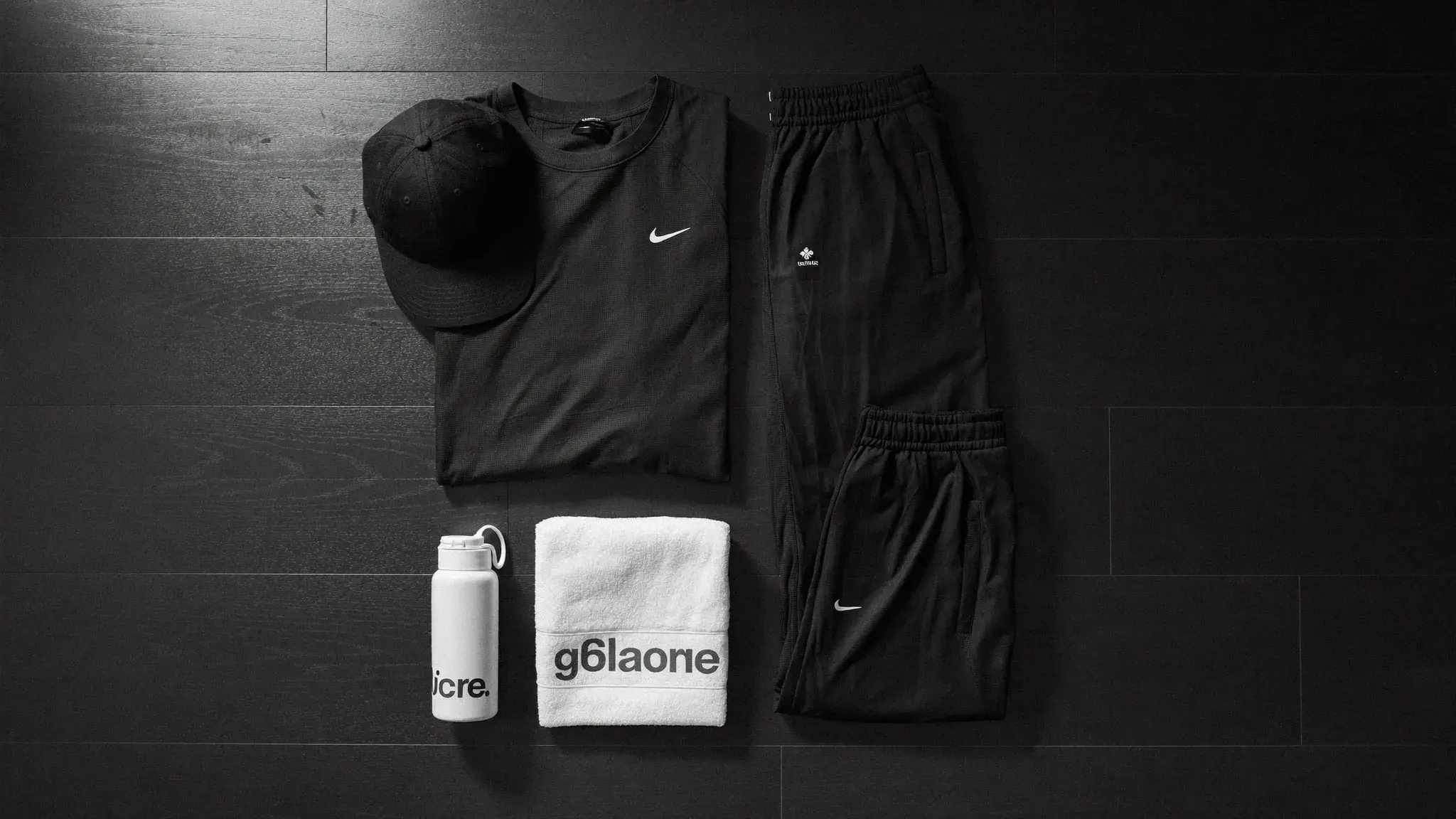
Apparel Categories - Training Context and Fit
Category | Training Context | Faith-Driven Brand Fit | Investment Range
Training tee | All lifting, conditioning, and warm-up contexts | Core identity piece - worn most, seen most
Long sleeve / compression | Cold months, early morning, layering | Quiet branding shows on the floor and post-workout
Hoodie / sweatshirt | Warm-up, cool-down, travel, rest days | Highest visibility item outside the gym
Training shorts / joggers | Leg days, conditioning, all-around | Branding less visible - prioritize fit and function
Cap / headwear | Outdoor training, sun, sweat management | Secondary identity signal - complements, doesn't compete
The training tee is the category that matters most. You wear it most, and it does the most identity work. That's where to start if you're building a kit from scratch.
The Hoodie Is Your Most Public Piece
Most athletes underestimate the hoodie. They think of it as warm-up gear - something you peel off before the real work starts. But the hoodie is the piece you wear to and from. It's what people see in the parking lot, the grocery store after training, the coffee run. It carries your identity further than any other piece in your kit.
What your hoodie says in those in-between spaces matters. Three things to consider when choosing one:
- Does the branding hold up outside context? A gym-only message looks out of place everywhere else. A statement about identity travels.
- Is the weight right for your climate? A 7-oz fleece is different from a thin pullover. Buy for where you actually train.
- Does it hold its shape after washing? Low-quality hoodies compress and shrink after 10 washes. Pay for the one that lasts.
Why Alpha Omega Built What It Built
When I started building Alpha Omega Strength Team, I kept running into the same thing: faith-fitness apparel that was either militaristic in its branding (aggressive, all-caps, designed to intimidate) or so explicitly evangelical that it read like a tract. There was almost nothing in between - nothing that said I know who I am without announcing it to the room.
The Alpha Omega name comes from Revelation 22:13 - the declaration of Christ as the beginning and the end. It's a complete statement. It doesn't need explaining. For someone who knows it, it carries everything. For someone who doesn't, it's a clean piece of gear. That dual function is intentional. You can read more about why we built it the way we did on the About page.
What AO gear is built to do:
- Hold up under actual training. Not just photogenic - durable. Premium cotton and construction that doesn't break down in the wash or lose shape under weekly use.
- Carry a mark that means something. Every piece connects to a specific scriptural anchor. It's not decoration; it's a statement about identity that you choose to carry.
- Fit both men and women. Faith-driven training is not a men's-only lane. The kit is built for anyone who shows up with conviction.
- Travel from the gym to the rest of your day. Understated enough to wear outside the gym without looking like you just came from a competition.
Getting the Most Out of Your Training Kit
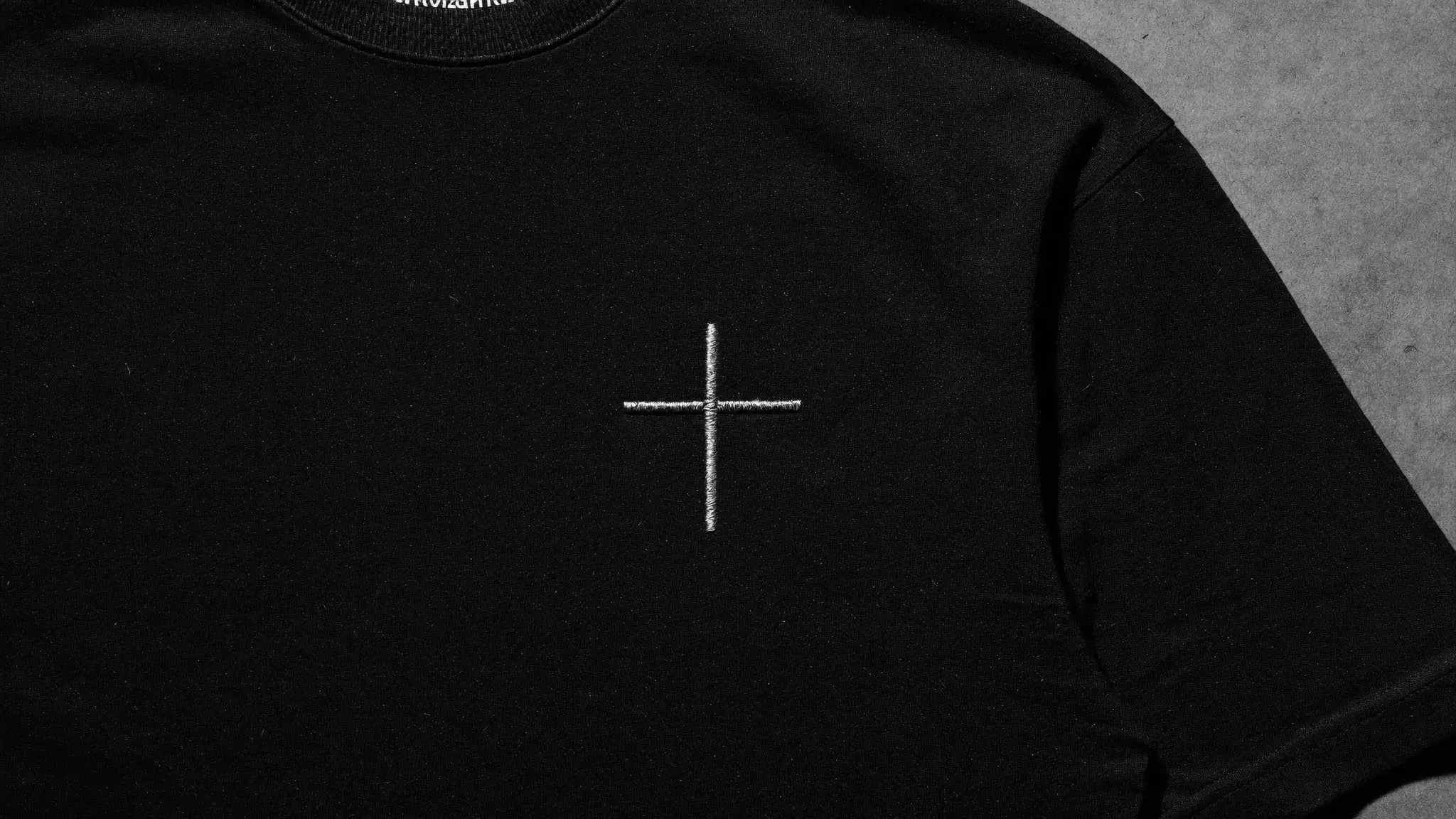
A few practical notes for building a kit that holds together over time:
- Start with three tees before anything else. Tees are the workhorse. Get three in rotation before spending on anything else - that's enough to train five days a week without repeat-wearing unwashed gear.
- Cold-wash everything. Heat breaks down cotton and print quality faster than use does. Air dry when you can. Your gear lasts two to three times longer.
- Choose neutral colors for longevity. Black, charcoal, ash, and cream all pair with each other. You can build a complete kit across brands and pieces without anything clashing.
- Buy one tier up on the hoodie. The hoodie is the highest-public-visibility piece in your kit. You will wear it more than any other piece you own - prioritize construction over cost here.
Frequently Asked Questions About Faith-Driven Gym Apparel
Is it wrong for a Christian to wear mainstream athletic brands?
No. Wearing Nike to the gym is not a moral failure. The question is not whether a brand is Christian - it's whether the posture you adopt when you put it on is shaped by your faith or by the culture around you. Mainstream gear is neutral. What you bring to it is not. That said, if you're looking for gear that already carries a meaning aligned with your identity, the search is worth taking seriously.
What is the difference between modest athletic apparel and faith-based gym apparel?
Modesty in athletic apparel is primarily about coverage - what is and isn't shown. Faith-based apparel is about identity and intention - what the gear says about who you are and what you believe. The two can overlap, but they are different conversations. A modest gym outfit carries no faith statement. A faith-identity piece might be a fitted training shirt; modesty and faith-expression are not the same axis.
How do I find gym clothes that are both functional and faith-forward?
Look for brands that were built with both priorities in mind from the start - not brands that added scripture to a generic product line as a market move. The tell is in the construction and in the scriptural anchoring. Does the verse on the piece match the design concept? Does the product hold up after 50 washes? Is the brand consistent about what it stands for, or does it pivot with trends? If the answer to all three is yes, you've found gear that earns both labels.
The Small Choice That Compounds
You will make this choice hundreds of times this year. What to put on before you train. It will never feel like a significant decision in the moment - that's the point. Significant decisions rarely do. But the aggregate of small, intentional choices is what builds a life that reflects something worth reflecting.
Being clothed with Christ, as Paul puts it in Galatians, is not a Sunday category. It follows you into the gym, into the parking lot, into the quiet of an early morning session when nobody is watching. The gear you train in is a small part of that - but it is a part. Build a kit that holds up to both the weight and the work.
// FREQUENTLY ASKED
Questions, answered.
Is it wrong for a Christian to wear mainstream athletic brands?
No. Wearing Nike to the gym is not a moral failure. The question is not whether a brand is Christian - it's whether the posture you adopt when you put it on is shaped by your faith or by the culture around you. Mainstream gear is neutral. What you bring to it is not. That said, if you're looking for gear that already carries a meaning aligned with your identity, the search is worth taking seriously.
What is the difference between modest athletic apparel and faith-based gym apparel?
Modesty in athletic apparel is primarily about coverage - what is and isn't shown. Faith-based apparel is about identity and intention - what the gear says about who you are and what you believe. The two can overlap, but they are different conversations. A modest gym outfit carries no faith statement. A faith-identity piece might be a fitted training shirt; modesty and faith-expression are not the same axis.
How do I find gym clothes that are both functional and faith-forward?
Look for brands that were built with both priorities in mind from the start - not brands that added scripture to a generic product line as a market move. The tell is in the construction and in the scriptural anchoring. Does the verse on the piece match the design concept? Does the product hold up after 50 washes? Is the brand consistent about what it stands for, or does it pivot with trends? If the answer to all three is yes, you've found gear that earns both labels.
// GEAR WORN IN THIS TRAINING
PUBLISHED JUNE 3, 2026