// FAITH
The Faith-Driven Lifter's Guide to Pre-Workout Prayer: A 5-Minute Mental Routine for Strength Training
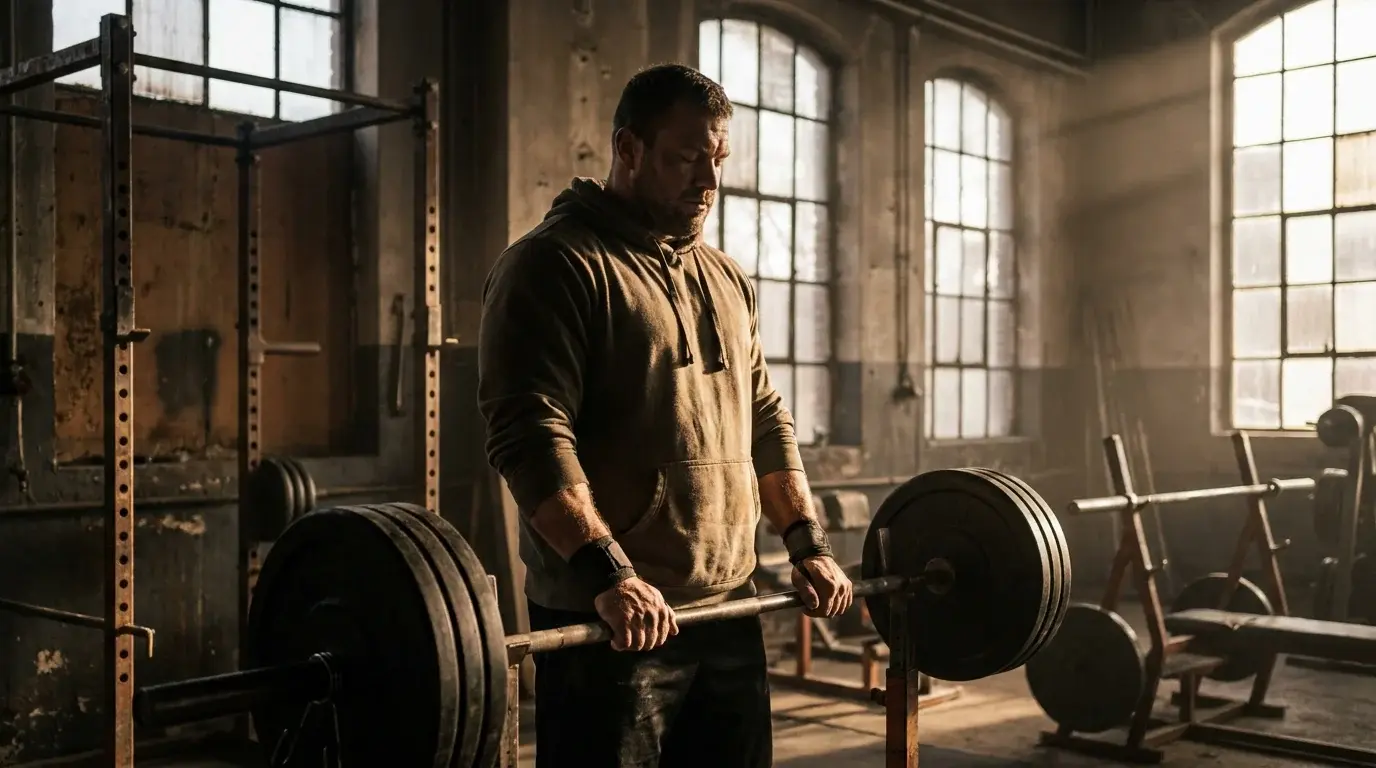
Most pre-workout routines stop at caffeine and a playlist. This is the 5-minute mental and spiritual routine that turns a training session into an act of devotion - and makes you stronger under the bar.
Pete Fluriach, founder of Alpha Omega Strength Team. Two years into serious training, I started noticing that the difference between a great session and a wasted one had almost nothing to do with sleep, food, or caffeine. It had to do with the first five minutes after I walked through the gym door - and what I did with my head before I touched a weight. This guide is the routine I built, the theology behind it, and the practical format I use every training day.
Pre-workout prayer is not a substitute for warm-up reps. It is not a religious accessory you bolt on to look pious. It is the mental and spiritual frame that decides what the warm-up is for. Done well, it takes five minutes, costs nothing, and changes the way you train for the rest of your life.
What Every Faith-Driven Lifter Needs to Know About Pre-Workout Prayer
Pre-workout prayer is a short, focused practice of bringing your training session under the lordship of Christ before the first rep. It belongs to anyone - beginner or advanced - who wants their work in the gym to mean something beyond the number on the bar.
There are five styles of pre-workout prayer most lifters end up using:
- Silent prayer - wordless, posture of surrender
- Scripture-anchored prayer - one verse meditated on
- Confession-and-surrender prayer - for hard mental days
- Spoken declaration - masculine, audible, short
- Walking prayer - between warm-up sets, eyes open
Before you pick a style, hold the four variables that decide whether your routine actually works:
- Time - short enough you'll never skip it (target: 5 minutes)
- Place - done at the gym, not in your car or before you left
- Posture - physical stillness before physical work
- Frame - what you're asking God for is clarity, not strength
After this guide, you'll have a defined 5-minute routine you can run before any training session - at any gym, in any season - and a working framework for adapting it when the routine itself goes stale.
The Theology Behind Pre-Workout Prayer: Why It's Not a Gimmick
Christian fitness content has a credibility problem. Half of it is verse-decorated bro culture - Philippians 4:13 stamped on a tank top, no thought behind it. The other half is gentle-encouragement content that never makes contact with the actual demands of a barbell program. Pre-workout prayer sits between those failures. It is theologically serious and physically practical.
The biblical case is short. 1 Corinthians 6:19-20 calls the body a temple of the Holy Spirit, bought at a price, to be glorified. Romans 12:1 instructs believers to present their bodies as a living sacrifice - language that assumes the body is an instrument of worship, not separate from it. Colossians 3:17 universalizes this: whatever you do, in word or deed, do it in the name of the Lord Jesus. There is no exemption clause for the gym.
Prayer as Frame, Not Performance Enhancer
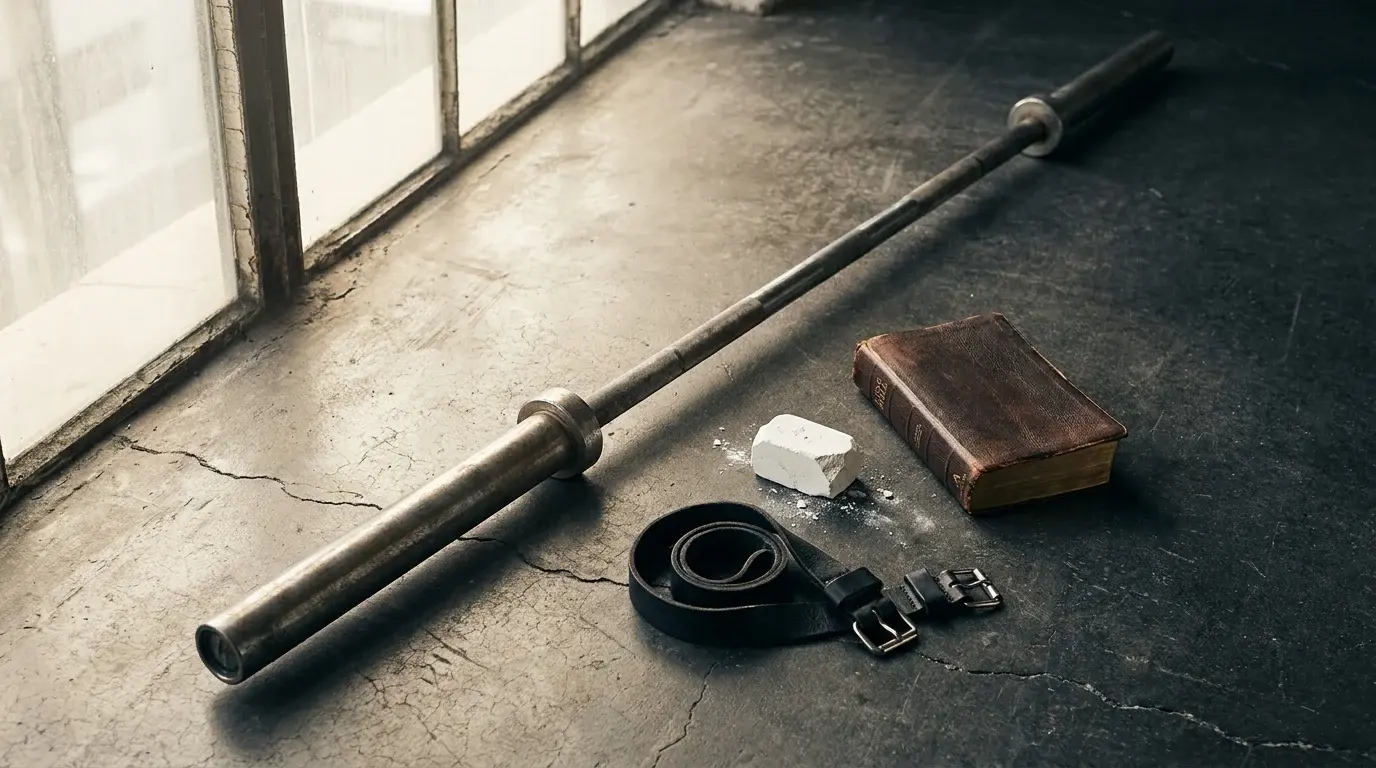
Pre-workout prayer is not a deal you make with God for a PR. He is not a vending machine, and the bar does not care about your spiritual state. What prayer does is reorient the man holding the bar. You walk in distracted, anxious, half-checked-out from a hard day at work - and prayer slows the body, names the work, and hands the outcome to someone bigger than the workout.
- Function - reorients the will, not the muscle fibers
- Length - short enough to never be skipped, long enough to actually land
- Content - confession of distraction, request for clarity, surrender of the outcome
- Result - a present, focused, less reactive lifter for the next 60 to 90 minutes
If you train regularly, you already know that the difference between a great session and a wasted one is rarely about strength on the day. It's about attention. Prayer is the most effective attention-training tool any lifter has access to, and it costs nothing.
The Avodah Connection - Work and Worship as the Same Word
The Hebrew word avodah is translated as both 'work' and 'worship' depending on context. The same word names a priest in the temple and a farmer in the field. The conceptual wall most of us draw between Sunday morning and a Tuesday training session is not a wall the original text builds. Pre-workout prayer is one of the cleanest, most honest places to live out that fact - a moment of explicit worship right before an act of physical work.
Practically, this means a faith-driven lifter does not have to invent a hyphenated spirituality. The work itself, done with the right intention, is already worship. The prayer is what sets the intention.
How to Choose the Right Pre-Workout Prayer Style for You
Most lifters who try pre-workout prayer abandon it inside two weeks. The reason is almost always the same: they picked a style that didn't match their temperament or their schedule. Use the comparison below to pick the one most likely to survive contact with a real training week.
Silent Prayer - for the Internal Processor
- Best for: introverted lifters, crowded commercial gyms, early-morning sessions
- Strength: low friction, looks like normal pre-set focus, hard to skip
- Weakness: drifts into daydreaming if you don't anchor it to one verse
Scripture-Anchored Prayer - for the Cerebral Lifter
- Best for: men who need their faith to land conceptually, not emotionally
- Strength: gives the mind something specific to chew on between sets
- Weakness: requires a small bank of memorized verses to actually use
Spoken Declaration - for the High-Intensity Lifter
- Best for: garage-gym athletes, strongman, heavy compound days
- Strength: matches the body's pre-PR adrenaline state without spiraling into hype
- Weakness: socially awkward in a commercial gym; reserve for private space
Walking Prayer - for the Aerobic-Day Lifter
- Best for: warm-up cardio, hypertrophy days, lifters who can't sit still
- Strength: integrates seamlessly with a 5-minute treadmill or row warm-up
- Weakness: the body's motion can crowd out the mind's stillness
Expert tip: if you're starting from zero, pick scripture-anchored prayer with one memorized verse - Psalm 18:32, Isaiah 40:31, or Colossians 3:17 - and run it for thirty straight training days before you change anything. The verse becomes part of how your body remembers the gym.
The 5-Minute Format - Practical Steps
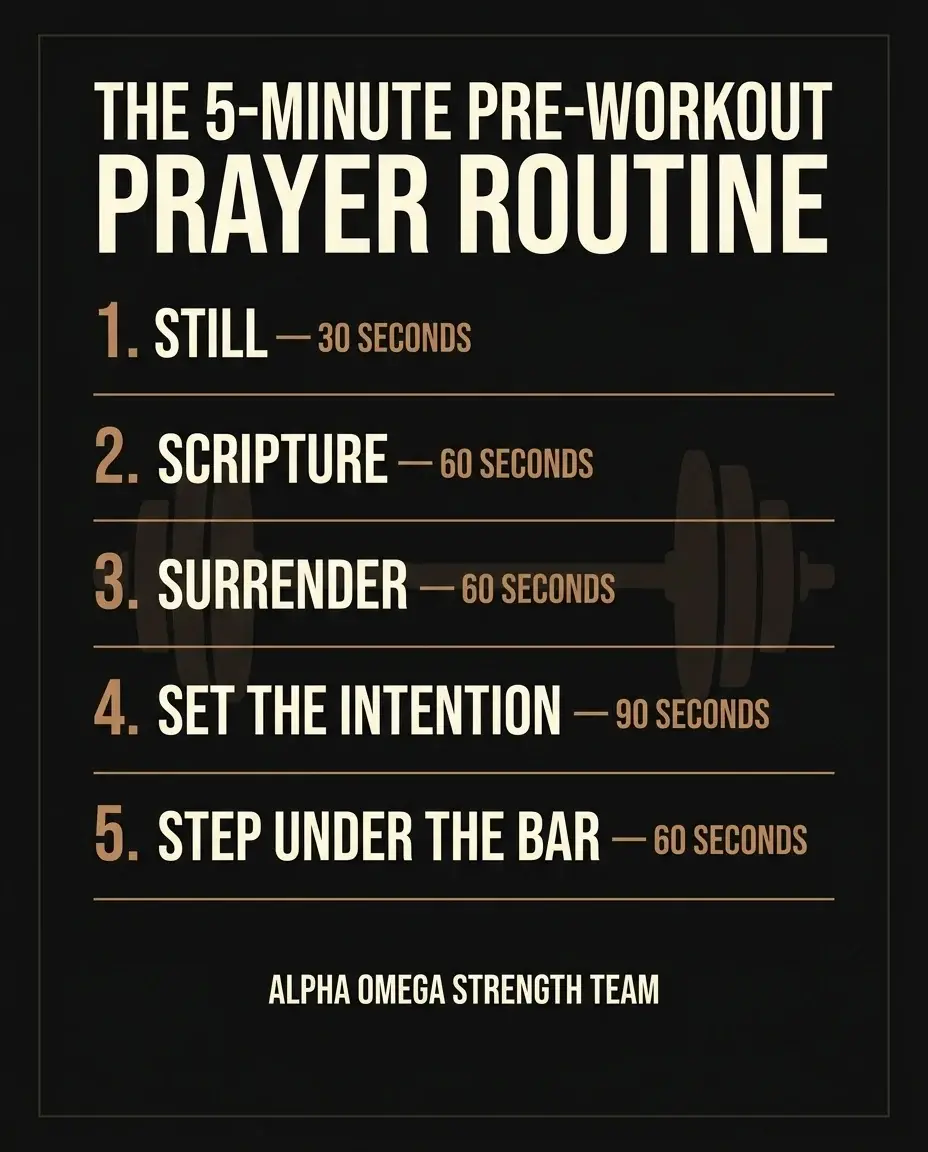
Whichever style you pick, the structure underneath stays the same. Five minutes, five steps, five seconds of transition between each:
- Still (30 seconds) - sit or stand, eyes closed, two slow breaths, let the day end
- Scripture (60 seconds) - speak one verse out loud or in your head, then sit with it
- Surrender (60 seconds) - confess the distraction you walked in with; hand it over
- Set the Intention (90 seconds) - name the work, who it is for, and what good outcome would look like
- Step Under the Bar (60 seconds) - finish with a one-line spoken commitment, then begin warm-up
For a deeper read on the theology behind training as worship, see the Lifter's Devotional Guide to Training as Worship.
Pre-Workout Prayer for Every Stage of Training
The format flexes by season. A lifter six months in needs a different emphasis than a lifter at year five. Below is how the same five-step routine reads at three real stages of a training life:
- The new lifter (0-12 months): emphasis on Step 4 - Set the Intention. The work is unfamiliar; naming what you're doing and why prevents the body from spiraling into anxiety or ego. Keep the prayer short and concrete.
- The intermediate lifter (1-4 years): emphasis on Step 3 - Surrender. This is the stretch where ego gets dangerous. You know enough to chase numbers and not enough to know when to back off. Daily surrender keeps the training from quietly becoming the idol.
- The advanced lifter (5+ years): emphasis on Step 1 - Still. By this stage the body knows what to do; the work is keeping the soul from going on autopilot. Stillness reintroduces presence to a training session that could otherwise run itself.
Heavy Day vs. Light Day vs. Deload
The same routine, recalibrated by training stress:
- Heavy day - spoken declaration style, full 5 minutes, eyes closed; ask for clarity under load and safety in the lift
- Hypertrophy / volume day - walking prayer, integrated with cardio warm-up; emphasis on gratitude for the body that's about to do real work
- Deload / recovery day - scripture-anchored, longer Stillness step (60+ seconds); the prayer reminds you that rest is part of the program, not a failure of it
Adapting the Routine to Your Gym
As of 2026, most commercial gyms are louder, more screen-saturated, and harder to concentrate in than at any point in recent memory. The routine adapts. In a packed commercial gym, run it silently in a corner during your first warm-up set. In a garage gym, you have permission to speak it out loud. In a hotel gym on a work trip, do it on the bench before you load a single plate. The location does not matter. The orientation does.
Why Faith-Integrated Training Identity Makes a Difference
Most men who try to integrate faith into their training quit within a month. Not because they stop believing it matters - but because the rest of the gym culture quietly pulls them back into a version of training that is about appearance, ego, or escape. The fix is not more willpower. The fix is identity. What you put on before you walk into the gym is part of how you train.
- Quiet, unflinching messaging - Alpha and Omega, the beginning and the end (Revelation 22:13) - without the bro-Christian aesthetic.
Getting the Most Out of a Pre-Workout Prayer Practice
- Pick a fixed location at your gym - the same bench, the same corner - so the place itself starts triggering the practice
- Memorize one verse cold; if you have to look it up on your phone, the routine dies inside a week
- Track it like a training variable - if you stop praying for two weeks straight, expect your training quality to drop, and adjust
- Re-read the routine every 90 days; pre-workout prayer goes stale faster than a training program does
Frequently Asked Questions About Pre-Workout Prayer
How do I start praying before workouts if I've never done it?
Start with one memorized verse and 60 seconds of silence on the bench before your first warm-up set. That is the whole practice. Once that feels native - usually two weeks - add the surrender and intention steps. Trying to install the full 5-minute routine on day one is the single most common failure mode.
What verses work best for a pre-workout routine?
Pick one from each category and rotate them by training day:
- Strength - Psalm 18:32, Isaiah 40:31, Philippians 4:13
- Stewardship - 1 Corinthians 6:19-20, Romans 12:1
- Endurance - Hebrews 12:1-2, James 1:12
- Surrender - Colossians 3:17, Proverbs 3:5-6
Can I pray during my workout instead of before?
Yes - and most experienced lifters end up doing both. The pre-workout prayer sets the frame; mid-workout prayer between sets keeps the frame intact when the work gets hard. The caveat is that mid-set prayer is a poor substitute for the pre-workout version. Without the front-end routine, the in-set prayer turns into bargaining under load. Front-load the practice.
Conclusion
Strength training rewards the man who keeps showing up. Pre-workout prayer is the practice that decides whether the showing up is sustainable for the next ten years or the next ten weeks. It does not make the bar lighter. It makes the man under the bar steadier - clearer about who the work is for, less reactive to the days the numbers don't move, less likely to quit when the program asks for years instead of weeks.
Five minutes. Five steps. Run it tomorrow. To go deeper on the theology that makes the practice work, read the Lifter's Devotional Guide to Training as Worship.
// FREQUENTLY ASKED
Questions, answered.
How do I start praying before workouts if I've never done it?
Start with one memorized verse and 60 seconds of silence on the bench before your first warm-up set. That is the whole practice. Once that feels native - usually two weeks - add the surrender and intention steps. Trying to install the full 5-minute routine on day one is the single most common failure mode.
What verses work best for a pre-workout routine?
Pick one from each category and rotate them by training day: Strength - Psalm 18:32, Isaiah 40:31, Philippians 4:13 Stewardship - 1 Corinthians 6:19-20, Romans 12:1 Endurance - Hebrews 12:1-2, James 1:12 Surrender - Colossians 3:17, Proverbs 3:5-6
Can I pray during my workout instead of before?
Yes - and most experienced lifters end up doing both. The pre-workout prayer sets the frame; mid-workout prayer between sets keeps the frame intact when the work gets hard. The caveat is that mid-set prayer is a poor substitute for the pre-workout version. Without the front-end routine, the in-set prayer turns into bargaining under load. Front-load the practice.
// GEAR WORN IN THIS TRAINING


PUBLISHED MAY 16, 2026