
// TRAINING
The Disciplined Lifter's Guide to Progressive Overload: Training Smarter for Faith-Driven Athletes
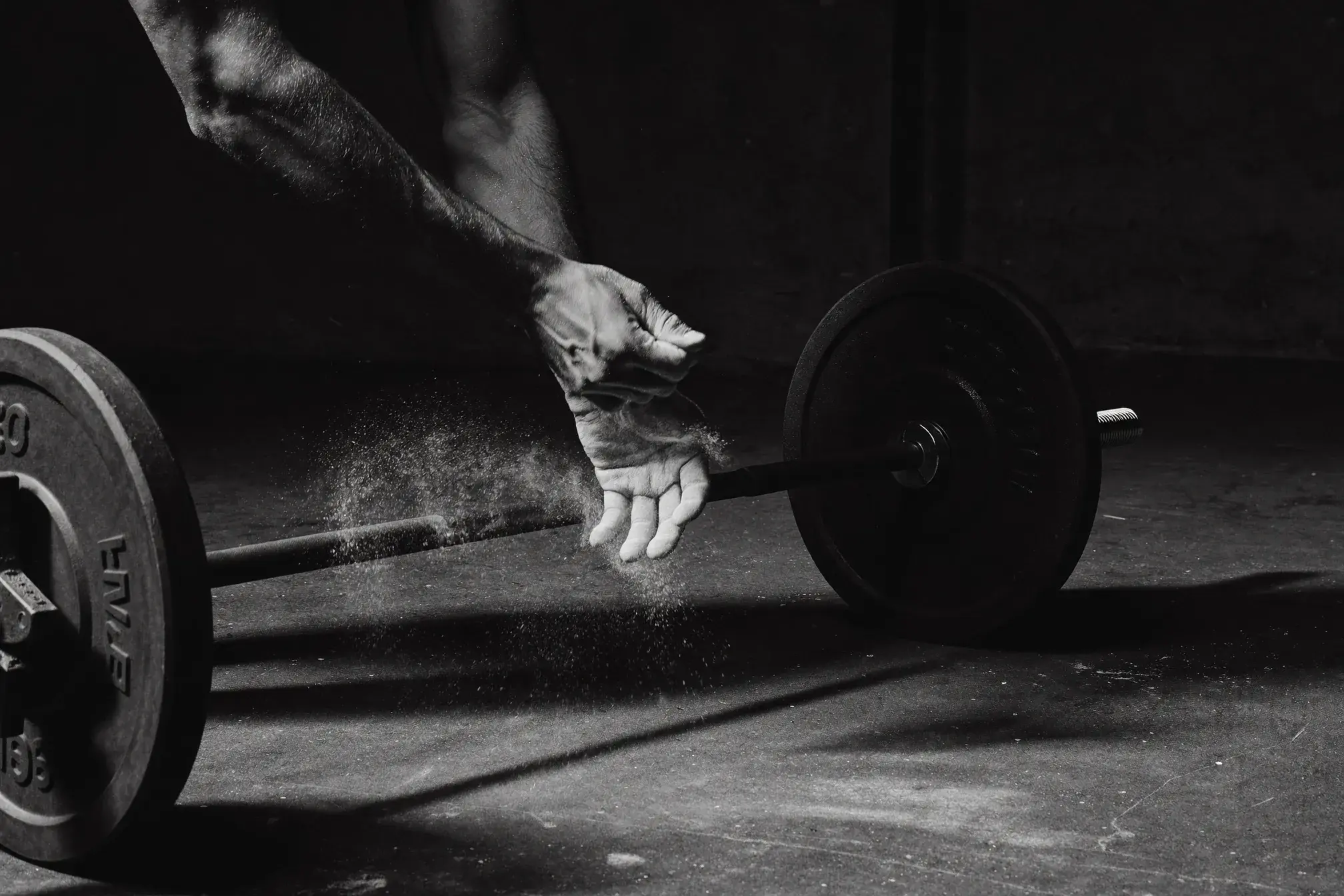
You've been training for months and the gains have slowed. This is the principle that breaks the plateau - and it maps directly onto what scripture says about growth through intentional stress.
At some point the gains stop feeling automatic. You show up, you work hard, you go home sore - and then six months go by and the bar weighs the same as the day you started. You haven't gotten weaker. You haven't gotten lazy. You've just stopped giving your body a reason to adapt.
That's the plateau. And the principle that breaks it has a name: progressive overload.
Progressive overload is simple in principle: you must continually increase the demand placed on your body if you want it to keep adapting. Add weight, add reps, add sets, shorten rest, deepen range of motion - any variable that makes the work harder. The body is a remarkable machine. It adapts to exactly what you ask of it. Ask the same thing every week and it stops changing.
What the sports science says matches what Hebrews 12:11 has always said:
"No discipline seems pleasant at the time, but painful. Later on, however, it produces a harvest of righteousness and peace for those who have been trained by it."
- Hebrews 12:11
Notice the condition: "for those who have been trained by it." Not everyone who experiences pain gets the harvest. Only those who submit to the training process - who do the uncomfortable thing with consistency - see the return. That is not a metaphor. That is also exactly how progressive overload works.
I'm Pete Fluriach, founder of Alpha Omega Strength Team. In this guide I'll show you the 4 levers of progressive overload most Christian lifters never use, plus the discipline framework that keeps the work sustainable for years, not weeks.
Here is what this guide covers:
What progressive overload is and why most lifters stall without it
The five overload methods and when to use each one
A practical tracking framework you can implement this week
Why recovery is not optional - it is structural
The scriptural framework that ties it all together
What Intermediate Lifters Need to Know About Progressive Overload
Beginners grow almost automatically. The nervous system adapts to new movement patterns, the body responds to the novel stress of training, and for the first 3-6 months most people see consistent progress without thinking much about programming. That window closes. Once the body has adjusted to the general stress of lifting, it needs a reason to keep adapting - and that reason has to be intentional and progressive.
The research on this is consistent. A 2019 meta-analysis published in the Journal of Strength and Conditioning Research confirmed that progressive overload - across any method - is the primary driver of hypertrophy and strength gains in intermediate and advanced trainees. Without it, training becomes maintenance at best.
The Physiology of Adaptation
When you stress a muscle beyond what it is accustomed to, two things happen. First, mechanical tension and metabolic stress trigger satellite cells to fuse with existing muscle fibers, increasing their cross-sectional area. Second, the nervous system recruits additional motor units to handle the new demand. Both adaptations make you stronger and larger - but only if the stress is sufficient to trigger them. Training at the same weight with the same reps every week produces the same stress. Same stress means no new adaptation signal.
Think of it in terms of stewardship. The body is a resource entrusted to you. Like any stewardship, passive maintenance is not the same as faithful development. Proverbs 27:17 says iron sharpens iron - the sharpening requires friction. A blade that never meets resistance stays dull.
"As iron sharpens iron, so one person sharpens another."
- Proverbs 27:17
Why Most Intermediate Lifters Stall
The most common reason is not laziness. It's the absence of a system. Most intermediate lifters default to one overload method - adding weight - and when the weight stops moving, they stop progressing. They don't know there are four other variables to pull. Or they're training without a log and genuinely can't tell whether they've progressed because nothing is being tracked.
The second common cause is under-recovery. You can apply progressive overload perfectly and still stall if the body is not getting enough sleep, enough nutrition, or enough time between sessions to repair and supercompensate. Overload without recovery is not progress - it's accumulated fatigue that eventually becomes injury.

The Five Methods of Progressive Overload - Choosing the Right Variable
Most lifters know one method. The disciplined lifter knows five - and knows when to use each. The table below maps the most common overload variables, what they change, and where they fit in your training.
Progressive Overload Methods - Comparison
Method | What It Changes | Best Phase | Injury Risk if Rushed | When to Use It
Increase load (weight) | Absolute strength demand | Strength phases | Medium | When you can complete the top of your rep range with perfect form for 2 consecutive sessions
Increase reps | Time under tension per set | Muscle building (hypertrophy) | Low | When weight jumps are too large (e.g., small plates unavailable) or form breaks at higher load
Increase sets (volume) | Total weekly work per muscle | Hypertrophy phases | Low | When load and reps are temporarily capped and total volume is below optimal range
Decrease rest time (density) | Work accomplished per unit of time | Conditioning and metabolic phases | Low | When cardiovascular capacity is limiting performance and structured intensity is needed
Increase range of motion (ROM) | Stretch-mediated hypertrophy and mobility | Technique phases | Medium | When form is locked in and limited mobility is reducing muscle activation at end range
The practical insight here: these methods are not mutually exclusive, and they are not all equal at every stage. Load increases are the primary driver during strength phases. Volume increases matter more during hypertrophy blocks. ROM work is a maintenance and technique investment. Density training earns its place when cardiovascular capacity or time efficiency are the limiting factor.
How to Track Progress Reliably
You cannot apply progressive overload without knowing your starting point. A training log is not optional - it is the minimum infrastructure for intentional training.
Record exercise, weight used, sets completed, and reps completed each session. Review the last 2-3 sessions before choosing your working weight. Apply the two-rep rule: if you hit the top of your rep range (e.g., 3x10) for two sessions in a row with good form, increase the load by the smallest available increment - typically 5 lb on upper body movements and 10 lb on lower body.
Four rules that make the system work:
1. Log every set, every session - even bad ones. A missed rep is data.
2. Only increase one variable at a time. Adding load and volume simultaneously makes it impossible to identify what is working.
3. Audit your log every 4 weeks. If a lift hasn't moved in a month, the problem is either recovery, technique, or a need to switch overload methods - not effort.
4. When you stall on load, shift to reps. When you stall on reps, shift to volume. Rotate the lever before assuming you've hit your ceiling.
Load vs. Volume - Understanding the Distinction
Load (the weight on the bar) and volume (total sets times reps times weight) are related but distinct. A lifter can increase load while decreasing volume if they drop from 4 sets of 8 to 3 sets of 3 at a higher weight. Depending on the goal - strength versus hypertrophy - one matters more than the other.
For pure strength, heavier load at lower reps (3-6 range) with long rest periods builds maximal neural drive. For muscle size, moderate load at moderate to high reps (8-15 range) with sufficient volume is the better driver. Most intermediate lifters benefit from spending blocks of 4-6 weeks focused on one goal, then rotating. Trying to optimize for both simultaneously typically produces mediocre results on both fronts.
Progressive Overload Across Every Training Stage
The overload principle applies regardless of where you are in your training life. The method shifts, but the requirement to keep raising the bar - in both the literal and figurative sense - does not.

Early intermediate (6-12 months in): Focus almost entirely on load progression. Your nervous system is still learning to recruit muscle fibers efficiently. Adding 5 lb per week on major lifts is realistic and sustainable at this stage. Use rep ranges in the 5-8 zone for compound movements.
Mid intermediate (12-24 months in): Linear load increases become monthly rather than weekly. This is when volume manipulation becomes important. Add a set before you add weight. At this stage, programming blocks - alternating between strength and hypertrophy emphasis - yield more consistent progress than attempting to do both every week.
Advanced lifter (2+ years consistent): Progress is measured in months, not weeks. ROM work and density training become meaningful variables. Periodization - planned deloads, wave loading, and intentional fatigue management - becomes the difference between continued growth and spinning wheels.
Bodyweight, Home Gym, and Barbell Training
Progressive overload is not exclusive to barbell training. The variable that changes is the lever you pull:
Bodyweight training: Progress by increasing reps, moving to harder exercise progressions (e.g., pike push-ups to decline push-ups to handstand push-ups), adding pause reps, or reducing rest time. The ceiling is real but higher than most people reach.
Home gym with dumbbells or bands: Progress by extending time under tension, using tempo prescriptions (e.g., 3 seconds down, 1 second pause, 1 second up), or increasing ROM with elevated push-ups and deficit lunges.
Barbell training: All five methods are available. The barbell is the most versatile tool for long-term progressive overload because load increments can be as small as 1.25 lb with fractional plates, giving you the precision needed at the intermediate and advanced stages.
Fitting Overload Into Your Weekly Schedule
In 2026, the research consensus on training frequency supports training each major muscle group 2 times per week as the optimal baseline for intermediate lifters - balancing sufficient stimulus with adequate recovery. A simple upper/lower or push/pull/legs structure achieves this without requiring six days in the gym.
Three days per week is enough to apply consistent progressive overload - if those three days are structured, logged, and executed with intention. Four to five days allows for more volume, but more volume without structure is not the same as more progress.
The Discipline Framework - Why This Is a Stewardship Practice
Every serious lifter has felt the difference between going through the motions and training with genuine intention. The motions produce maintenance. Intention produces growth. That distinction is spiritual before it is physical.
Philippians 4:13 - "I can do all things through him who strengthens me" - is not a promise of effortless results. Read it in context: Paul is writing from prison, having learned contentment in every circumstance. The strengthening is not the removal of difficulty. It is the capacity to persist through it. That same posture applied to training looks like showing up to a session you don't feel like doing, logging the weight even when it didn't go up, and trusting that the harvest comes to those who are trained by the process.
"I can do all things through him who strengthens me."
- Philippians 4:13
The discipline framework that makes progressive overload sustainable over years has four pillars:
Measurement: Log every session. No exceptions. The log is your accountability structure.
Patience: Strength is built in months, not sessions. Progress that compounds over two years dwarfs any six-week transformation program.
Recovery integration: Sleep, nutrition, and deload weeks are not recovery from training - they are part of the training. The growth happens during rest, not during the session.
Identity anchoring: The motivation that outlasts feelings is rooted in who you are, not how you feel. Showing up because you are a steward of the body God gave you is a more durable reason than showing up because you want to look better.
Getting the Most Out of Your Progressive Overload Program
1. Prioritize compound movements. Squats, deadlifts, rows, presses, and pull-ups involve multiple muscle groups and allow the heaviest loading. These are where progressive overload has the highest return.
2. Apply the 2-rep buffer rule. If you can complete 2 more reps than prescribed while maintaining form, the weight is too light. Challenge is the signal; comfort is the stall.
3. Schedule a deload every 4-6 weeks. A deload - 50-60% of normal training volume at reduced intensity - is not a missed week. It allows accumulated systemic fatigue to clear so the next training block starts from a recovered baseline. Think of it as the Sabbath principle applied to programming.
4. Fuel the work. Nutrition is the substrate for the overload signal. Training in a sustained caloric deficit while attempting to add load is like sowing into dry soil. The post on fueling your body for sustained performance goes deeper on this - read Fueling the Temple at /blog/fueling-the-temple for the nutrition side of this equation.

Frequently Asked Questions About Progressive Overload
How much weight should I add each week to progressively overload?
There is no universal answer - it depends on the movement, your training age, and which overload method you are applying. A general starting point for early intermediates: 5 lb per week on upper body pressing and pulling movements, 10 lb per week on lower body compound lifts. Once those increments become impossible to hit every week (usually within 3-6 months), shift to a bi-weekly or monthly load increase and compensate with rep or volume increases in between. The principle is always the same: increase demand systematically. The increment size decreases as you advance.
What happens if I stop adding load - will I lose muscle?
Not immediately. Muscle mass is relatively stable when training volume is maintained - even without load increases. The research suggests you can maintain muscle for weeks to months of training at lower intensity if volume is preserved. What you lose is forward momentum. Stagnating on load does not cause immediate atrophy, but it does mean the investment of time and effort is producing maintenance rather than growth. The goal is not to preserve what you have - it is to keep developing what has been entrusted to you. Maintenance has its place (deloads, injury recovery, high-life-demand seasons), but it should be a planned season, not the default state.
Can I apply progressive overload to bodyweight training, or do I need a barbell?
Fully. Bodyweight training has access to rep progression, exercise progression (harder movement variants), tempo manipulation, and density methods - four of the five overload levers. The one missing is precise load increment (adding 5 lb to a push-up requires a vest, which is a valid tool). For beginners and early intermediates, bodyweight training can drive meaningful progress for 12-18 months before the ceiling becomes limiting. The key is intentional progression - moving from standard push-ups to archer push-ups to ring push-ups, for example - rather than doing the same exercises indefinitely and hoping for different results.
Conclusion
Progressive overload is not a secret technique or an advanced concept reserved for competitive athletes. It is simply the practice of giving your body a reason to keep adapting - systematically, patiently, and with enough self-awareness to know which lever to pull and when. The lifter who applies this principle consistently for two to three years will look back at a body and a character that bear almost no resemblance to where they started.
Hebrews 12:11 puts a condition on the harvest: it comes "for those who have been trained by" the discipline. Not those who survived it. Not those who endured it reluctantly. Those who submitted to the process - who let it shape them. That is the posture that builds both strength and character over the long haul.
Recovery is the other half of the equation - and it is the half most lifters underinvest in. The overload signal requires a repair window to produce the adaptation. If you have not read Rest Is Not Weakness, that is the natural next read - it covers the recovery side of the overload cycle in full. Find it at /blog/rest-is-not-weakness.
Start with the log. Pick the lift you have been stalling on the longest. Identify which overload method applies. Execute it this week. That is the whole system.
// FREQUENTLY ASKED
Questions, answered.
How much weight should I add each week to progressively overload?
There is no universal answer - it depends on the movement, your training age, and which overload method you are applying. A general starting point for early intermediates: 5 lb per week on upper body pressing and pulling movements, 10 lb per week on lower body compound lifts. Once those increments become impossible to hit every week (usually within 3-6 months), shift to a bi-weekly or monthly load increase and compensate with rep or volume increases in between. The principle is always the same: increase demand systematically. The increment size decreases as you advance.
What happens if I stop adding load - will I lose muscle?
Not immediately. Muscle mass is relatively stable when training volume is maintained - even without load increases. The research suggests you can maintain muscle for weeks to months of training at lower intensity if volume is preserved. What you lose is forward momentum. Stagnating on load does not cause immediate atrophy, but it does mean the investment of time and effort is producing maintenance rather than growth. The goal is not to preserve what you have - it is to keep developing what has been entrusted to you. Maintenance has its place (deloads, injury recovery, high-life-demand seasons), but it should be a planned season, not the default state.
Can I apply progressive overload to bodyweight training, or do I need a barbell?
Fully. Bodyweight training has access to rep progression, exercise progression (harder movement variants), tempo manipulation, and density methods - four of the five overload levers. The one missing is precise load increment (adding 5 lb to a push-up requires a vest, which is a valid tool). For beginners and early intermediates, bodyweight training can drive meaningful progress for 12-18 months before the ceiling becomes limiting. The key is intentional progression - moving from standard push-ups to archer push-ups to ring push-ups, for example - rather than doing the same exercises indefinitely and hoping for different results.
// GEAR WORN IN THIS TRAINING


PUBLISHED MAY 27, 2026