
// NUTRITION
Fueling a Strength Program on a Real Budget: The Faith-Driven Lifter's Grocery Guide
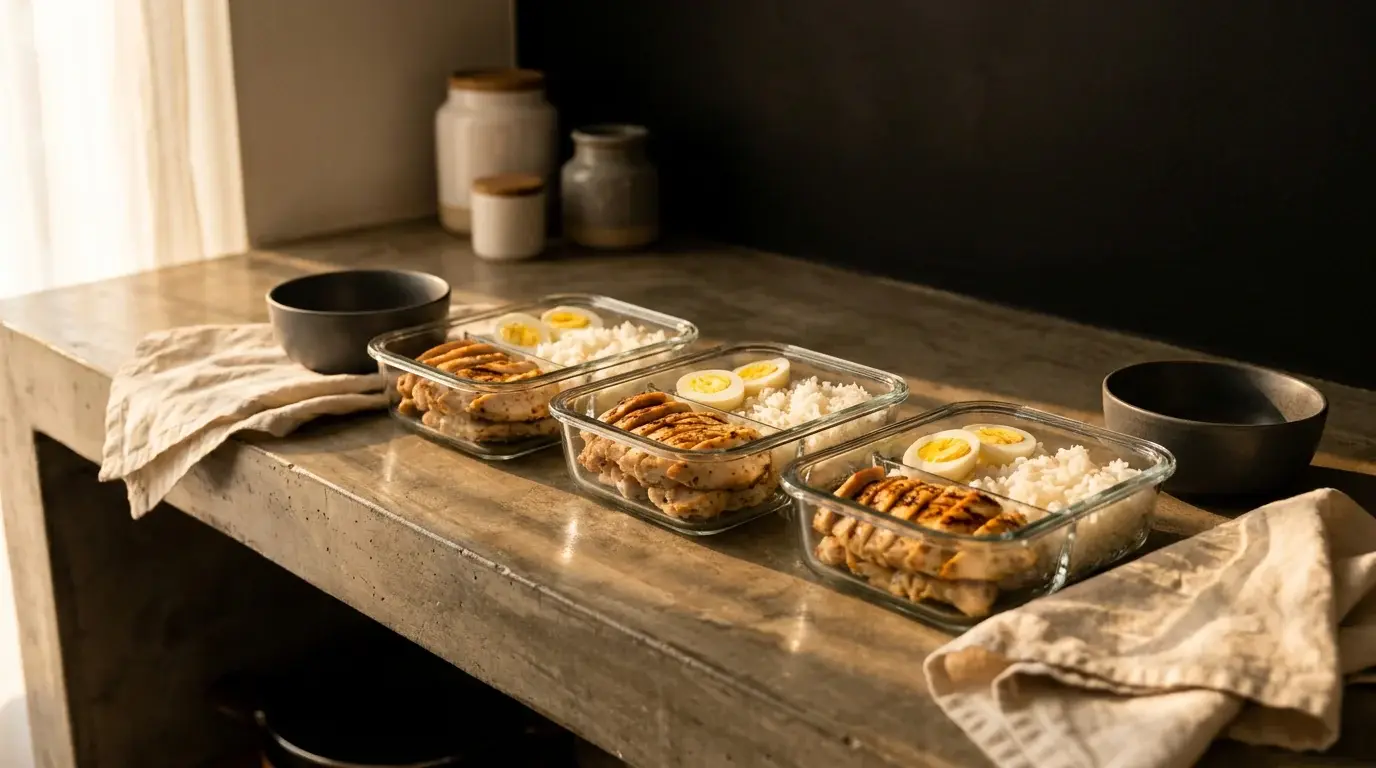
Most nutrition advice assumes you have $300 a week and no family to feed. This is the actual grocery framework for hitting 180g+ protein under $100 a week - built on stewardship, not supplement sponsorships.
Pete Fluriach, founder of Alpha Omega Strength Team. I've run structured strength programs for several years on the same budget most working men are actually dealing with - not the supplement-company fantasy budget, and not the dismiss-it-all approach either. This is the grocery framework I use, tested against real protein targets and real weekly spending in 2026.
Nutrition is where most strength programs die quietly. The training program is sound, the effort is real, but the food never gets dialed in because it feels complicated or expensive - so the body never catches up to the work being asked of it. This guide fixes that.
What Every Faith-Driven Lifter Needs to Know About Strength Training Nutrition on a Budget
Budget nutrition for lifting is not about eating less or eating cheap. It is about eating with intention - the same stewardship logic that governs your time and your training applied to the grocery store. The five protein sources most budget-stack lifters rely on:
- Chicken breast and thighs - the backbone of any serious budget protein stack
- Eggs - the most complete, cheapest protein-per-gram source available in any grocery store
- Canned tuna and sardines - shelf-stable, zero-prep, high-density protein that most lifters underuse
- 90/10 ground beef - affordable, satiating, requires no additional fat sources in the meal
- Greek yogurt and cottage cheese - slow-digesting dairy protein suited to pre-sleep and recovery meals
Before you build your stack, hold these four variables that determine whether your nutrition plan survives the week:
- Protein target - 0.7-0.8g per pound of bodyweight for most natural lifters running a serious program
- Carbohydrate sources - cheap, calorie-dense, and timed around training rather than spread randomly
- Batch cooking logistics - one two-hour cook session per week determines whether you actually hit your targets
- Weekly food budget - $80-$100 is the realistic floor for a 180-pound lifter trying to eat seriously
After this guide, you'll have a concrete weekly grocery list, a protein math framework you can run in your head, and a stewardship lens for every food decision you make going forward.
The Real Cost of Fueling a Strength Program in 2026
Grocery prices in 2026 are meaningfully higher than they were four years ago - protein costs have risen roughly 18-22% across most retail formats since 2022. That reality lands hard on the working man running a serious training program without a professional athlete's stipend. The good news is that the math still works. A 180-pound lifter targeting 145g of protein per day - 0.8g/lb - can hit that number comfortably for under $100 a week if the grocery stack is built correctly from the bottom up.
Where most lifters bleed budget is not on whole food - it is on supplements, premium cuts of meat, and pre-made protein snacks that charge a 300% markup on protein that eggs could have delivered for pennies. Strip those out first. The budget freed up is substantial.

Why Protein Is the Only Macro Worth Targeting First
The evidence on protein is cleaner than any other nutritional variable in strength sports. Hit your protein target and the rest of the diet - within reason - largely takes care of itself. Carbohydrate intake can flex with training volume and budget. Fat intake settles around whatever whole-food protein sources you are eating. Protein is the constraint that governs the rest, which means it is the only macro worth obsessing over at the planning stage.
- Muscle protein synthesis requires sufficient leucine per meal - roughly 2.5-3g - meaning 3-5 protein-forward meals per day beats 8-10 small snacks
- 0.7g/lb is the evidence-based floor for natural lifters in a maintained or slight-surplus phase; 0.8g/lb adds margin for error
- The 2g/lb bro-science target wastes money and rarely improves outcomes for natural athletes - the excess gets oxidized, not built
The Stewardship Case for Budget Nutrition
The biblical case for stewardship is not about spending as little as possible - it is about spending with intention. Proverbs 21:5 reads: the plans of the diligent lead surely to abundance, but everyone who is hasty comes only to poverty. A grocery stack built from planning and bought from a list is the diligent path. Impulse buying at the supplement store, or defaulting to restaurant food because nothing is prepped, is the hasty one. Your body and your wallet both deserve better.
Building Your Weekly Grocery Stack: The Four-Tier System
Organize every grocery trip into four tiers. Spend money in order - Tier 1 first, Tier 4 last. If the budget is tight, Tier 4 disappears entirely and nothing important is lost.
Tier 1 - Protein Foundation (~$40/week)
- Chicken thighs (5 lbs) - roughly $8-10; higher fat than breast, more forgiving to cook, still 27g protein per 4oz serving
- Eggs (2-3 dozen) - roughly $8-12; 6g protein per egg, cheapest complete protein on the market
- Canned tuna or sardines (8-10 cans) - roughly $10-14; 22g protein per can, zero prep time
- Cottage cheese or Greek yogurt (2-3 lbs) - roughly $7-10; ideal for pre-sleep protein, high casein content
Tier 2 - Carbohydrate Fuel (~$15/week)
- White rice (10 lb bag) - roughly $8-10; 45g carbs per cup cooked, easy to batch, digests quickly around training
- Rolled oats (42oz container) - roughly $4; 27g carbs per half-cup dry, high fiber, inexpensive pre-training fuel
- Russet potatoes (5 lb bag) - roughly $4-5; micronutrient-dense, filling, versatile, routinely overlooked
Tier 3 - Fats and Micronutrients (~$15/week)
- 90/10 ground beef (2 lbs) - roughly $10-12; adds protein volume and saturated fat for hormone support
- Frozen broccoli and spinach (2-3 bags) - roughly $6-8; the cheapest route to vitamin K, magnesium, and iron
- Olive oil or butter (one container) - roughly $5-8; covers fat intake for the week without overthinking the macro
Tier 4 - Strategic Supplements (~$10-15/week, optional)
- Creatine monohydrate - the only supplement with a consistent, well-replicated performance benefit; roughly $0.25 per day at 5g per day
- Protein powder (whey concentrate) - buy only when whole food falls short of the weekly protein target; not a staple, a backup
Expert tip: run the protein math before you buy anything. Multiply your bodyweight in pounds by 0.8. That is your daily protein target. Divide by the number of meals you actually eat per day. Now check whether your Tier 1 list covers it before you add a single scoop of protein powder.
Four Practical Rules for Budget Grocery Shopping
- Never shop hungry - every unnecessary purchase in a lifter's cart traces back to walking in without eating first
- Buy in bulk when protein is on sale - frozen chicken freezes cleanly for 3 months; double the buy when the price is right
- Ignore unit price obsession on everything except Tier 1 protein; a smaller bag of oats or rice is fine if it is all you need this week
- Avoid the supplement aisle on every trip until Tier 1-3 is covered; supplements are Tier 4 because they are
For the training program this nutrition plan is designed to fuel, see the 5 Compound Lifts Every Christian Man Should Know.
How Your Budget Stack Changes by Training Phase
The same grocery stack flexes significantly depending on whether you are trying to add mass, maintain, or lean out. The protein floor stays fixed; only carbohydrate volume and total caloric density shift.
- Building phase - increase Tier 2 volume (add another 5 lb bag of rice, more oats, a few more potatoes); keep protein floor identical; allow total spend to reach $100-110
- Maintenance phase - Tier 1 and Tier 3 stay unchanged; Tier 2 carbs match training load week to week; total spend $85-95
- Cutting phase - reduce Tier 2 carbs by 30-40% and shift those calories into non-starchy vegetables; protein rises slightly to preserve muscle; total spend can drop to $70-80
Budget Nutrition by Body Weight
Protein targets and weekly cost scale with bodyweight. A 160-pound lifter needs roughly 128g per day; a 200-pound lifter needs 160g. The gap is a few extra cans of tuna and another dozen eggs per week - under $10 in real grocery terms. Do not let a heavier body weight convince you the budget math breaks. It does not.
Batch Cooking the Budget Stack
The grocery list only works if the food gets cooked. A 90-minute Sunday cook session - one pot of rice, a sheet pan of chicken thighs, a dozen hard-boiled eggs, and portioned Greek yogurt - covers the majority of weekday eating. Meal timing becomes a retrieval problem, not a cooking problem. That shift matters more than any specific food choice in the stack.
Stewardship Is the Theology Behind Every Grocery Trip
Most men running a serious training program feel a low-grade guilt about the grocery budget. They know they should eat better but cannot fully justify the spend when there are mortgage payments and kids to feed. The theology that resolves that tension is not your body is a temple, therefore spend whatever it takes. It is stewardship - the full picture. Your body matters and so does your family's financial stability. Budget nutrition is not a compromise. It is the right answer for almost every working man who takes both seriously.
- Whole food first - real ingredients, not engineered products with impressive labels
- Evidence-based targets - protein math grounded in research, not supplement-company self-interest
- Long-horizon thinking - a grocery strategy that works at 35 and at 55, not just during a 12-week program
- Integrated stewardship - body, budget, and family treated as connected responsibilities, not competing ones
Getting the Most Out of Your Budget Nutrition Plan
- Weigh your protein sources for two weeks to calibrate your eye - after that, estimating by portion size is accurate enough for maintenance
- Write the grocery list from the Tier system, not from what sounds good in the moment - the list precedes the trip, not the other way around
- Rotate two or three different Tier 1 proteins each week to avoid sensory fatigue - tuna for three straight days is a fast path to quitting the plan
- Track your actual weekly grocery spend for 30 days - most men are surprised by what the number is before they introduce any discipline to the process
For the full progressive loading framework this nutrition stack is designed to support, read the Faith-Driven Lifter's Guide to Progressive Overload.
Frequently Asked Questions About Budget Nutrition for Lifters
Can I hit 180g of protein per day on a budget without protein powder?
Yes, without difficulty. 180g per day from whole food breaks down like this: 3 eggs at breakfast (18g), a 6oz chicken breast at lunch (50g), two cans of tuna across the day (44g), 1 cup cottage cheese (25g), and 4oz ground beef at dinner (28g) gets you to 165g before the day is over. One additional chicken thigh or a serving of Greek yogurt closes the gap. Protein powder is a convenience tool, not a requirement.
What is the cheapest high-protein breakfast a lifter can eat?
Four scrambled eggs with half a cup of oats cooked in water costs roughly $1.00-1.50, delivers 40g protein and 40g carbohydrate, and takes eight minutes to make. That combination - eggs and oats - is the most cost-effective lifting breakfast available. It requires no appliances beyond a pan and a pot, holds through a full morning of work, and matches the training fuel profile of options that cost three times as much.
How do I avoid eating the same three meals on repeat when money is tight?
Rotate one Tier 1 protein per week and change one preparation method per batch cook. Week one: chicken thighs roasted with salt and olive oil. Week two: ground beef with cumin and garlic over rice. Week three: sardines with lemon and black pepper on potatoes. The base stack stays identical - the seasoning and preparation method provide enough variety that adherence holds. Boredom with food is almost always a preparation problem, not a budget problem.
Conclusion
A serious strength program deserves a serious food strategy. Not an expensive one - a disciplined one. The man who builds his grocery stack the same way he builds his training block - with intention, from first principles, for the long run - will outlast the man who relies on supplements, skips meal prep, and wonders why his numbers do not move. The bar and the grocery cart answer to the same logic: plan the work, do the work, and let the results follow.
Build the Tier 1 list this week. Run the protein math. Cook Sunday. To understand what you are fueling - the training framework this grocery stack is designed to support - read the progressive overload guide.
// FREQUENTLY ASKED
Questions, answered.
Can I hit 180g of protein per day on a budget without protein powder?
Yes, without difficulty. 180g per day from whole food breaks down like this: 3 eggs at breakfast (18g), a 6oz chicken breast at lunch (50g), two cans of tuna across the day (44g), 1 cup cottage cheese (25g), and 4oz ground beef at dinner (28g) gets you to 165g before the day is over. One additional chicken thigh or a serving of Greek yogurt closes the gap. Protein powder is a convenience tool, not a requirement.
What is the cheapest high-protein breakfast a lifter can eat?
Four scrambled eggs with half a cup of oats cooked in water costs roughly $1.00-1.50, delivers 40g protein and 40g carbohydrate, and takes eight minutes to make. That combination - eggs and oats - is the most cost-effective lifting breakfast available. It requires no appliances beyond a pan and a pot, holds through a full morning of work, and matches the training fuel profile of options that cost three times as much.
How do I avoid eating the same three meals on repeat when money is tight?
Rotate one Tier 1 protein per week and change one preparation method per batch cook. Week one: chicken thighs roasted with salt and olive oil. Week two: ground beef with cumin and garlic over rice. Week three: sardines with lemon and black pepper on potatoes. The base stack stays identical - the seasoning and preparation method provide enough variety that adherence holds. Boredom with food is almost always a preparation problem, not a budget problem.
// GEAR WORN IN THIS TRAINING


PUBLISHED MAY 24, 2026